
Atlas Battery Sourcing Guide: Samsung SDI, LG Energy Solution and the 1.3kWh Humanoid Pack
According to recently reported coverage from The Elec, Samsung SDI is expected to supply batteries for Boston Dynamics' Atlas and handle most early shipments, while LG Energy Solution remains a second approved source. The production pack uses 70 2170 cylindrical cells and about 1.3kWh, with 4-hour general runtime and 3-minute swaps.
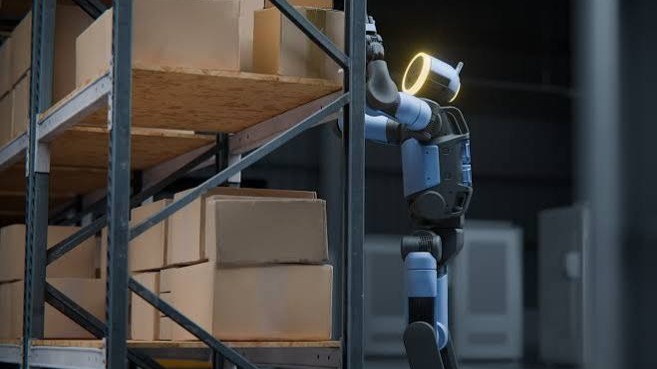
Why Samsung SDI looks dominant in the first Atlas battery phase
The short answer is capacity timing, not a sign that only one battery maker can qualify. The Elec says Samsung SDI will likely take almost all initial shipments, while LG Energy Solution is selected but constrained by early volume and available capacity. For industrial buyers, the practical implication is that first-phase supply terms may look more like a ramp than a mature multi-sourcing program.
A useful market lens comes from The Korea Herald, whose earlier coverage framed the Atlas battery race as long-term positioning rather than immediate revenue. That fits the program: robot battery volumes are small at the start, but the qualification path for humanoid cells, packs, thermal controls and fast-swap systems can create strategic value once factories scale.
What the 2170 cell architecture changes for factory operations
The operational anchor is cell-level packaging. Atlas is specified with 70 2170 cylindrical cells; each cell is 21mm wide, 70mm tall and rated at 5000mAh. After pack assembly, total capacity is about 1.3kWh, roughly 1.6% of the 84kWh pack used by the Hyundai IONIQ 5 long-range version. Boston Dynamics' published figures add the duty-cycle reality: up to 4 hours in general conditions, about 2 hours during heavy carrying, battery swap at a workstation in 3 minutes, and charging in 1.5 hours.
| Atlas battery fact | Factory meaning |
|---|---|
| 70 cells and 5000mAh | Runtime depends on torque, navigation and payload, not just a cell count. |
| 1.3kWh pack | Power density must serve compact humanoid packaging and repeated thermal cycles. |
| 4 hours general duty | A full shift may require staggered swaps or two packs per robot. |
| 2 hours heavy task | Carrying-heavy work can shrink the margin for waiting time. |
| 3-minute swap | Swap speed helps uptime, but pack staging and station access still need design. |
| 1.5-hour charge | Charger queue management becomes an operations problem, not a plug-and-play task. |
Case snapshot: imagine a parts-sequencing cell where a robot must stay available for a long shift. If the machine consumes a pack roughly every two to four hours, the bottleneck is not the cell price; it is the availability of charged packs, swap navigation, battery-health records and charger slots. This is where humanoid deployment differs from a one-off prototype demo.
Which sites and parts matter in the Atlas supply chain
South Korea's Electronic News has reported that Samsung SDI plans to serve Atlas from a Malaysia factory, while LG Energy Solution may use a plant in the United States, in Georgia. That split matters because a program starting in U.S. manufacturing sites can become exposed to cross-border component audits, tariff classification questions, battery traceability requests and factory validation steps. Supply location can shape lead time and total cost even when cell chemistry is similar.
The mechanical side is also concentrated. Hyundai Mobis supplies actuators and key parts, while Boston Dynamics has started product-version production. Hyundai Motor Group plans to introduce Atlas into parts sequencing from 2028. The company's official story also points to later expansion into parts assembly and a long-term ambition of roughly 25,000 Atlas units across global plants, which makes early battery qualification more consequential than a pilot-order headline suggests.
Implementation steps for teams evaluating humanoid battery suppliers
- Start with task energy, not brochure voltage. Rebuild the cycle profile for parts picking, walking, lifting and waiting. A robot rated for 4 hours in general duty may behave closer to 2 hours when carrying parts.
- Size the swap infrastructure. A 3-minute swap only helps if charged packs are present and the robot can reach the station reliably. Use the 1.5-hour charge time to model how many chargers are needed for peak-shift demand.
- Qualify more than one source. Samsung SDI is the early main supplier, but LG Energy Solution should remain on the map. Track capacity, plant origin and qualification milestones.
- Follow actuator and BOM dependencies. Hyundai Mobis' role in actuators and key parts shows that humanoid sourcing is a multi-component problem. For related component volumes, see our Robotics Brief on the 750,000-servo Microduck order.
- Plan by factory phase. Parts sequencing is a more forgiving first use case than precision assembly; it gives time to build data on failures, safety boundaries and maintenance windows.
Common misconceptions to avoid when reading the Atlas battery news
- The 70-cell count does not mean 70 independent power reserves. It describes the pack architecture; total capacity is about 1.3kWh.
- Small pack energy is not automatically easy. 1.3kWh may sound minor next to a Hyundai IONIQ 5 84kWh EV battery, but a humanoid pack must survive frequent handling, variable loads, compact packaging and service constraints.
- Early supplier share does not guarantee permanent exclusivity. Samsung SDI's initial lead can fade as LG Energy Solution scales its role or another qualified source enters later.
- Country of production is only one cost input. Malaysia or Georgia sourcing can change logistics and compliance burdens, but pack design, warranty and robot integration often drive the final decision.
Action advice before Atlas reaches factory floors
Procurement teams should treat the Atlas battery report as a test of their humanoid readiness framework. Ask suppliers for cell-level traceability, pack cycle-life targets, thermal-management limits, spare-pack pricing and swap-station requirements. Operations teams should validate whether a pilot can sustain real takt, not just a demo video. Engineering teams should check how battery health data enters predictive maintenance. Leadership should resist comparing early pilot economics with mature fleet economics, especially while product-version production and factory rollout are still building toward 2028.
FAQ: What industrial readers should ask about Atlas batteries
Is Samsung SDI the only battery supplier for Atlas?
No. The Elec reports Samsung SDI as the expected early main supplier, while LG Energy Solution is also included in the approved supply group for Boston Dynamics' Atlas.
What are the Atlas battery specifications?
Atlas uses 70 2170 cylindrical cells, each 21mm by 70mm and rated at 5000mAh, for a pack of about 1.3kWh. That is roughly 1.6% of the 84kWh capacity associated with the Hyundai IONIQ 5 long-range version.
How long can Atlas run before it needs power?
The published figures are 4 hours in general work and about 2 hours during heavy carrying. When battery levels fall, Atlas can move to a workstation and change the pack in 3 minutes; charging takes 1.5 hours.
Where may Atlas batteries be supplied from?
South Korea's Electronic News says Samsung SDI plans Malaysia-based supply, while LG Energy Solution may supply from the United States, in Georgia.
When is Atlas expected to enter factory work?
Hyundai Motor Group plans to start parts-sequencing deployment from 2028, with broader assembly ambitions discussed in later official manufacturing-story material.