
WorldIndustrialWeekly Robotics Brief: Robotis' 750,000-Servo Microduck Order and What Operations Teams Should Read Into It
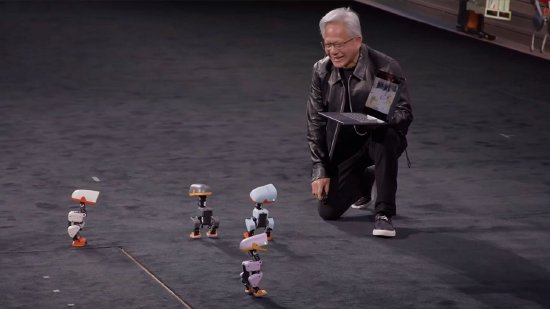
For readers following industrial automation, component supply, and robot commercialization, the disclosed order involving Robotis and Pollen Robotics is best understood as a translation problem: how a product demonstration becomes a unit forecast, how a unit forecast becomes a bill of materials, and how a bill of materials becomes a supplier contract.
Case snapshot: a component order anchored to 50,000 robot units
On the 26th, Robotis disclosed at its Seoul's Gangseo District headquarters that it had signed a contract to supply about 750,000 servos for Pollen Robotics' Microduck. The reported product-order need is 50,000 units, with each robot requiring 15 Robotis servos. The contract scale is stated as about 3.5 billion won, equivalent to about USD 2.4 million.
What changed the demand curve
Microduck belongs to Pollen Robotics, which sits under AI platform company Hugging Face. The reported turning point came after Jensen Huang demonstrated Microduck on the 21st. According to Pollen Robotics co-founder and CEO Matthieu Lapeyre, about 15,000 orders were added within three days following the demonstration. Lapeyre expects next-year servo demand to reach at least 1 million.
Pollen Robotics links Microduck's traction to a design close to ordinary consumers and a price point that feels accessible. The robot began as a platform for reinforcement learning and developer use, then moved into wider attention as a companion robot for consumers. Lapeyre describes the longer-term ambition as a robot that can enter daily life the way a pet does.
Supplier fit: Dynamixel and prior product history
The relationship between the two companies is not a first-time test. Pollen Robotics had used Robotis' Dynamixel servos in other robot developments, and its earlier product Reachy Mini also used the same brand's actuators. Lapeyre said the team has long used Dynamixel and chose Robotis because it trusts the supplier's ability to deliver high performance within a compact volume.
Operating data worth reading beyond the headline
| Signal | Reported fact | Managerial reading |
|---|---|---|
| Component content | 15 Robotis servos per Microduck unit | Every unit-level forecast directly converts into actuator demand. |
| Confirmed order scale | 50,000 units | Provides a near-term production and procurement baseline. |
| Contract quantity | about 750,000 servos | Makes the link between robot popularity and component purchasing visible. |
| Contract value | about 3.5 billion won, or about USD 2.4 million | Anchors the financial scale of the disclosed component relationship. |
| Demand acceleration | about 15,000 orders within three days after a demonstration on the 21st | Shows how technical visibility can compress order-generation cycles. |
| Forward expectation | at least 1 million servo demand next year | Raises a planning question about capacity, supplier readiness, and rolling forecasts. |
Common misconceptions to avoid
- Treating the story as only a consumer-robot hype case. The disclosed facts show a chain from demonstration to orders to per-unit component requirement, which places it inside manufacturing and procurement planning.
- Reading the current contract as the ceiling. The present facts describe about 750,000 servos tied to 50,000 units, while the at-least-1-million figure for next year is presented as an expectation, not a completed purchase.
- Reducing supplier selection to unit price alone. Lapeyre's stated reason for choosing Robotis includes long use of Dynamixel, confidence in the supplier, and high performance in a compact volume. Those are qualification and integration factors, not only cost factors.
- Separating platform strategy from hardware execution. A product positioned under Hugging Face, originally developed for reinforcement learning, and later reframed for consumer companionship still generates a concrete actuator order through its mechanical design.
Action recommendations for production, procurement, and engineering teams
- Build a per-unit component exposure map for high-visibility products. When one robot uses 15 Robotis servos, a change in consumer demand immediately changes supplier forecast. The same logic applies to automation modules, inspection devices, and edge robotics deployed in plants.
- Separate contracted quantities from forecasted demand in planning documents. The 50,000-unit and about-750,000-servo facts should be handled as contract fulfillment, while the next-year at-least-1 million expectation should trigger supplier capacity review, not automatic purchase assumptions.
- Use supplier history as a qualification signal. Prior use of Dynamixel across robot programs, including Reachy Mini, supports the practice of evaluating component partners through demonstrated integration, compact-performance requirements, and repeated deployment rather than only first-time price comparisons.
- Create rapid-response rules around demonstration-driven demand. A public demonstration on the 21st preceded the reported 15,000-order surge within three days. Sales, engineering, and operations teams should define who updates lead-time statements, who checks inventory, and who informs component partners when order visibility changes suddenly.
FAQ
What is the size of the disclosed servo order?
Robotis disclosed a contract for about 750,000 servos for Microduck. The order is tied to 50,000 robot units, with each unit requiring 15 Robotis servos.
What is the contract value?
The disclosed order scale is about 3.5 billion won, equivalent to about USD 2.4 million. It provides a concrete financial anchor for the component relationship at the current order volume.
Why did demand increase sharply?
The reported acceleration followed Jensen Huang's demonstration of Microduck on the 21st. Matthieu Lapeyre said about 15,000 orders were added within three days, and he expects servo demand to reach at least 1 million next year.
Was Robotis a new supplier for Pollen Robotics?
No. Lapeyre said the team had long used Robotis' Dynamixel servos, and the earlier Reachy Mini also used the same brand. The stated reason for choosing Robotis was trust in its ability to combine compact volume with high performance.
Bottom line for industrial readers
The useful takeaway is that product demand becomes an industrial plan only when a company can express it through unit volumes, component content, supplier relationships, and time-bound forecasts. In this case, the chain runs from Hugging Face and Microduck, through Jensen Huang's demonstration, to the about-15,000-orders-within-three-days surge, and finally to the contract for about 750,000 servos built on prior Dynamixel and Reachy Mini experience. For operations and procurement leaders, the lesson is to convert visible product momentum into measurable capacity, qualification, and supplier-review actions before the next-year demand estimate becomes the current-year constraint.