
LIBERTAS in QuantAM: Cutting Support Costs on RenAM 500 Series Without New Hardware | WorldIndustrialWeekly General
Support removal runs $150–300 per metal AM build once the part comes off the plate — and LIBERTAS is Renishaw's software answer to that line item. The platform runs inside QuantAM with no extra hardware, gives users finer control over laser parameters, and ships a support reduction package for the RenAM 500 series. Below: how it works, which numbers actually move, and a deployment sequence for mixed-volume shops.
Why support removal sets your real per-part price
Start with the line item most cost sheets bury. In laser powder bed fusion (LPBF), support structures manage thermal conditions and keep the build stable — that is their job, and Renishaw's release framing says as much. The bill arrives later. Materialise's cost analysis puts aggressive support removal — grinding or electrical discharge machining (EDM) of block supports — at $150–300 every time a build comes off the plate. Add the powder the supports consumed, the laser hours they took to print, and the risk of gouging a finished downskin surface, and the "free" orientation in your build software stops being free.
The metric I check first when auditing a metal AM operation is simple: removal minutes per build. It is the number a support reduction package is supposed to move — and the number most vendor decks never quote.
How LIBERTAS works: parameters, not hardware
LIBERTAS changes how laser energy is applied across the part geometry during the build. Instead of one parameter set fighting every overhang, laser delivery adapts locally, which Renishaw describes as better thermal management with distortion limited. The practical outputs: reduced reliance on traditional support structures, steeper allowable downskin angles, and improved finish on unsupported downskin surfaces. Full details sit in Renishaw's release announcement.
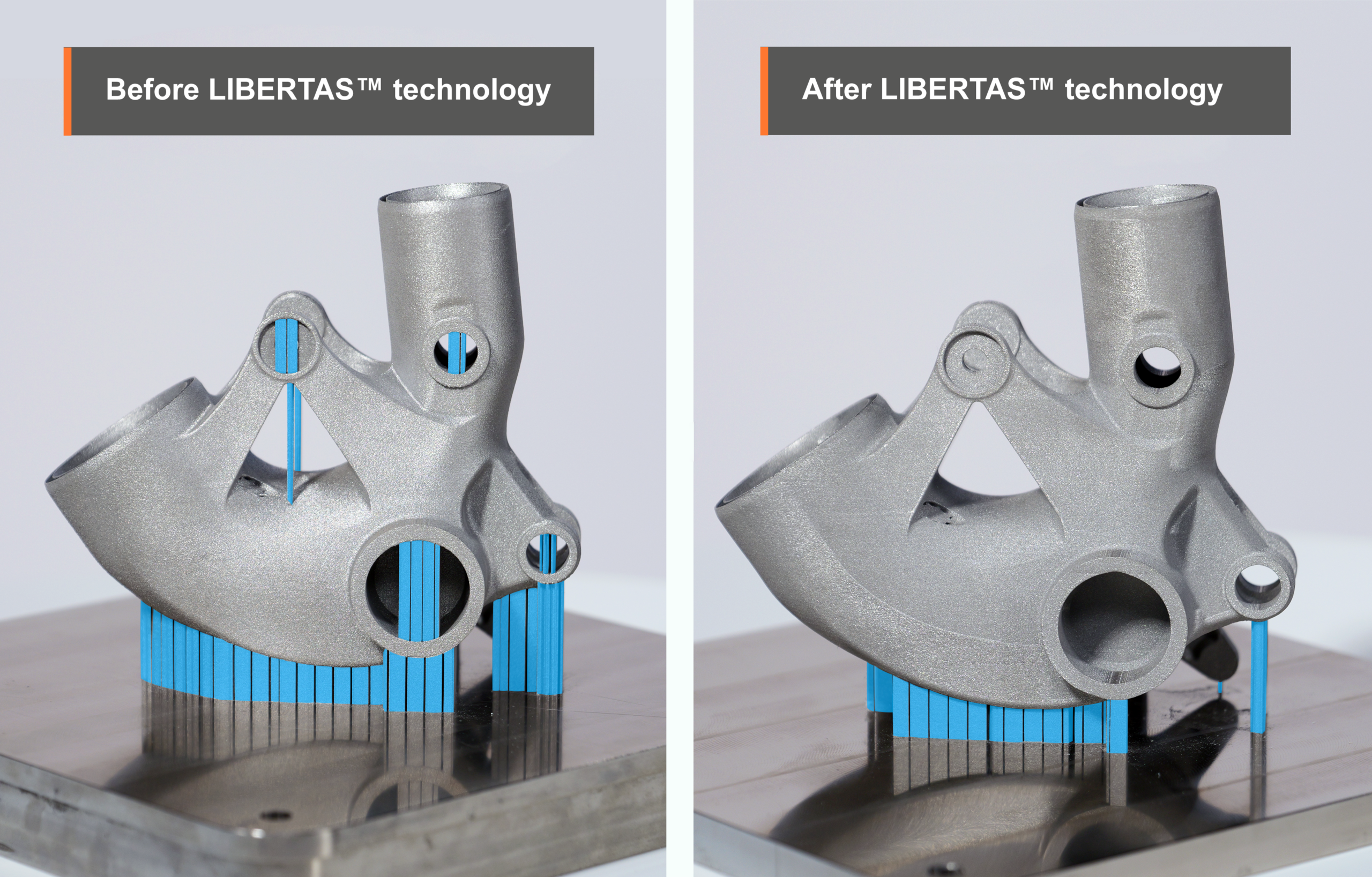
Bike part support structures before and after LIBERTAS technology
Deployment-wise, the software sits inside QuantAM, Renishaw's build preparation platform, and needs no additional hardware or major workflow change. The timeline matters for anyone tracking release cadence: the technology first surfaced in August 2026 — trade outlet metrology.news carried it on August 12, 2026 — with the formal release push landing in November 2026. My read: that quarter went into hardening parameter sets rather than rushing seats out the door.
One caution, because scrutinizing these claims is the job: a software-only upgrade with no hardware change deserves per-release evidence — parameter sets, thermal envelopes, validation data. We set that test out in our no-hardware-change upgrade disclosures checklist, and it applies here. Ask for the coupon data behind the support reduction numbers before you rewrite your quoting sheets.
What actually moves in the numbers
Four outputs, per Renishaw: lower material use, shorter post-processing, improved surface quality on downskin features, and support for both low-volume and scaled production — all without new hardware. Independent research backs the mechanism: a peer-reviewed LPBF study in MDPI's Technologies journal shows that controlled remelting — a parameter-side change, not a hardware one — improves downskin surface quality while reducing support requirements. That matters because it says the physics supports the software pitch: downskin outcomes respond to laser parameter control alone.
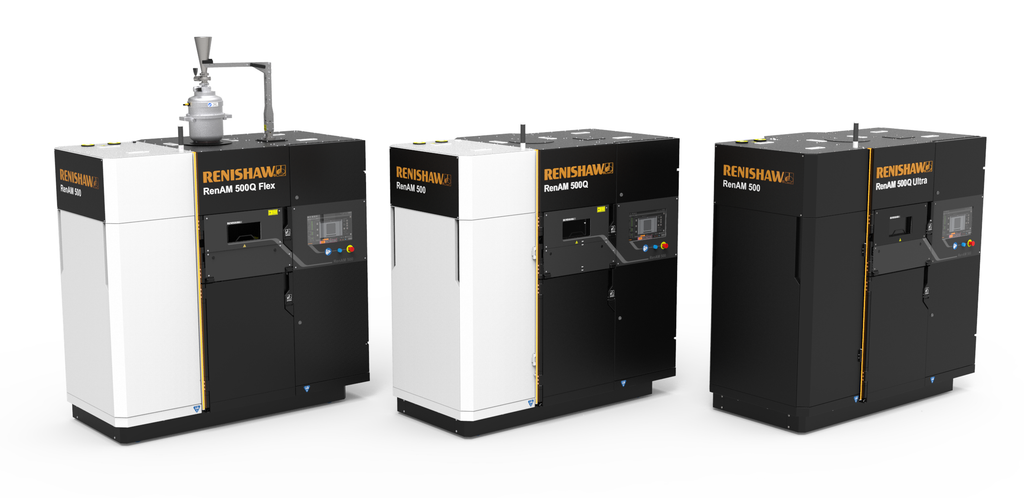
RenAM 500 series systems
The commercial structure is the quiet win. Licensing is based on individual QuantAM seats, and build files can be used across multiple machines — one seat can serve a mixed fleet. The RenAM 500 series itself spans configurations from the dual-laser RenAM 500D, which works with Renishaw's QuantAM software suite, up through quad-laser variants. For a shop running two or three machines off one planning desk, seat-based licensing with portable files is the difference between a modest software line item and another hardware capex cycle.
Who should deploy first — and the four traps
The clearest early fit is high-mix, low-volume work, where every build is a different geometry and support removal is pure labor. Renishaw's own examples point that way: the bike component shown above, and removable partial dentures produced on a Renishaw AM machine with LIBERTAS — dental work being the textbook case of patient-specific production where post-processing minutes dominate unit cost.
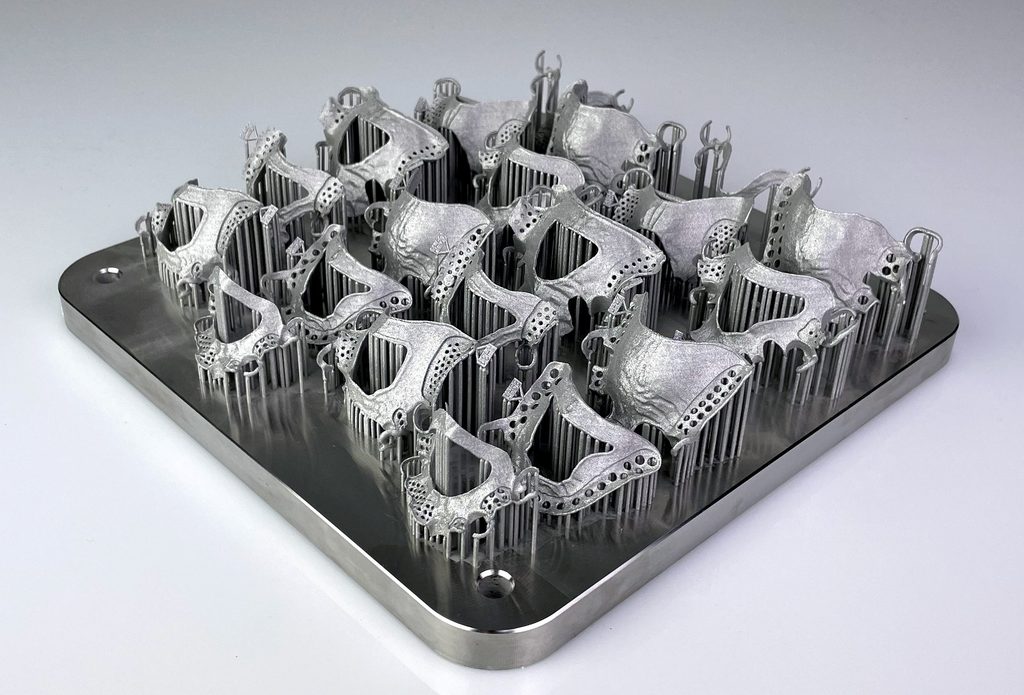
Removable partial dentures created using Renishaw AM machine and LIBERTAS technology
A sequence that holds up in the field:
- Rank by downskin contact. Pull build logs and score part families on downskin area and support contact points. Start with the families spending the most removal minutes.
- Coupon before commitment. Run the same part twice — legacy parameters, then LIBERTAS. Measure support volume, removal minutes and downskin finish. Keep the raw numbers; they become your new quoting baseline.
- Do the seat math. Licensing is per QuantAM seat and files port across machines. Count planners, not printers, before you buy.
- Re-qualify, don't assume. Steeper downskin angles and new parameter sets still need distortion checks on your alloy and your geometry. Build-file portability is not process qualification.
Four traps we see repeatedly:
- Treating "reduced supports" as "zero supports." Overhangs still need thermal management; the package shifts the balance, it does not delete the physics.
- Quoting from the vendor's before/after images instead of your own coupon data. The denture and bike examples are illustrative, not your part.
- Skipping the orientation review. Steeper downskin angles only pay off if someone rebuilds the orientation strategy to use them.
- Budgeting hardware. There is no hardware. The spend is seats and training; the risk is validation discipline.
The same seat-and-file planning logic travels beyond metals, by the way — we mapped a version of it for a modular polymer PBF cell, and the pattern holds: plan the software seats and file templates before the machine count grows.
FAQ
Does LIBERTAS require new hardware on RenAM 500 systems?
No. It runs inside QuantAM without additional hardware or major workflow changes, and licensing is based on individual QuantAM seats.
How is LIBERTAS licensed?
Per QuantAM seat. Build files generated under that license can be used across multiple machines, which is what makes it workable for a mixed fleet on one planning desk.
When did Renishaw release LIBERTAS?
The technology first appeared in August 2026 as a QuantAM upgrade, with the formal release push in November 2026, aimed at design freedom, productivity and scalability on the RenAM 500 series.
What does it change on the finished part?
Less reliance on support structures, better finish on unsupported downskin surfaces, lower material use and shorter post-processing — with build stability maintained and distortion limited, per Renishaw's specification. Validate on your own coupons before quoting.
The replicable framework
Strip the vendor gloss and the framework is four moves: score your part families by support contact, coupon-validate old versus new parameters, buy seats for your planners rather than your machines, and re-qualify geometry and distortion before the quoting sheets change. Software like LIBERTAS moves the cost baseline only as far as your validation discipline lets it. The release itself sits on renishaw.com.
References
- Renishaw — LIBERTAS technology release announcement: renishaw.com
- Materialise — 3 Hidden Costs in Metal Additive Manufacturing (Feb. 27, 2024): materialise.com
- Metrology and Quality News — Renishaw LIBERTAS Technology Reduces Supports and Improves Surface Finish in Metal AM (Aug. 12, 2026): metrology.news
- MDPI Technologies — Optimization of Downskin Surface Quality in Laser Powder Bed Fusion: mdpi.com
- VoxelMatters — Renishaw unveils new RenAM 500D dual laser system: voxelmatters.com
- 3D Printing Industry — Renishaw LIBERTAS software reduces support structures in metal 3D printing (Nov. 12, 2026): 3dprintingindustry.com
Daniel Foster covers manufacturing transformation for WorldIndustrialWeekly. Reach the desk at news@industrialweekly.com.