
WorldIndustrialWeekly Comparison: Honda's China Parts Strategy Versus Legacy Supply Chains
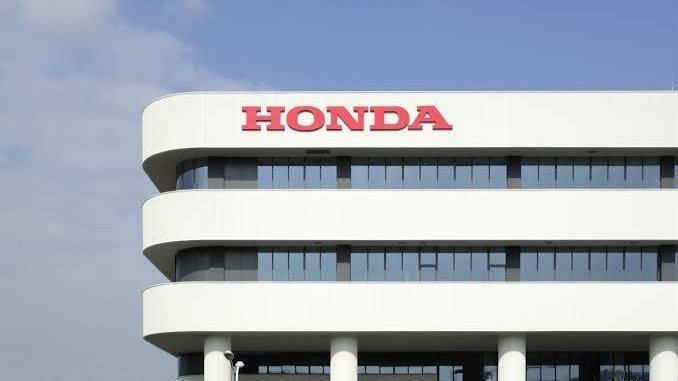
Honda's China sourcing turn is a comparative shift: new-generation gasoline vehicles for the Chinese market will rely more heavily on China standard parts, while EV projects may borrow partner platforms, with production expected from 2027 to 2028. For procurement teams, the trade-off is lower local cost against revalidation work, safety testing and supplier selection under tighter margin targets.
What is changing in Honda's China sourcing model?
At its core, Honda is shifting from a globally specified parts regime to one that gives greater weight to components already proven in the Chinese market. Honda Executive Officer and Chief Financial Officer Masao Kawaguchi said new-generation gasoline vehicles developed for the Chinese market will use a large share of locally made parts; for new-energy vehicles, the company is discussing use of partner platforms, with production expected in 2027 to 2028. The change is presented as a balance among cost, quality and local demand, not a blanket substitution.
Honda's four-wheel restructuring plan announced this May also frames the shift as the use of local standardized parts, intelligent-driving technologies and partner platforms, alongside a review of proprietary standards. The company says procurement is not divided by supplier capital origin, and that part competitiveness — price, quality and technology — will decide orders.
Why did China sales pressure trigger procurement and platform moves?
The practical trigger is volume and mix pressure. Masao Kawaguchi disclosed this August that in April to June 2026, Honda's China sales were only just above 80,000 units, down by about 50% year on year. The company attributes part of the gap to the speed at which China's auto market has moved toward new-energy vehicles, while Honda remains weighted toward gasoline and hybrid models; the relevant market segment contracted by about 40% year on year.
That sales gap changes the supplier conversation. A model plan that relied on inherited global specifications must now compete in a market where pricing, feature integration and development cadence are set by local players. In industrial terms, the sourcing model becomes a margin-recovery tool, not merely a cost-center exercise.
How do legacy standards compare with China standard parts?
Comparison should be made at the decision level, not by nationality of origin. The table below summarizes the trade-offs a manufacturing or procurement team can use.
| Decision dimension | Legacy internal standard | China standard parts approach | Managerial trade-off |
|---|---|---|---|
| Cost base | Designed for global reuse, with validation margins that can create excess quality relative to a single market's needs. | Builds on parts already proven in local programs and supply chains. | Lower piece cost may be real, but only if total validation cost does not erase the saving. |
| Quality logic | Internal specifications and global development assumptions dominate. | Meets requirements that already satisfy local performance, regulation and usage. | Honda says it does not intend to use "Chinese quality" as a new baseline; it intends to rebalance cost, quality and demand. |
| Development speed | More centralized control; can be slower when local software or electrification features are involved. | Faster use of local technology and partner platforms, especially for EV concepts targeted for 2027 to 2028. | Speed gains must be tested through homologation, crash validation and supply continuity. |
| Supplier access | Long-standing relationship channels favor incumbents. | Open evaluation based on competitiveness; local, foreign and joint-venture suppliers can qualify. | Incumbents need evidence of price competitiveness, not only historical compliance. |
What risks do incumbent suppliers face under the new screening?
The risk is not simply lost volume; it is a change in the evaluation gate. G-TEKT senior executive Takeshi Baba has described the situation as a stage of being screened, saying suppliers have entered price competition and order allocation will depend on price. For body-related parts, if material or tolerance requirements change, suppliers may need to rerun crash tests and other validation work, increasing development and verification costs.
A useful case comes from G-TEKT's own reporting. Nikkei Asia reported that G-TEKT's China business logged an operating loss of about ¥940 million in the fiscal year ended March 2026, mainly because output for Honda parts fell by more than 10%; during that period, its deliveries to Toyota in China exceeded deliveries to Honda. G-TEKT President Naohiro Takao said it was time to consider how to restructure the company's China business, which signals that suppliers must move from single-client loyalty to portfolio resilience.
How does cost pressure shape supplier decision rules?
Reuters reported in September 2026 that documents reviewed by the news organization showed Honda seeking about ¥1.5 trillion in savings by 2030, equivalent to roughly $9.4 billion, and asking suppliers for 30% cuts in pressed and forged components, electrical parts and software-defined vehicle parts. If that reporting is taken as a planning benchmark, a supplier cannot answer the China sourcing question by quoting current costs alone. The relevant answer must show where a component can move 20%-30% lower through material substitution, standardized geometry, fewer exclusive features or broader reuse.
This is where an industrial comparison becomes useful. Procurement should separate low-consequence standard parts from high-consequence safety parts, then set the local-content target accordingly. A comparable localization metric appears in Anduril's BlueChip laptop plan, where a parts-cost threshold is used to test whether a supply-chain pledge is feasible before production. The lesson for automotive teams is to turn a slogan into an auditable percentage and a timeline.
Which scenarios fit the new sourcing logic?
For non-safety, high-volume items — brackets, fasteners, interior modules, some connectors and trim — the new logic can deliver savings and speed without a heavy validation burden. For safety structures, the logic must be more cautious: body frame members, crash boxes, restraint-related parts and anything affected by tolerance changes may require new testing and approval. The most attractive first applications are those where a part has already demonstrated field performance in local vehicles, but where the engineering interface can be isolated from a safety-critical system.
For software and electrification, the platform-borrowing option changes ownership of the specification. If a partner supplies the platform, the brand still has to define quality boundaries, user experience, regulatory checks and serviceability. That can shorten time to market, but it also creates a new control point: whether the OEM can keep differentiation visible after the underlying architecture becomes shared. The institutional side also matters: Honda and GAC extended their joint venture to 2038, according to Xinhua, giving the local product strategy a longer contractual runway.
What are the common misconceptions?
- One misconception is that "China standard parts" automatically means weaker quality. The stated approach is not to replace requirements with "Chinese quality"; it is to stop applying specifications that carry excess quality relative to local demand.
- Another misconception is that localization means excluding Japanese-affiliated suppliers. The company's position is that orders will not be split by capital origin, and that competitiveness remains decisive.
- A third misconception is that platform sharing removes validation work. Shared platforms can accelerate development, but crash, durability and regulatory testing still need ownership and evidence.
- A fourth misconception is that cost reduction is a purchasing event only. Pressed, forged, electrical and software-defined vehicle parts often require design changes, material substitution or process redesign.
What action list should industrial managers follow?
- Build a parts segmentation model: safety-critical, regulatory-critical, customer-visible, and commoditized standard parts.
- Quantify total cost, including piece price, freight, inventory, revalidation, tooling and possible crash tests; reject savings calculations that ignore those costs.
- Run a supplier screening matrix by price, lead time, platform fit, quality data and local provenness, then identify incumbents that can move to a two-source model.
- Use a pilot vehicle family or module to test the new standard, rather than rewriting the full specification set at once.
- Align procurement with product management: a platform or local part strategy fails if the customer does not perceive the trade-off as acceptable value.
FAQ: reader questions about the China parts transition
Is the strategy only about price?
No. Price is visible, but the shift also addresses development speed, local user expectations, platform reuse and the mix of parts that can be standardized without sacrificing required performance. The 2027 to 2028 production timeline indicates a product-platform issue, not a one-time sourcing cut.
Why is the April to June 2026 sales figure important?
Because it converts the strategy into a measurable problem. Honda's disclosure this August — just above 80,000 units in the quarter, down about 50% year on year — explains why purchasing and engineering gates are moving toward parts already validated in the Chinese market.
Will legacy suppliers be cut off?
Not automatically. The public stance is that competitiveness decides. But incumbents now need to show they can meet cost and speed benchmarks. G-TEKT's "being screened" comment makes the practical standard explicit: price, qualification and reliability of supply will determine order allocation.
What is the biggest validation risk?
The biggest risk is treating a local part as a simple drop-in. If material, geometry or tolerance changes touch safety structures, revalidation and crash tests can increase development cost enough to offset piece-price savings.
Reference sources
- Honda Global: Summary of 2026 Honda Business Briefing, May 14, 2026
- Reuters: Honda tells suppliers to cut costs in $9 billion push to fend off China, documents show, September 2, 2026
- Nikkei Asia: Honda's China struggles weigh on frustrated parts suppliers, June 20, 2026
- Xinhua: Honda, GAC extend China joint venture until 2038, July 20, 2026