
SupplyChain Risk Watch: European Supermarket Freezer Hack Turns Cold-Chain Assets Into Loss Centers
For procurement and distribution leaders, the most alarming part of this incident is not melted ice cream on a shop floor. It is the speed with which a few network commands can turn refrigeration, normally a source of inventory control, into a source of sudden shrink. Recently, supermarket operators in Belgium, the Netherlands, Sweden, Luxembourg, Estonia, Finland and Ireland reported abnormal temperature rises in chillers, frozen cases and cold rooms. The episode arrived several weeks earlier in France, and the pattern suggests that connected cold-chain hardware has become a supply-chain failure point rather than an isolated IT problem across Europe.
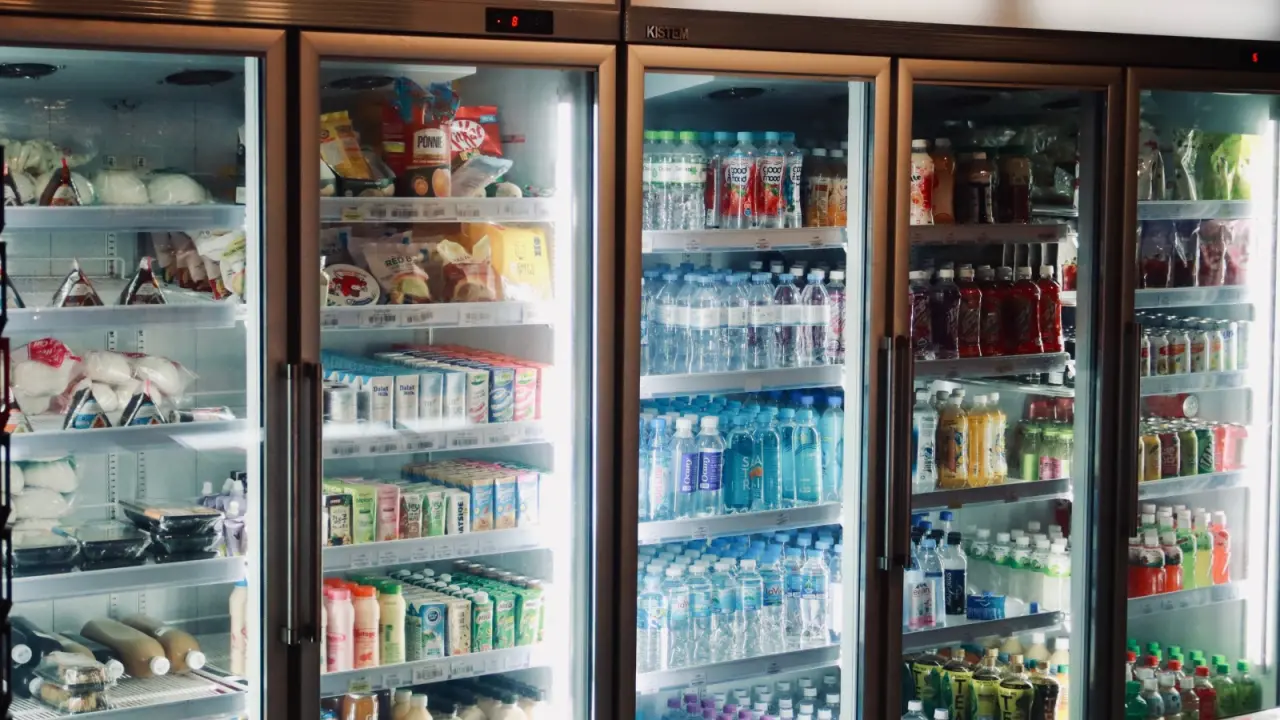
What the incident data tells a supply-chain manager
The operational facts are blunt. Local refrigeration services providers in Belgium estimated that at least 20 refrigeration systems were compromised, while affected brands in that market included Ahold Delhaize, Delhaize, Carrefour and Spar. The attack is reported to have begun around midnight on Sunday, and many store teams discovered the damage only hours later. Some cases saw temperatures around 50 degrees Celsius; in other reports, units were pushed above 50 degrees Celsius. That combination of timing and temperature matters. It converts overnight replenishment into a disposal event and turns inventory visibility into a question of provenance, product safety and recovery speed.
Public reporting also gives a useful scale reference. Reuters, citing the Les Mousquetaires group, described roughly 150 Intermarché stores affected in France, while BBC reported that Carrefour said 80 of about 6,000 stores were hit. Those numbers are not identical to the latest incident, but they establish why supply-chain teams should care: a localized control failure can become a retail network event within a single business day.
A compact read of the numbers
| Signal | Reported figure or detail | Supply-chain interpretation |
|---|---|---|
| Belgian asset exposure | At least 20 refrigeration systems | Confirmed asset counts may understate risk, because operators often see only systems with visible temperature loss. |
| Physical control effect | Around 50 degrees Celsius; some cases above 50 degrees Celsius | Food categories with narrow thermal tolerances can become unsaleable before staff arrive. |
| Earlier France precedent | About 150 Intermarché stores and 80 Carrefour stores in public reporting | Distributed retail footprints can experience simultaneous loss across many receiving points. |
| Recurring exposure | Several weeks earlier and a new wave across Europe | Patch and network hygiene gaps are not closed by one incident response alone. |
Case view: Sweden and Belgium show how quickly shrink spreads
In Sweden, ICA and Coop outlets reported problems overnight, with store notices and social-media updates telling customers that refrigeration was being restored. In Stockholm, one shop publicly stated that all frozen equipment was unavailable because of a cyberattack. Guardian reporting also described an ICA store in Sjöbo, southern Sweden, where the affected equipment was set to 50 degrees Celsius. These examples show the same operational chain: a remote control change, a delayed human discovery, then a rapid shift from temperature anomaly to food disposal.
The Belgian case adds the supplier dimension. Centre for Cybersecurity Belgium said it was aware of attacks targeting supermarket refrigeration systems and was monitoring developments. Sabcobel, which works on connected refrigeration environments for retailers, said over the past weeks it had deployed protections for customer equipment, but some fixes would still require physical hardware changes. Sabcobel chief executive Stephan Moelans said the method matched the French episode and described a pattern of exploiting defrost functions to create heat.
Why the attack works: defrost commands are business logic, not exotic malware
Refrigeration defrost is a legitimate maintenance mode. In normal operation, it runs for a controlled period to clear ice from an evaporator, then returns to cooling. The attack abuse appears simple: scan internet-exposed controllers, exploit authentication or web-management weaknesses, then issue commands that look valid. Once defrost is forced into a continuous state, the system may no longer respond to expected cooling logic. That creates a difficult operational scenario: equipment can remain online, telemetry can be misleading, and the store team sees only a delayed physical outcome.
The hidden single-point risk in a common control platform
A procurement lesson is vendor and control-platform concentration. Facilities Dive noted that the U.S. Cybersecurity and Infrastructure Security Agency published an advisory concerning an authentication flaw in Danfoss's AK-SM 800A system, and Cybersecurity Dive referenced Claroty research about flaws in the web management interface of such controllers. Danfoss has also said, according to public reporting, that affected French units ran outdated firmware. None of that proves every supermarket uses the same configuration, but it does show why retail and manufacturing networks should treat connected controls as OT assets, not simple smart devices. A small number of controllers can connect to a fleet of cases, cold rooms, compressors and alarm relays. If those controllers sit on flat networks, one exposed portal can create multi-site exposure.
Action recommendations for procurement, operations and risk owners
- Inventory the connected cold chain first. Map every refrigeration controller, gateway, remote-management portal, vendor maintenance path and temperature sensor. Include model, firmware level, patch status and which teams can log in remotely.
- Eliminate direct public exposure for field devices. Replace open remote access with a controlled path: private connectivity, certificate-based authentication, allowlisted administrative access, session logging and time-bound maintenance credentials.
- Add firmware assurance to supplier contracts. Require vendors to disclose vulnerabilities, supported firmware ranges, patch windows and rollback plans. Where devices are legacy, define a replacement date rather than an open-ended support expectation.
- Turn temperature and command logs into operational controls. Alerts should be triggered not only by rising store temperature, but by abnormal defrost duration, compressor stop, setpoint change, authentication anomaly or loss of local control authority.
- Pre-agree disposal, traceability and insurance steps. When a cold room is compromised, supply-chain teams need a clear rule: quarantine, batch record review, disposal authorization, carrier notification and supplier recovery claim process.
- Build response capacity that is not only software. Sabcobel's comments indicate that some fixes need physical hardware work. Operations should maintain access to spare controllers, emergency portable cold storage and temporary receiving routes.
Common misconceptions to avoid
- “The temperature alarm is enough.” Alarms can miss the control change if the system reports the malicious command as authorized. Cross-check command logs with compressor state, defrost state and setpoint history.
- “A newer device is automatically safer.” If old firmware, open ports or vendor remote support remain, newer equipment can still be compromised.
- “Cyber risk belongs to IT alone.” For food, pharmaceutical and industrial buyers, temperature loss creates inventory liability, customer-service failures and compliance evidence gaps.
FAQ: managing supermarket cold-chain cyber risk after the freezer attack
Is this mainly a food-safety event or an OT cybersecurity event?
It is both. The food-safety consequence is visible through spoiled meat, dairy and frozen goods. The cybersecurity cause sits in remote access, controller authentication, firmware maintenance and network segmentation. Treating it as one or the other leaves a gap.
Should retailers stop using remote monitoring?
No. Remote monitoring is still valuable for energy use, preventive maintenance and shrink reduction. The safer approach is to limit how that monitoring is reachable and to make command integrity auditable.
What should a supply-chain manager ask the vendor tomorrow?
Ask for the current firmware baseline, known vulnerabilities, whether the management interface can be disabled from the internet, how vendor support sessions are authenticated, and whether the controller supports secure logging of defrost and setpoint changes.
Does the missing attribution reduce urgency?
No. The lack of confirmed attribution or a claim of responsibility may mean the motive is still unclear, but the operational method has already produced physical loss across Europe. For supply-chain risk, demonstrated impact matters more than attribution certainty.
The supermarket freezer attacks are not a sign that cold chains must be abandoned. They are a reminder that when inventory controls are embedded in connected assets, the procurement team inherits part of the cyber risk. The most practical response is to make the cold chain visible, segmented, version-controlled and operationally recoverable before the next anomaly occurs at around 50 degrees Celsius.