
WorldIndustrialWeekly SmartManufacturing: Siemens and NVIDIA Pair cuLitho with Calibre for 10x to 17x Lithography Gains
For SmartManufacturing readers at WorldIndustrialWeekly, the most important signal is not simply another compute performance claim. Siemens and NVIDIA report expanded collaboration in computational lithography. The integration of NVIDIA cuLitho, a CUDA-X library designed for GPU-accelerated lithography simulation, with Calibre manufacturing software addresses advanced chip patterning where runtime constraints shape schedules. The reported gains center on High-NA EUV and curvilinear approaches such as Inverse Lithography Technology. Verified engineering data shows at least 10x to 17x speedups for key simulation workloads, which can support fuller optimization, earlier hotspot detection, and stronger manufacturing readiness for next-generation AI semiconductors.
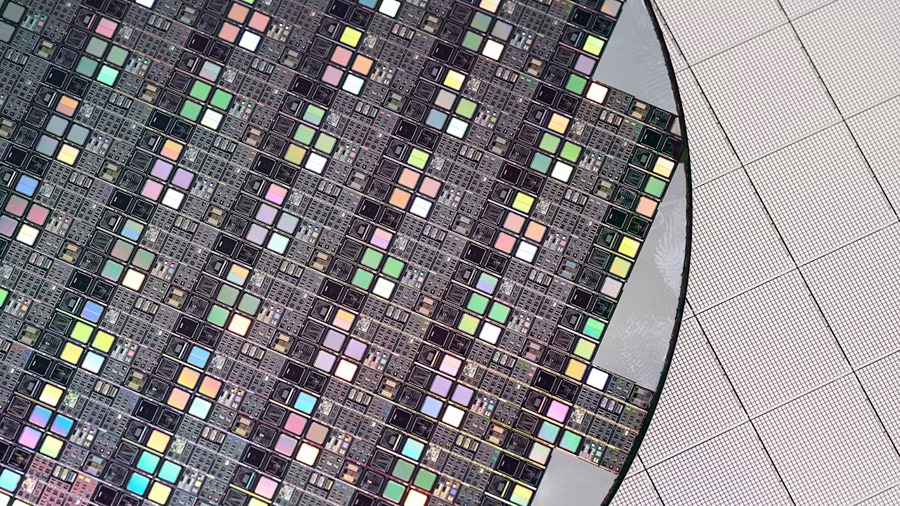
The runtime wall.
Advanced process nodes have made lithographic patterning complexity grow exponentially. Traditional optical proximity correction (OPC) and computational lithography workflows now face a runtime wall. High-NA EUV requires very large computational resources, and curvilinear methods such as Inverse Lithography Technology (ILT) add another layer of workload intensity.
When essential techniques are not accelerated, teams often cannot apply them at full-chip, manufacturing-scale deployment without slowing schedules. The practical effect is a trade-off: deeper optimization competes with project timelines. That trade-off can increase the risk of lithographic hotspots and reduce process margins, particularly for the most advanced AI compute and memory devices.
How GPU-accelerated patterning changes the execution path
Siemens and NVIDIA are presenting the runtime issue as a target for GPU-accelerated lithography simulation. The collaboration pairs NVIDIA cuLitho, a CUDA-X library, with Calibre manufacturing software so advanced patterning workloads can move from schedule-limited execution toward more complete simulation coverage. It is positioned as at least 10x acceleration for key lithography simulation workloads, letting manufacturers run more comprehensive optimization and identify potential hotspots before tapeout.
Verified speedups and measurable value
The reported engineering data supports simulation speed-ups ranging from at least 10x to 17x for key workloads. For semiconductor manufacturers and mask manufacturers, this evidence is most useful when it links to production decisions: shorter runtimes allow more iterations in less time, earlier identification of lithographic hotspots, and improved process margins before tapeout.
The same performance change can make full-chip curvilinear patterning practical for High-NA EUV production. It can also support manufacturing readiness and deployment of new AI silicon, because patterning validation is no longer forced to stop as deep as schedule pressure requires.
Before and after: simulation workload effects
| Manufacturing pressure | Runtime-limited workflow | GPU-accelerated workflow described in the update |
|---|---|---|
| Advanced node optimization | OPC and computational lithography may be too slow for full-chip, manufacturing-scale deployment. | cuLitho plus Calibre targets High-NA EUV and curvilinear workloads. |
| Iteration capacity | Optimization depth trades against schedule. | Shorter simulation runtimes allow more iterations. |
| Hotspot control | Hotspots may be detected late. | Teams can identify potential hotspots before tapeout. |
| Process margin | Reduced margins can affect yield in advanced AI compute and memory devices. | Earlier margin review is enabled before tapeout. |
Adoption checklist for SmartManufacturing teams
- Confirm that the organization is moving toward High-NA EUV or curvilinear patterning methods such as Inverse Lithography Technology (ILT).
- Map the OPC and computational lithography steps that face a runtime wall. at full-chip scale.
- Evaluate whether NVIDIA cuLitho, a CUDA-X library, can be paired with Calibre in the current manufacturing-software stack.
- Require verified engineering data for the specific key workloads, not a general marketing speed claim.
- Define review gates for lithographic hotspots and process margins before tapeout.
- Include mask manufacturers in workload planning, because the reported benefits address semiconductor and mask manufacturing.
- Track how additional iterations affect manufacturing readiness for next-generation AI semiconductors.
Step-by-step implementation tutorial
- Baseline current runtime behavior for full-chip lithography simulation and identify schedule-limited workloads.
- Isolate the workloads tied to High-NA EUV and curvilinear methods, including ILT.
- Compare the existing computational lithography path with the cuLitho and Calibre integration model described by Siemens and NVIDIA.
- Measure whether the pilot delivers at least 10x acceleration for key simulation tasks and check the broader at least 10x to 17x range for reported workloads.
- Use saved runtime to increase optimization depth and move hotspot detection earlier in the schedule.
- Validate the impact on process margins, tapeout readiness, and deployment timelines for new AI silicon.
Common pitfalls
- Assuming every workload will move at 10x to 17x without checking the key-workload basis.
- Treating GPU acceleration as isolated compute speed rather than a change to full-chip manufacturability decisions.
- Letting the runtime wall. reappear through manual handoffs that cannot absorb more iterations.
- Ignoring mask-side coordination when the update includes semiconductor and mask manufacturers.
- Failing to connect earlier hotspot detection to process-margin and yield outcomes.
FAQ: What the Siemens and NVIDIA lithography update means for manufacturing
What problem does the update address?
It addresses the runtime wall. facing advanced chip patterning, especially High-NA EUV and curvilinear methods such as Inverse Lithography Technology.
Which software components are involved?
NVIDIA cuLitho, a CUDA-X library, and Calibre manufacturing software.
What performance range is reported?
The reported verified data supports at least 10x to 17x speedups for key simulation workloads, including at least 10x acceleration for the workloads highlighted by the collaboration.
Why does faster simulation matter beyond engineering?
It can shorten iteration cycles, support earlier hotspot detection, improve margins before tapeout, and help advanced AI compute and memory devices reach manufacturing readiness more effectively.
Action recommendations for production and digital operations leaders
WorldIndustrialWeekly's SmartManufacturing lens suggests treating this update as an industrial-software decision point rather than a component announcement. The question for a production organization is whether faster simulation can change the operating sequence: more iterations, earlier hotspot review, and better margin control before tapeout. If advanced-node roadmaps already face a runtime wall., use the Siemens and NVIDIA integration around cuLitho and Calibre as a reference model for evaluating computational-lithography acceleration.
Next steps
- Review the current lithography simulation backlog and schedule pressure.
- Identify the key workloads where High-NA EUV or curvilinear methods create the most runtime burden.
- Validate that the integration path between NVIDIA cuLitho, CUDA-X, and Calibre can fit existing manufacturing software governance.
- Measure whether shorter runtimes translate into fuller optimization, earlier hotspot detection, and improved process margins.
- Align chip-design, mask-production, and manufacturing-readiness timelines so the reported speedups support operational decisions.