
Depalletizing 80 Boxes an Hour: A Practical Guide to Putting AgiBot's Genie G2 Max on Your Warehouse Floor
By Michael Torres — WorldIndustrialWeekly, Logistics Desk
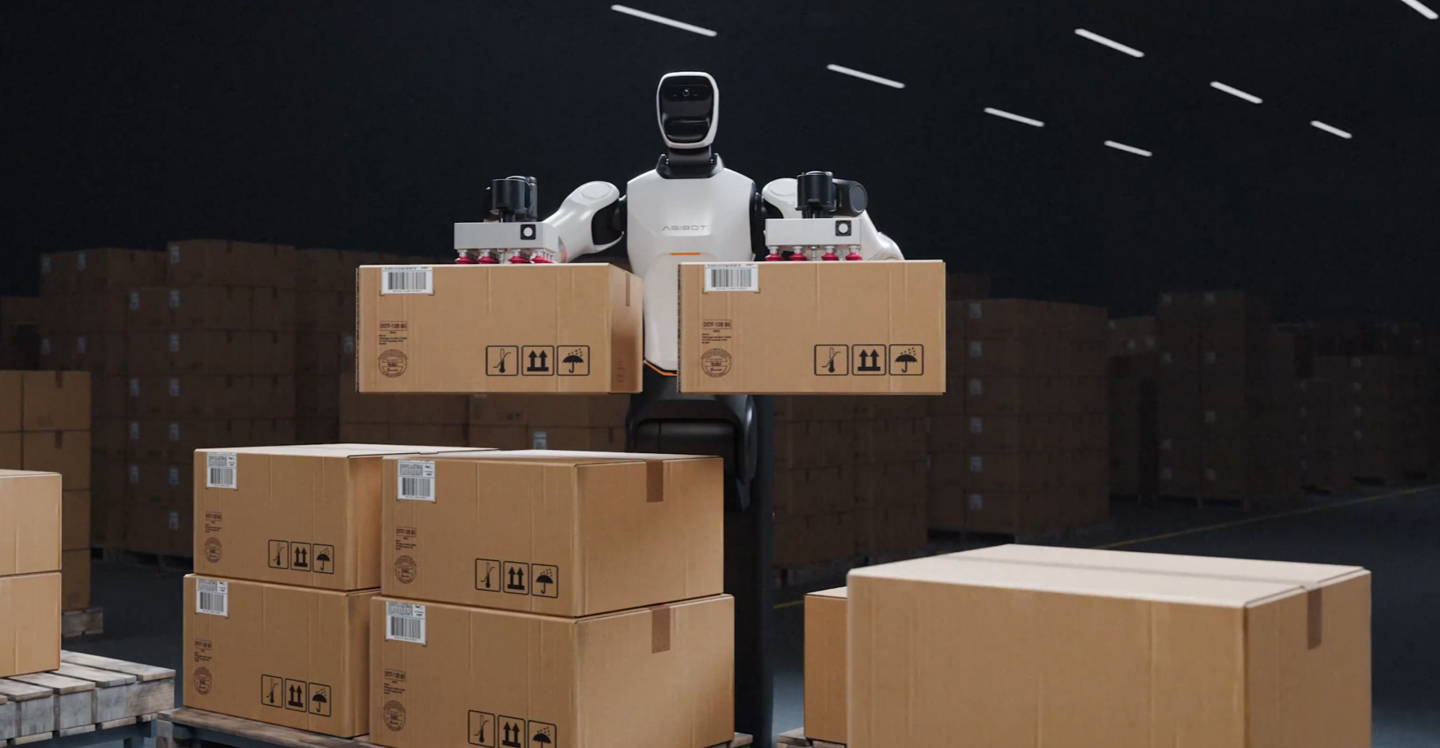
Short answer: treat the launch numbers as your pilot acceptance test, not as a buying argument. AgiBot released its safety-rated, heavy-load embodied robot, the Genie G2 Max, today, October 26, for depalletizing, material transfer and line feeding. It is rated at 20 kg per arm and 40 kg dual-arm, reaches a 50 kg peak, and holds arm repeat positioning accuracy of ±0.5 mm or better. It is already running on several production lines: in an e-commerce warehouse it depalletizes 80 boxes per hour and palletizes 75, at a task success rate above 99%.
Launch coverage usually stops at the spec sheet. A plant logistics manager has a narrower job: identify the fixed slice of inbound work this machine can absorb, figure out what has to change in the cell around it, and prove the case before a fleet order is signed. The sections below follow that sequence — positioning, comparison, deployment steps, failure modes and a 90-day action list.
What is the Genie G2 Max in logistics terms?
Conclusion: it is a payload-class gap filler, sitting between a fixed palletizing cell and a tote-moving mobile robot. A conventional articulated palletizer can run hundreds of cases an hour but is effectively locked to one pattern and one station; a tote AMR is flexible but cannot pull a 40 kg crate out of a trailer. A heavy-duty humanoid with force-controlled arms is the first of the three that can do both, in the same shift, without new conveyoring.
| Stated parameter | Value | What a logistics planner should read into it |
|---|---|---|
| Single-arm payload | 20 kg | Covers a fully loaded standard tote or a dense carton without a lift assist. |
| Dual-arm rated payload | 40 kg | Two-handled crates, drums and small unit loads — the weight band behind most manual-handling claims. |
| Dual-arm peak payload | up to 50 kg | Occasional out-of-band picks only. Do not build steady-state throughput on the peak figure. |
| Arm repeat positioning accuracy | ≤ ±0.5 mm | Allows the same machine to feed a machine infeed or a rack slot, not just dump cases onto a pallet. |
| Depalletizing rate | 80 boxes per hour | About one box every 45 seconds; benchmark it against your own unload crew, per shift. |
| Palletizing rate | 75 boxes per hour | Pattern-building speed. Test it with your most deformed carton, not the vendor's demo box. |
| Task success rate | above 99% | Fewer than roughly 10 exceptions per 1,000 moves. That is the number to write into an acceptance gate. |
| Operating window | 24 hours, uninterrupted | Removes shift handovers and night cover — but only if battery handling and jam recovery are staffed or automated. |
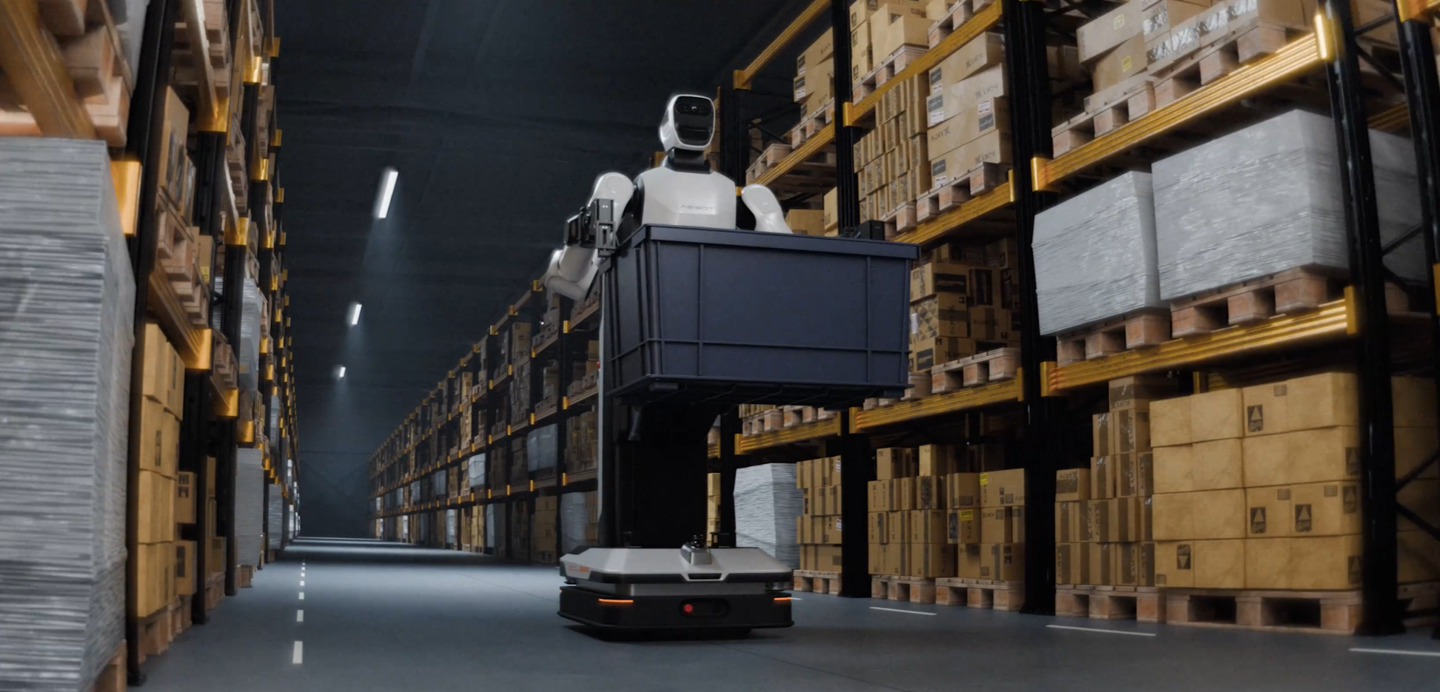
AgiBot's product material adds two details that matter for retrofits into live buildings: the machine carries 21 whole-body degrees of freedom, an active waist-pitch joint for posture adjustment against existing line geometry, and a vertical working envelope of roughly 0.1 to 2.5 metres, on an omnidirectional wheeled base. In practice that means it can serve multi-column tote lanes and high pallet stacking within human reach, while everything above 2.5 metres stays with ASRS or goods-to-person equipment.

Where has it actually been run?
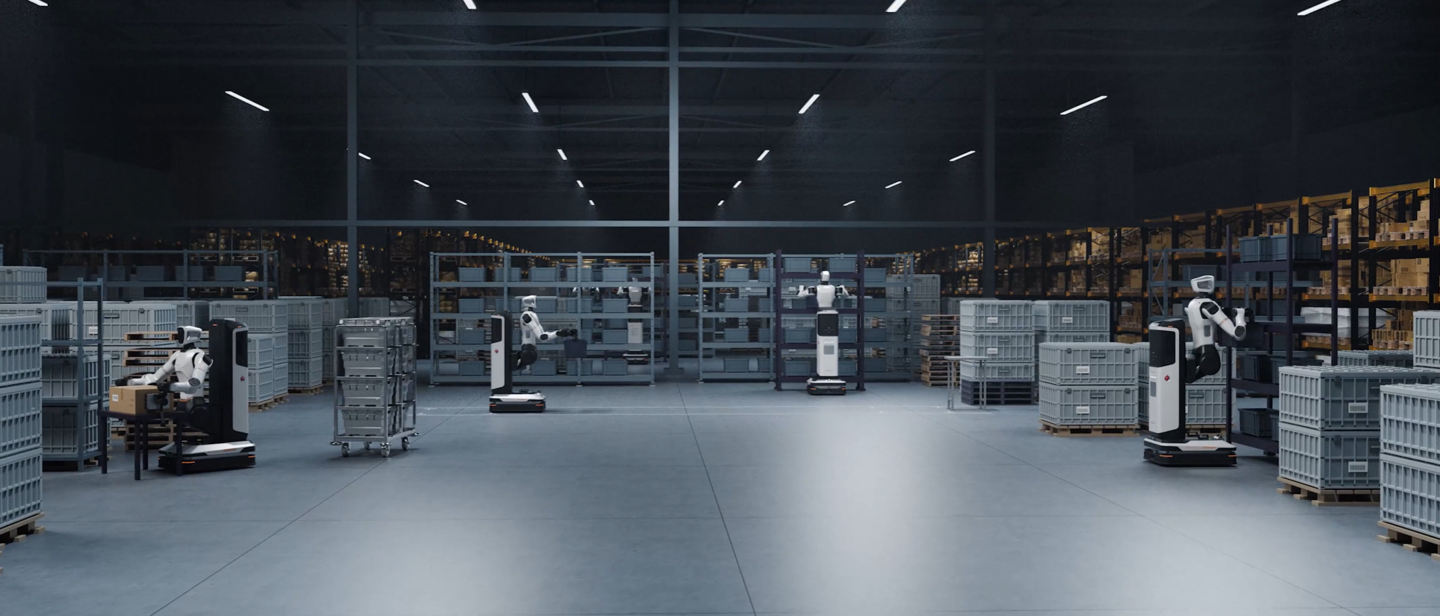
Conclusion: the reference value here is production, not demonstration. Per AgiBot's disclosure, the G2 Max is already in operation on multiple production lines, and the e-commerce warehouse figures above — 80 boxes an hour depalletized, 75 palletized, success rate above 99% — come from live work rather than a staged test.
The warehouse story started earlier this year. Back in July, at the 2026 World Artificial Intelligence Conference (WAIC), JD Logistics and AgiBot jointly introduced the new generation of safety-rated heavy-load embodied robot, the Genie G2 Max, and announced that it would be deployed in JD Logistics' Zhilang warehouse — the first time a humanoid robot has been placed inside a real warehouse production environment rather than a lab. IT Home noted that the robot is positioned at the inbound stage, where staff would otherwise lift, sort and restack goods case by case before they enter the storage loop.
That placement is the instructive part. A JD Logistics Zhilang business lead, quoted by IT Home at the launch, pointed out that goods-to-person automation had already shifted the outbound side — to the point that warehouse employees' average daily step count could drop by 20,000 to 30,000 steps — and that the humanoid was brought in to cut physical workload and raise efficiency at inbound. Trade media covering the Zhilang site describe a system that works the full height of the building, up to roughly 12 metres of cubic space, with hundreds of robots and around three times the outbound picking efficiency of a conventional warehouse. Heavy-duty humanoids are therefore being slotted into the unstructured end of the flow, not into the racks.
How does it compare with the options already on your shortlist?
Conclusion: choose by task structure, not by novelty. Mixed, deformable, multi-SKU inbound work is where the humanoid earns its keep; single high-volume patterns still belong to fixed automation.
| Option | Throughput behaviour | Flexibility / changeover | Installation load | Best-fit task |
|---|---|---|---|---|
| Fixed articulated palletizer | High and stable on one pattern | Low; pattern and fixture changes take hours | Caged cell, foundations, guarding | Monolithic outbound pallet building |
| Goods-to-person robot fleet | Scales with fleet size | Medium; storage logic must be re-planned | Racking, charging docks, WMS re-architecture | Outbound picking density and cube utilisation |
| Tote AMR with lift module | Steady, route-dependent | High for routes, low for the load itself | Mapping, traffic management, drop points | Horizontal transfer of standardised totes |
| Heavy-duty humanoid (Genie G2 Max) | 80 boxes/hour depalletizing, 75 palletizing, above 99% success | High; same machine re-sequences across infeed, transfer and stacking | Smallest of the four — reuses existing lanes and rack heights within 2.5 m | Trailer break-down, mixed-load depalletizing, line feeding |
| Manual crew with lift assist | Shift-dependent, fatigue-curved | Highest | None, but training and injury exposure | Exceptions, damaged loads, low-volume SKUs |
The comparison is not a replacement matrix. In the JD Logistics case, goods-to-person robots and the humanoid sit in the same building because they solve different ends of the order flow. Most plants will end up with a hybrid: fixed and semi-automated equipment on the predictable lanes, a heavy-duty humanoid plus a small manual crew on the exceptions.
How do you move from spec sheet to a production cell?
Conclusion: run it as a gated project with six steps, and make the vendor hit your numbers before your site hits their deadline.
- Baseline the station before anyone visits. Record two shifts at the trailer or tote station: boxes moved per person-hour, exception types (deformed cartons, mixed SKUs, leftover shrink wrap, wrong pallets), and the queue behind the station. Deliverable: a cost-per-move and units-per-hour target that the 80/75 box figures must beat once changeover and recovery time are netted out.
- Profile the load, not the demo. Log weights, dimensions, carton condition and pallet patterns for your top 20 SKUs. Anything that needs more than the 40 kg dual-arm rating, or that requires the 50 kg peak to sustain, is excluded from phase one and stays on the manual list.
- Write the safety concept first. "Safety-rated" is a design attribute, not a clearance. OSHA's robotics guidance points integrators to ISO 10218-1 and ISO 10218-2 for robot and system integration, and to ISO/TS 15066 for collaborative operation — the latter requires a documented risk assessment of the whole workcell, including force and power limits, stop behaviour and the human intervention path. Make this the vendor's deliverable, signed off by your EHS lead.
- Define the systems handshake. Name one owner for the work-order interface between robot fleet, WMS and MES. Specify what flows in (task queue, SKU master, pallet pattern), what flows back (completion, exception, downtime codes), how barcode or RFID reads are validated, and how a stalled task re-queues to a human. A robot without exception routing becomes an operator with a phone.
- Prepare the cell, not just the robot. Check floor flatness and expansion joints for the wheeled base, network coverage in the aisle rather than at the dock, power runs for charging or hot-swap battery handling, spare end-effectors, lighting and contrast at the pick face, and the 2.5-metre reach ceiling against your actual rack and pallet heights.
- Gate the pilot. Week one to two under supervision on a single shift; then unattended 24-hour windows. Gates: sustained task success rate above 99%, 80 boxes per hour depalletizing and 75 palletizing on your SKU mix, mean time between failures, jams per shift, cost per move, and zero recordables during exception handling. Fleet expansion is approved only on measured shift averages.
What usually goes wrong in these pilots
- Planning on peak numbers. The 50 kg peak and a best-case cycle are marketing values; your business case should be built on the 40 kg rated dual-arm payload and a mixed-SKU shift average.
- Confusing repeatability with accuracy. An arm that repeats within ±0.5 mm still has to find a crushed carton face. Perception variance, not kinematics, drives most failures.
- Automating the wrong constraint. If the inbound bottleneck is trailer wait and strip time, a faster box-mover changes cost per box but not dock-to-stock lead time. Measure labour cost per inbound trailer.
- No named exception handler per shift. Unattended 24-hour operation collapses the moment one pallet is mis-built, and you end up staffing shadow operators beside the robot.
- Assuming the safety rating removes your obligations. The workcell risk assessment, guarding decisions and lockout routine remain the site's responsibility.
- No data logging from day one. Without per-task logs you cannot defend the capital request, and the vendor cannot tune the skill library.
- Ignoring battery logistics. A 24-hour claim requires a charging or hot-swap plan, shift rostered to it, inside the cell footprint.
What should a logistics lead do in the next 90 days
- Days 1-30: select one inbound station, capture two shifts of baseline, and produce the SKU and load profile plus an exception log.
- Days 31-60: issue a written pilot spec — throughput targets, success-rate threshold, safety concept under ISO 10218-2 and ISO/TS 15066, WMS interface owner, cell preparation list — and request both a capital quote and a multi-year robotics-as-a-service quote for the same scope.
- Days 61-90: run a supervised two-week pilot on the acceptance sheet, then publish cost per move, availability and downtime to finance before any fleet decision.
The commercial framing deserves attention here: robotics-as-a-service has become the default route for humanoids into logistics. GXO Logistics and Agility Robotics, for example, signed a multi-year RaaS agreement in June 2024 and are now extending deployment of the Digit robot to two further U.S. sites, in Statesville, North Carolina, and Lebanon, Tennessee, with operations expected from early 2027. Evaluating a rental-style per-task price alongside a purchase price is the fastest way to expose the real five-year cost of a fleet.
Labour availability, not wage arbitrage, is the sharper driver. Industry trackers citing U.S. Bureau of Labor Statistics data report a separation rate of 3.6% against a hire rate of 4.1% in warehousing and storage in 2024, and note that 34% of warehouses rank labour availability and quality as their single biggest operational constraint. On that basis, a heavy-duty humanoid is best justified where turnover is highest and the work is most physically punishing — inbound break-down first.
FAQ: what procurement asks first
Does the Genie G2 Max replace a palletizing robot?
No. It replaces the manual step around it. Fixed palletizers stay faster and cheaper on one high-volume pattern; the humanoid wins where patterns, SKUs and pallet conditions change by the trailer — the 80 boxes per hour depalletizing and 75 palletizing figures are useful precisely because that work is unstructured.
What payload should we plan on?
20 kg per arm and 40 kg dual-arm rated. The 50 kg figure is a peak allowance for occasional picks and should not appear in a throughput model. Repeat positioning accuracy of ±0.5 mm is what makes machine infeeding, rather than loose stacking, feasible.
Is a safety-rated humanoid fence-free?
Do not assume so. The rating describes the machine; the operating mode is decided by your risk assessment under ISO 10218-2 and ISO/TS 15066. Expect area scanners, reduced-speed zones, e-stops and a defined human-entry routine even where a full cage is not required.
Which sites are the right first candidates?
Multi-shift inbound operations with mixed cartons, existing racking that a 2.5-metre reach can serve, a WMS that can queue discrete tasks, and a documented turnover problem at the unload station. Single-shift, single-SKU operations will struggle to clear a payback hurdle.
How should success be measured?
Four numbers on your SKUs: boxes per hour, task success rate against the above 99% benchmark, exceptions per 1,000 moves, and fully loaded cost per move — including the exception handler, energy, battery cycling and support. Anything else is a demo metric.
References
- AgiBot, product announcement and specifications for the Genie series at WAIC 2026 — https://www.agibot.com/article/231/detail/85.html
- OSHA, Robotics standards page (ISO 10218-1, ISO 10218-2, ISO/TS 15066) — https://www.osha.gov/robotics/standards
- OSHA, Warehousing hazards and solutions — https://www.osha.gov/warehousing/hazards-solutions
- Agility Robotics, expanded GXO deployment of Digit — https://www.agilityrobotics.com/content/gxo-and-agility-robotics-expand-partnership-to-accelerate-deployment-of-humanoids-in-u-s-operations
- IBISWorld, General Warehousing and Storage in the US — https://www.ibisworld.com/united-states/industry/general-warehousing-storage/1224/
- MHI, 2026 Annual Industry Report — https://www.mhi.org/
- AGV Network, deployment of the G2 Max in JD Logistics' Zhilang warehouse — https://m.chinaagv.com/news/detail/202610/37523.html