
NXP S32K5 and Volkswagen Group's Zonal SDV Case: A 2027 Benchmark for WorldIndustrialWeekly General
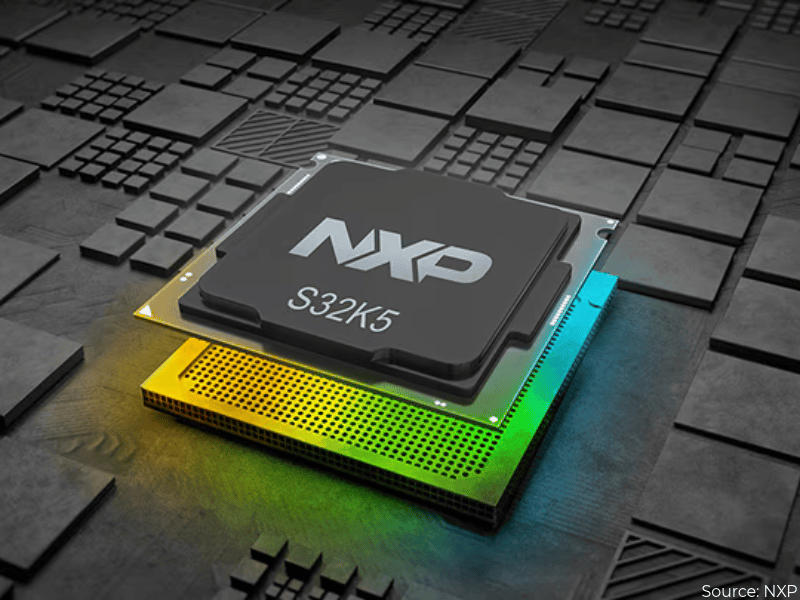
The industrial takeaway from the Volkswagen Group and NXP Semiconductors agreement is standardization pressure: NXP S32K5 will anchor a software-defined vehicle architecture, with the first vehicle timed for 2027, after the news surfaced ahead of the International Suppliers Fair (IZB) in Wolfsburg, Germany.
Why a microcontroller choice reads as a manufacturing signal
For WorldIndustrialWeekly General readers, the decision is not simply a new component list for one vehicle brand. The architecture is being developed by Rivian and Volkswagen Group Technologies (RV Tech), the joint venture between Volkswagen and Rivian. Its reach across multiple Volkswagen Group brands, vehicle segments, and Rivian vehicles makes it a test case for how firms can trade bespoke electronic hardware for shared digital foundations.
Conventional vehicle programs rely on numerous dedicated electronic control units, or ECUs, each carrying a narrower role. Zonal systems consolidate multiple functions into fewer controllers. The described effect is to reduce the number of chips and ECUs required while simplifying vehicle development and component management. For operations teams, that is closer to a platform decision than a purchase decision.
Case snapshot: facts, anchors, and dates
- Core semiconductor family: NXP S32K5, supplied by NXP Semiconductors.
- Scheduled first vehicle year: 2027.
- Announcement timing: ahead of the International Suppliers Fair (IZB) in Wolfsburg, Germany.
- Architecture developer: Rivian and Volkswagen Group Technologies (RV Tech).
- Group strategy alignment: Group Target Picture 2030.
- Function split: NXP's MCUs connect sensors and actuators, process data from different vehicle zones, and manage functions including lighting, comfort, chassis and safety systems.
- Central compute: high-performance processors handle more demanding workloads, including AI-enabled automated driving and advanced infotainment.
Our future zonal architecture, developed by RV Tech and supported by strategic technology partners such as NXP, creates a scalable technology foundation for multiple Group brands and vehicle segments. By harmonizing key technologies across the Group, we reduce complexity, leverage scale and accelerate innovation while enabling advanced digital capabilities. This allows us to bring digital innovations to our customers faster and continuously enhance our vehicles throughout their lifecycle,
Werner Tietz, Volkswagen Group executive committee member responsible for research and development.
From chip supply to long-term planning certainty
The agreement also supports Volkswagen's broader semiconductor strategy, which focuses on long-term supplier relationships, technology standardization and improved supply resilience. By defining semiconductor requirements earlier and using common components across brands, Volkswagen aims to achieve economies of scale and greater planning certainty for future vehicle platforms.
For NXP, the selection strengthens its position in the automotive SDV market, where real-time processing, functional safety and secure over-the-air software updates are becoming increasingly important. The case therefore sits at the intersection of component procurement, software governance, and industrial scalability.
Intelligent, software-defined vehicles must operate safely, securely and reliably. Together with Volkswagen Group and RV Tech, NXP is bringing scalable real-time compute, trusted edge intelligence and continuous software innovation together to create a scalable foundation for the next generation of intelligent vehicles,
Rafael Sotomayor, president and CEO of NXP Semiconductors.
What the zonal architecture actually changes
| Dimension | Conventional architecture | Described zonal architecture |
|---|---|---|
| Controller count | Numerous dedicated ECUs | Fewer consolidated controllers |
| MCU role | Not described in source | NXP MCUs connect sensors and actuators, process zone data, manage lighting, comfort, chassis and safety systems |
| Central processing | Not described in source | High-performance processors handle AI-enabled automated driving and advanced infotainment |
| Deployment logic | Programs use many ECU types | Scalable foundation for multiple Volkswagen Group brands and vehicle segments, as well as Rivian vehicles, while allowing differentiated features |
The table should be read as a mapping of the source facts, not as a claim about performance gains beyond the stated effects: fewer chips and ECUs, simplified development, and component management.
Common misconceptions to avoid
- Assuming that fewer ECUs means a single all-powerful controller. The described split places lighting, comfort, chassis and safety systems on NXP's MCUs, while central processors carry more demanding workloads such as AI-enabled automated driving and advanced infotainment.
- Treating the agreement as a simple purchase order. It also reinforces an industrial path built on earlier semiconductor requirement definition, common components across brands, long-term supplier relationships, technology standardization, and improved supply resilience.
- Thinking standardization removes brand differentiation. The architecture is designed for deployment across Volkswagen Group brands and vehicle segments, as well as Rivian vehicles, while allowing manufacturers to offer differentiated features.
Action suggestions for industrial teams
For managers in manufacturing, procurement, engineering, and technology planning, the case offers a practical checklist rather than a brand-specific endorsement. The first action is to move semiconductor or controller requirements into earlier program reviews, so that platform teams can judge whether a standardized microcontroller family can serve multiple products instead of one project. The second is to map component commonality across brands, segments, and joint ventures, because the stated benefit is scale and planning certainty.
A third action is to examine whether fewer controllers change assembly, software validation, and service processes, since the source description connects consolidation to simplified vehicle development and component management. A fourth is to track functional safety and secure over-the-air software update requirements, which the article identifies as increasingly important in the automotive SDV market.
Finally, decision-makers should monitor whether a supplier relationship is being used as a long-term resilience instrument, not only a delivery contract. Volkswagen's approach, as described, is tied to Group Target Picture 2030 and to harmonizing key technologies across brands and regions.
FAQ: What this announcement means for WorldIndustrialWeekly readers
Which component has Volkswagen Group chosen for its next-generation software-defined vehicle architecture?
NXP S32K5, from NXP Semiconductors, is described as a core component of the architecture, with the first vehicle scheduled for 2027.
Who is developing the architecture?
Rivian and Volkswagen Group Technologies (RV Tech), the joint venture between Volkswagen and Rivian.
Why is the zonal approach relevant beyond automotive engineering?
Because it demonstrates how standardized hardware platforms can reduce the number of chips and ECUs while simplifying development and component management, a pattern that can influence other industrial equipment programs.
Which strategic framework is connected to the partnership?
Group Target Picture 2030, which aligns with harmonizing key technologies across brands and regions.
Where was the agreement announced before?
The news was released ahead of the International Suppliers Fair (IZB) in Wolfsburg, Germany.
Conclusion: A dated milestone for platform thinking
The 2027 vehicle milestone gives the Volkswagen Group and NXP Semiconductors arrangement a concrete test date. The broader industrial message is that component choice is becoming an operating model: NXP S32K5 supports a zonal architecture that reduces ECU complexity, spans multiple brands and vehicle segments, and aims to support continuous software innovation. Readers tracking manufacturing, automation, and supply-chain strategy should watch how RV Tech, Volkswagen, Rivian, and NXP handle the transition from standardized silicon to scalable digital products.