
Three US Nuclear Restarts by Holtec, Constellation and NextEra: A 2.25 GW Play for AI Power Demand
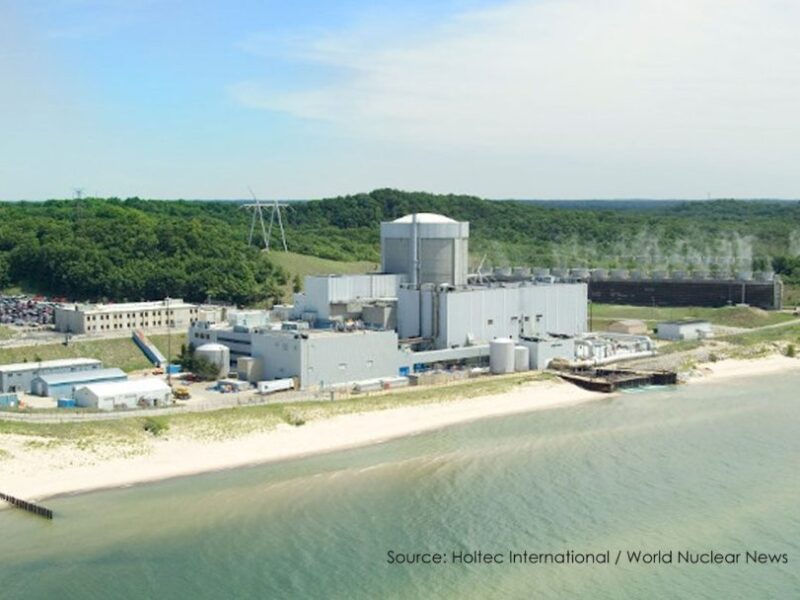
For plant engineers, energy managers and supply-chain teams, nuclear restart news is no longer a niche utility topic. It is becoming a capacity-planning signal because hyperscale electricity demand is forcing the market to reassess retired assets. Three US nuclear restart programmes, led by Holtec, Constellation and NextEra, are attempting to restore 2.25 GW while long-term purchase commitments from Microsoft and Google help underwrite the commercial case.
The story also matters because the sites were not abandoned due to a single safety event. They were retired mainly because their economics weakened. Now, rising power needs—especially loads measured in hundreds of megawatts—are changing how public lenders, utilities and corporate buyers view the value of existing nuclear infrastructure.
Three restart cases at a glance
The package can be understood as three separate industrial projects that share one demand environment. Each has a different site history, regulator path and financing structure.
| Restart case | Site and operator | Technical baseline | Current schedule | Backing and funding |
|---|---|---|---|---|
| Palisades | Palisades Nuclear Plant in Michigan; Holtec International | 800 MW pressurised water reactor; closed in 2022 | Refuelling began August 2026, with fuel-handling delays reported; generation target around March 2027 | Federal financing is part of the wider programme; restart still depends on technical work and regulator sign-off |
| Crane | Former Three Mile Island nuclear facility in Pennsylvania, renamed Crane Clean Energy Center; Constellation Energy | Unit 1, an 835 MW reactor retired in 2019; separate from Unit 2, the reactor involved in the 1979 partial meltdown | Target restart in 2027 | Constellation is committing approximately $1.6 billion; the US government has provided a $1 billion loan; Microsoft has agreed to a 20-year power purchase arrangement |
| Duane Arnold | Duane Arnold Energy Center in Iowa; NextEra Energy | 615 MW boiling water reactor; shut down in 2020 | Expected to resume operations in first quarter of 2029 | Google has entered a 25-year purchase agreement; NextEra secured a federal loan of up to $1.9 billion |
Palisades: refuelling milestones matter more than headlines
The Palisades Nuclear Plant in Michigan is the most advanced of the group. Holtec International is steering the effort to return the 800 MW pressurised water reactor to service after it closed in 2022. Refuelling began in August 2026, but later fuel-handling work experienced delays. The revised electricity-generation objective is around March 2027.
This timing detail is important for industrial readers: a restart is not a one-line capital project. It is a sequence of technical, fuel, licensing and equipment actions. The schedule can move even when financing and policy support are in place.
Crane: the restart path at the former Three Mile Island site
In Pennsylvania, Constellation Energy is working on Unit 1 of the former Three Mile Island nuclear facility, now renamed Crane Clean Energy Center. The 835 MW reactor was retired in 2019 for economic reasons. The facility history requires careful separation: Unit 2 is the reactor involved in the 1979 partial meltdown, and it is distinct from the restart project.
Constellation is committing approximately $1.6 billion to the effort. The US government has provided a $1 billion loan toward refurbishment, and Microsoft has agreed to a 20-year power purchase arrangement supporting a 2027 restart target. The financing package shows how corporate offtake and public lending can combine to extend the life of an existing thermal asset.
Duane Arnold: the third restart track
The third restart track belongs to NextEra Energy at the Duane Arnold Energy Center in Iowa. The 615 MW boiling water reactor shut down in 2020 and is now expected to resume operations in the first quarter of 2029. Google has signed a 25-year electricity purchase agreement, and NextEra has secured a federal loan of up to $1.9 billion.
This longer schedule gives large users a different planning problem. It is closer to a future capacity commitment than a near-term supply replacement, but it still signals that existing reactors can be re-entered into development pipelines when load growth is credible.
Public money and demand signals
Associated Press reported that the US Department of Energy is making up to $4.4 billion available to support the three restarts. If completed, their combined output would be enough to supply approximately two million homes and businesses.
Earlier eeNews Europe coverage of AI infrastructure power requirements examined why this demand trend is not only a technology sector issue. Continuous load availability, grid connection timelines and site power quality have become practical constraints for data-centre expansion. Restarting a plant can reduce some of those constraints because the site already has grid connections, cooling systems and turbine equipment.
That said, the same infrastructure does not make the project simple. The plants still need substantial inspections, repairs and regulatory approval before they can sell power again.
Restart nuclear is not the same story as SMRs
These projects test a practical question: can retired conventional nuclear capacity be restored quickly enough to meet demand that is growing faster than many generation projects? That is different from deploying new small modular reactors. Although technology companies are investing in SMR development, most commercial projects remain several years from operation.
For decision-makers, the distinction matters. A restart can use an existing site, but it is still controlled by the US Nuclear Regulatory Commission and by the condition of legacy equipment. A new SMR may face fewer legacy constraints, but it also faces technology maturation, licensing and construction timelines that are not yet equivalent to the restart pathway.
Common misconceptions
- An announced restart date equals firm supply. The three projects still require technical execution and regulator sign-off; none of the three restored reactors is generating electricity yet.
- Existing infrastructure removes cost risk. The sites have grid connections and turbine equipment, but inspections, repairs and ageing-equipment questions remain central.
- Public lending means the market alone has validated the projects. Refurbishment costs, loan structures and public financing are still subjects of scrutiny.
- Corporate power purchase agreements guarantee immediate regional benefits. They support project finance, but commercial outcomes depend on commissioning, grid performance and load growth.
Action guidance for industrial and technology buyers
Industrial managers and procurement teams should treat these cases as staged capacity signals. Track the near-term schedule around March 2027 for Palisades, the 2027 restart target for Crane and the first quarter of 2029 expectation for Duane Arnold. Each date should be mapped to plant expansion plans, data-centre load growth and grid interconnection assumptions in the affected regions.
Buyers should also examine the contract and financing architecture. The Microsoft 20-year agreement and Google 25-year agreement show how long-term offtake can support nuclear life extension. But if the project schedule slips, the fallback question becomes important: where will load come from, who bears delay exposure, and how will public loan conditions interact with regulator outcomes?
For site operators, the practical takeaway is to separate three questions: whether the resource exists, whether the asset can be brought back into service, and whether the commercial structure can survive schedule changes. The answer on the first question is strongest; the other two remain under review.
FAQ
What is the target combined capacity?
Three US restart projects aim to restore 2.25 GW of combined generating capacity.
How much public support is reported?
The US Department of Energy is making up to $4.4 billion available, while separate financing includes a $1 billion loan from the US government and a federal loan of up to $1.9 billion for the Duane Arnold project.
Which corporate contracts are linked to the restarts?
Microsoft has agreed to a 20-year power purchase arrangement linked to Crane, and Google has entered a 25-year agreement linked to Duane Arnold.
Are the reactors producing electricity now?
No. The restart plans depend on technical work and approval from the US Nuclear Regulatory Commission, and none of the three restored reactors is generating electricity yet.