
Industrial Workforce Shift: U.S. Manufacturing Hiring Rebound Raises Credential and Automation-Skill Barriers
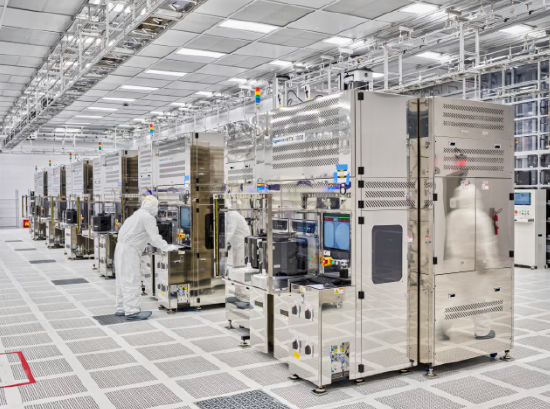
At a dusty industrial park north of Phoenix, Swift Coat plans to add two to three employees by the end of this year. Every opening is conditioned on an engineering degree. That single hiring detail is a compact signal of a broader United States industrial workforce change: manufacturing job growth is returning, but the entryway is narrower and more technical.
Since December last year, U.S. manufacturers have added 72,000 jobs, bringing a first visible sign of hope to a manufacturing employment market that had shrunk for years. Today, factory roles differ sharply from what previous generations knew. Manufacturers are recruiting more white-collar management and business operations talent, while rising automation and increasingly complex production systems are pushing blue-collar roles toward advanced skills training.
Binil Starly, dean of Arizona State University's Manufacturing Systems and Networks Institute, frames the shift plainly: “The manufacturing returning to the United States is not the same as the manufacturing of the 1970s, 1980s, or 1990s. What you need is a technology-centric worker.”
Case Anchor: Swift Coat's Seven-Person Staff Shows the New Job Mix
Swift, headquartered in Phoenix, uses highly complex equipment to turn nanoparticles, described as nanomaterials, into anti-reflective coatings that can be used to improve the efficiency of satellite solar panels and other applications.
Peter Firth, Swift's chief executive, said the startup currently has seven full-time employees: one physics PhD, two mechanical engineering master's degree holders, and one chemical engineering bachelor's degree holder. They run computer simulations, analyze data, design equipment, and test coatings. Among the three workshop technicians who handle and inspect samples, one holds an associate degree and another has completed part of college; all also have substantial work experience.
Firth put the logic behind the credential bar in practical terms: “If every piece of equipment ran perfectly, I could bring in my mother to do these jobs. But we hire for these positions to prevent and find problems. So what you really need is someone with relevant experience who can carry out these tasks effectively.”
Swift is investing in one highly automated assembly line in which robots load and unload samples and only one or two workers monitor the process. Firth said that means the company may need not five technicians, but one technician and two engineers, with the engineers paid higher salaries. “Our spending on workforce will not necessarily decrease,” he said.
The Data: Production Roles Shrank While Management Roles Expanded
U.S. Department of Labor data show that between 2015 and 2025, production-category jobs such as assembly workers and machine operators lost 244,000 positions in the United States, while management, business, and financial operations roles increased by 358,000.
| Workforce segment | Reported movement | Editorial reading |
|---|---|---|
| Production and machine operation | 244,000 fewer jobs from 2015 to 2025 | Robot substitution reduces routine manual tasks |
| Management, business, financial operations | 358,000 more jobs from 2015 to 2025 | Complexity shifts hiring toward coordination and analysis |
| Overall recent hiring | 72,000 manufacturing jobs added since December last year | Rebound is real, but not evenly distributed across old shop-floor roles |
| Aircraft manufacturing education | More than half of employees hold at least a bachelor's degree, U.S. Census Bureau | Knowledge-intensive sectors raise credential expectations |
Automation is one driver. Robots replace many production-line workers but do not replace managers and engineers, so those two categories claim a larger share of manufacturing labor. Automation also makes factory work more complex: companies rely increasingly on sensors and data to monitor machine operation and identify potential problems, which creates demand for data analysts who can extract useful information from large data streams. Robot maintenance itself requires specialized technicians.
Starly emphasized the baseline expectation: “Now, no matter which factory you walk into, if you do not at least understand how these systems operate, you simply cannot work.”
Growth Is Concentrating in Knowledge-Intensive Industrial Segments
Traditional sectors such as furniture manufacturing are shrinking. At the same time, aerospace, computers, electrical equipment, and heating and cooling systems have been adding jobs this year. These industries are more knowledge-intensive, and the hiring pattern mirrors the credential shift.
A U.S. Census Bureau figure shows that more than half of aircraft manufacturing employees have at least a bachelor's degree. One LinkedIn analysis shows that semiconductor manufacturers are more likely than other manufacturing firms to hire college graduates.
Susan Houseman, an economist at the W.E. Upjohn Institute for Employment Research, argued that high-skill jobs not only pay more but also often eliminate much of the “tedious, mind-numbing repetitive labor” associated with assembly-line work of past decades. Higher pay and less monotony are not trivial workplace improvements. They change what a manufacturing career can look like.
But the same forces create a harder threshold. Susan Helper, an economist at the Weatherhead School of Management at Case Western Reserve University, said, “I am concerned about whether people can get good-quality jobs.” The era when a high-school graduate could walk directly into a factory and secure employment is becoming part of the past.
Training Pipelines Are Scaling, but They Are Racing Against Technology
Fears of a skilled-labor shortage are pushing companies and industry associations to expand training quickly. SME, a manufacturing trade association, employs about 125 people in its workforce development unit and supplies middle schools with equipment such as drone programming kits and 3D printers, hoping to spark student interest in manufacturing careers.
Jeannine Kunz, SME's chief executive, said, “Today, the speed of technology development has exceeded the speed of talent development. No area of manufacturing is free from talent shortages.”
In Mesa, Arizona, Arizona State University's manufacturing institute is training about 170 trainees to work as equipment technicians for TSMC's rapidly expanding Arizona plant. The institute plans to increase trainee numbers to 800 next year. It was established five years ago and also has about 370 students in bachelor's, master's, and doctoral programs.
Aspyr Workforce Innovation, headquartered in Columbus, Ohio, was founded ten years ago. At that time, manufacturing jobs were not its core focus. In recent years, advanced manufacturers entered the local economy, and training local residents for manufacturing work has become an important part of Aspyr's business.
Lisa Patt-McDaniel, Aspyr's chief executive, said current training programs still meet employer and jobseeker needs, but that balance could change if local industry keeps growing. Intel has announced plans to build two plants east of Columbus, expected to employ 3,000 workers in total. “At present, our situation is not bad,” she said. “But come back and ask me in two years, and we will see what the situation is then.”
Common Misconceptions
- A rebound in manufacturing employment does not mean the old entry-level factory job is returning. The Swift Coat example, U.S. Department of Labor figures, and credential data point to a different job mix: fewer routine production openings and more roles that require analysis, monitoring, engineering, or advanced technical training.
- Automation does not automatically reduce total workforce spending. Swift Coat's planned assembly line may replace five technicians with one technician and two higher-paid engineers, suggesting cost composition may shift rather than simply fall.
- Training expansion is not a side topic. The scale-up from about 170 trainees to a planned 800 next year, SME's about 125 workforce-development employees, and Aspyr's local pipeline work show that workforce capability is now a strategic operating constraint.
Action Recommendations for Industrial Managers
- Write job requirements around system literacy, not just trade seniority. Ask whether candidates can interpret sensor data, understand machine states, and work alongside automated equipment, reflecting the baseline described by Starly.
- Map local training capacity to announced plant growth. The Intel two-plant, 3,000-worker plan near Columbus and TSMC's Arizona expansion are reminders that employer hiring plans can outpace training systems if institutions do not scale early.
- Design new lines as hybrid work structures. A one-technician-plus-two-engineer staffing model shows that automation projects should be evaluated by role quality, not only headcount reduction.
- Build entry routes for experience-rich workers without full degrees. Swift Coat's workshop technicians include an associate-degree holder and someone with partial college education plus rich work experience, suggesting that credential bars can be calibrated to demonstrated task capability.
FAQ
Is U.S. manufacturing job growth real?
Yes. Since December last year, manufacturers have added 72,000 jobs. That growth is described as a sign of hope after years of decline.
Why are degrees appearing in more factory-related roles?
Factories increasingly use sensors, data, robots, and complex production systems. Managers and engineers are less substitutable by robots, while blue-collar roles need advanced skills to monitor, maintain, and troubleshoot automated equipment.
Does automation mean fewer people are needed?
Not necessarily in cost terms. Swift Coat says one automated line may require one or two monitoring workers and could replace five technicians with one technician plus two higher-paid engineers. The firm's statement indicates that workforce spending may not decrease.
What is the main risk?
Training and credential pathways may lag technology. SME's chief executive Kunz says technology development speed has exceeded talent development speed, and Aspyr's Patt-McDaniel says current local programs are adequate but the situation could change in two years if growth continues.
Bottom Line
For WorldIndustrialWeekly readers, the story is not simply that factory jobs are coming back. The United States manufacturing rebound is arriving with a more technical workforce, a higher education screen, and a clearer split between shrinking routine production roles and growing analytic, engineering, and maintenance-heavy work. The strategic question for executives and policymakers is not only how many jobs are created, but whether workers can reach the upgraded entryway without leaving good-quality employment behind.