
Thailand Three-Tier EV Excise Tax: What the 35% Ceiling Means for Industrial Buyers
For automotive, parts and industrial supply-chain teams, Thailand's new electric-vehicle excise framework is not just a fiscal headline. It changes the landed cost of a finished EV, the value of a local assembly line and the timing of supplier qualification decisions. The core signal is simple: a vehicle that is merely imported without a credible Thai production plan now sits in the most expensive tax category, while a locally built vehicle with sufficient local content is rewarded.
How do the three tiers work in practice?
The system is designed as three tiers, based on localization depth. A manufacturer that operates a plant in Thailand and uses a high share of locally made components can qualify for the lowest tax position. A company that has submitted a local production plan and assembles vehicles in Thailand using imported parts is expected to fall into the middle tier. A brand that only imports fully built vehicles and has no local production plan is assigned the 35% ceiling.
| Tier | Operating model | Cost implication | Decision signal |
|---|---|---|---|
| Lowest | Thai plant plus high local content | Best excise position | Secure long-term local sourcing and production files. |
| Middle | Committed production plan, some imported parts | Transitional burden | Upgrade parts localization before the next audit cycle. |
| Highest | Pure imported vehicle without local production plan | 35% rate applies | Reprice, pivot to assembly, or exit the affected model. |
How does the tax change translate into a vehicle price?
Thailand's Ministry of Finance has illustrated the impact with a single vehicle: one car priced at 1 million Thai baht, about RMB 200,000. Under the earlier 10% excise level, the tax component is 100,000 Thai baht. If the rate moves to 35%, the same vehicle carries at least 250,000 Thai baht of additional tax exposure, or about RMB 50,000, and the retail price rises by more than one quarter. That calculation assumes the increase is passed through immediately, which is why the rule has direct consequences for channel inventory, hedge pricing and model mix.
Why did Thailand use excise duty rather than import tariffs?
Under the ASEAN and China free-trade arrangements, some electric-vehicle import duties are already zero, so Thailand cannot easily reprice the border tariff. Excise tax therefore becomes the policy lever for restoring the gap between imported units and domestically produced units. The local content calculation is also being pulled toward higher-value components such as electric drive units and battery systems, rather than only counting low-level assembly or body work.
Policy summaries reported by The Nation Thailand indicate that the 35% structure takes effect on January 1, 2027, and that certain range-extended electric vehicles previously taxed at 15% are also moving to 35%. For managers, the date matters: the remaining calendar year is not only a sales window but also a compliance window for production plans, supplier letters and localization evidence.
The timing is commercially sensitive. Bloomberg, citing government trade data, reported that Thailand imported US$421 million of electric passenger vehicles in September 2026, up 138.2% year on year, with China supplying almost 99%. That surge suggests that importers are accelerating shipments before the tax boundary tightens, but it also raises risk for distributors that hold stock into 2027 without repricing.
Which companies are already positioned for the lower tiers?
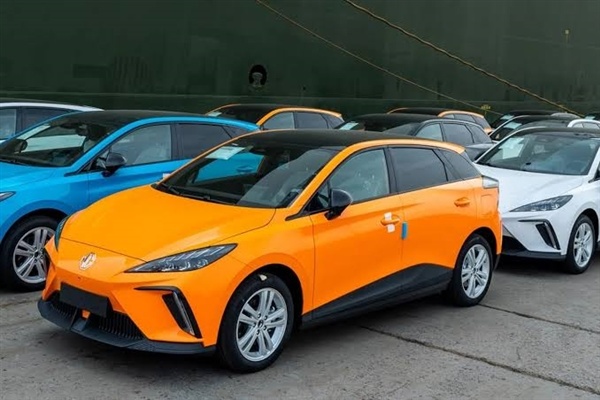
The localization push gives an advantage to brands that have committed capital to Thai manufacturing. BYD has already put its Rayong Province plant into operation, Reuters and BYD have reported. Changan Automobile's first overseas new energy manufacturing base is located in Thailand, and its Rayong factory has been described in company-linked releases as a 10 billion baht investment aimed at regional EV production. Chery and GAC Aion are also accelerating local presence through assembly, supply-chain sourcing or plant planning.
The result is a split market: local producers can keep more of their price competitiveness, while pure importers lose part of the cost edge that made them attractive. For procurement teams, this means the supplier question is no longer only "Which EV is cheaper today?" but "Which supplier can survive the tax, subsidy and local-content rules after 2027?"
What operational obligations accompany the tax change?
Thailand's EV3.5 incentives are not a standalone tax break. Board of Investment materials and legal summaries state that imported CBU units must be offset with local production, with the required compensation ratio tightening to two locally built vehicles per imported vehicle in 2026 and three by 2027 if production is delayed. The same policy framework has also been linked to a 40% local-content benchmark for battery-electric vehicles, while certain imported battery cells may be temporarily counted toward that threshold under transitional rules, according to legal analyses by Lexology.
That creates a practical trap for fast followers. A simple "assembly plan" may not be enough. Companies need evidence: plant agreements, supplier audits, bill-of-material calculations, component sourcing records, customs classification support and production schedules. For industrial managers, the tax classification should be treated like a quality-management document: it must be traceable, signed and defensible.
Common misconceptions to avoid
- "Zero tariff means zero tax cost." Wrong. Excise tax is separate from import duty and can be the binding constraint on retail price.
- "Any local assembly is sufficient." Wrong. The tier depends on production plans, local content and the substance of manufacturing, not just a final-stage workshop.
- "A 35% tax equals a 35% price increase." Not exactly. In the Ministry example, moving from 10% to 35% adds 25 percentage points of tax to the price base, producing at least a 25% price increase on a 1 million Thai baht vehicle.
- "Only automakers are affected." No. Suppliers of battery modules, drive units, electronics and tooling face indirect demand shifts as brands chase local content.
Decision guide for industrial teams
| Role | First question | Recommended action | Key risk |
|---|---|---|---|
| CBU importer | Can localization be proven in time? | Model landed cost with and without 35% excise; start CKD or plant partnership discussions. | Inventory repricing and stranded stock. |
| Local assembler | What share of parts qualifies? | Audit electric drive, battery, electronics and supplier declarations. | Weak local-content documentation. |
| Component supplier | Is the customer's plan credible? | Price long-term agreements with volume flexibility and certification support. | Customer plant slippage. |
| Procurement team | Which supplier survives after 2027? | Shift from price-only award to compliance, localization and lifecycle cost scoring. | Short-term savings that fail regulatory review. |
FAQ: short answers for managers
Is the 35% rate already in force?
The cabinet decision is being reported as an excise ceiling that takes effect on January 1, 2027. Companies should confirm final publication language and transitional treatment before locking inventory plans.
What is the minimum evidence for a lower tier?
At minimum: local production registration or plan, plant capacity, local-content calculation, supplier proof for key components and customs classification documentation. The more defensible the file, the lower the regulatory risk.
Should distributors build stock before 2027?
Only if the financial model works under both tax scenarios. Year-end sales may benefit from pre-hike imports, but unsold vehicles can become high-cost inventory once the rule is applied. A safer approach is staged orders, repricing clauses and local assembly options.
Does localization eliminate all cost risk?
No. Local production helps with excise positioning, but companies still need competitive parts cost, logistics, power electronics, software and quality systems. A plant can be compliant and still lose on total cost of ownership.
For readers tracking industrial supply-chain shifts, contact Industrial Weekly at news@industrialweekly.com for follow-up briefings.