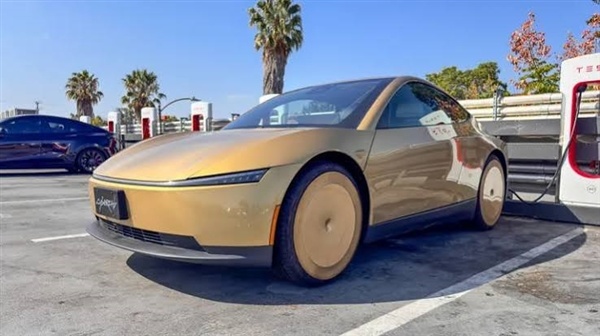
A WorldIndustrialWeekly Look at Tesla's Robotaxi Charging Step and CyberCab Line Economics
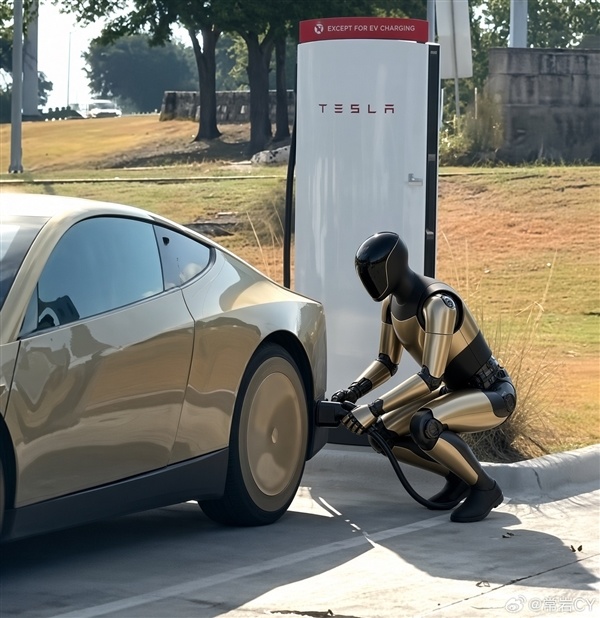
When a new production line is described as highly automated, factory leaders often hear two opposite signals: cost discipline or an over-promised vision. Tesla's recent remarks on Munro Live by engineering vice presidents Lars Moravy and Eric Earley provide a concrete example from mobility manufacturing. The discussion placed Optimus's first likely task in a Robotaxi fleet as plugging in vehicles for charging in the short term, while also disclosing CyberCab assembly details that matter to plant engineers, operations managers, and procurement teams.
A case in practice: charging as the robot's first industrial task
Optimus is currently learning to replenish energy for Robotaxi vehicles. The near-term role is not a broad mobile workshop but a defined routine: connect a charging gun to a driverless taxi. The statement is important because it starts with a repeatable, bounded task that can be measured in safety, uptime, cost, and cycle time.
On cost structure, Moravy said Optimus carries an independent battery module of about 2.5kWh. He contrasted this with vehicles, where a battery pack often accounts for one-quarter to one-third of total cost. In other words, the robot's battery is not the main cost center. For operations teams, that shifts attention toward labor substitution, scheduling, energy access, and the quality of the charging interface.
Moravy also extended the view beyond one station or one vehicle. He said, "it could provide maintenance services for vehicles, and could also enter the delivery field." That framing treats Optimus as a mobile utility, not just a charging device. He further said, "Think about Cybercab, Optimus and Robovan; the iron triangle of these three will be very amazing, and you can also add the Tesla Semi for long-haul transport." For plant and logistics leaders, the key is the sequence: a bounded task first, then adjacent services, then a wider transport network.
CyberCab line data: a smaller footprint as the real test
The CyberCab final assembly line scale was disclosed more concretely than before. Moravy said the line has only 25 fully automated workstations. Compared with the Model Y production line, that is one-fifth to one-tenth, with automation close to 80%.
For managers, those two numbers have different meanings. A smaller number of stations can reduce capital and floor space. But it also concentrates risk: if one station stops, the impact is larger. The line therefore depends on preventive maintenance, parts availability, station-level reliability data, and clear fallback procedures.
| Disclosed item | Figure or detail | Operational reading |
|---|---|---|
| Final assembly workstations | 25 fully automated workstations | Line balance must be very tight; maintenance planning is central. |
| Scale versus Model Y | one-fifth to one-tenth | Smaller footprint may lower investment, but redundancy is lower. |
| Automation level | close to 80% | Human tasks shift to supervision, exception handling, and recovery. |
| Per-vehicle footprint | reduced by about 50% by using the “unboxed process” | Floor space, conveyance, and layout costs may fall together. |
| Design life | 500,000 miles | Service-life assumptions become a core cost input. |
| Paint savings | hundreds of millions of dollars | Eliminating coating removes a high-capital, high-variability process. |
CyberCab's 4680 cells are placed in separate sealed modules. If one module fails, only that module needs replacement rather than the full pack. Moravy said the pack is using a steel shell for the first time, and space has been reserved so cheaper lithium iron phosphate cells can be used later, or in the future. He also said, "We found that the actual number of batteries needed is less than originally expected."
On drive configuration, CyberCab uses front-wheel drive with a transmission ratio of 11:1 because it does not need a very high top speed. A new inverter will also be used in Model 3 and Model Y this year.
At present, the line's manufacturing pace is faster than the expansion pace of the Robotaxi fleet, so the production line is not running every day. That detail matters for industrial readers. High automation does not automatically mean full utilization; demand, regulatory readiness, fleet deployment, and service capacity set the rhythm.
Common misconceptions
- Automation equals constant output. The CyberCab line's pace can exceed fleet expansion, so it may not run every day. The bottleneck is not always the line.
- Robots must first do complex general labor. Optimus's short-term task is charging a Robotaxi, which is narrow and repeatable, not a fully autonomous factory crew.
- Battery cost structure is the same for vehicles and robots. Optimus has an about 2.5kWh battery module, while a vehicle battery pack often covers one-quarter to one-third of cost.
- A small line means a simple line. Twenty-five fully automated workstations reduce scale but concentrate failure, scheduling, and quality risks.
- Design life is only a specification. A 500,000-mile life assumption changes residual value, maintenance intervals, and warranty exposure.
Action recommendations for industrial teams
- Use bounded pilot tasks for robotics. Charging is easier to standardize than broad maintenance because the object, location, and success criteria are clear.
- Map station concentration before copying the line design. With only 25 fully automated workstations, every stoppage, jam, or quality escape has a visible effect.
- Treat energy supply as a scheduling problem. Robotaxi fleets need enough plug access, queue management, and uptime data to make the robot useful.
- Compare module replacement with pack replacement. The CyberCab 4680 module design shows how repair economics can affect inventory, warranty, and labor training.
- Look for process removal, not just speed. Skipping paint saves hundreds of millions of dollars and removes a large capital and environmental burden.
- Track cross-platform component reuse. The new inverter will also be used in Model 3 and Model Y this year, showing how platform sharing can spread learning and cost.
FAQ
Is Optimus already operating in a Robotaxi fleet?
The reported status is learning. Moravy said the short-term focus is charging Robotaxi vehicles. The broader service scope is framed as a possible next step, including maintenance and delivery.
What makes the CyberCab line different from Model Y?
The disclosed difference is scale and automation. It has 25 fully automated workstations, one-fifth to one-tenth of the Model Y line, and close to 80% automation.
Why would a vehicle have only front-wheel drive?
Moravy linked the 11:1 transmission ratio to CyberCab's operating profile, noting the vehicle does not need a very high top speed.
Can battery design lower lifecycle cost?
The 4680 sealed modules allow replacement at module level, and the pack reserves space for cheaper lithium iron phosphate cells later.
Does a faster line mean immediate mass production?
No. At present, line manufacturing pace exceeds Robotaxi fleet expansion, so the line is not running every day.
The industrial takeaway
The value of Tesla's update is not that one robot learns one task or that one line becomes shorter. It shows how a mobility program can be decomposed into measurable units: a charging routine, a station count, a module boundary, a drivetrain ratio, and a fleet pace. For WorldIndustrialWeekly readers in manufacturing, energy, logistics, and engineering management, the lesson is to build automation plans around verified constraints. The interesting question is not whether the line can move faster; it is whether the surrounding system can absorb what the line produces.