
Songon Combined-Cycle Power Plant Case Briefing: What a 372-MW Gas Turbine Award Signals for Industrial Planners in Côte d’Ivoire Through 2030
Grid shortfalls in fast-industrializing economies rarely announce themselves as outages first. They surface as connection queues, rising backup-power budgets and expansion projects pushed to the right on a roadmap. Seen from that operating seat, the equipment award standing behind the Songon combined-cycle power plant in Côte d’Ivoire reads less like supplier news and more like a planning document: a 372-MW Songon facility scheduled for service in 2029, sited in the Songon region near Abidjan, and expected to create up to 1,400 jobs.
The value of that document is not the headline capacity figure. It is the visible chain it exposes — financing, developer selection, original equipment manufacturer, EPC contractor and a dated start-up window — which production, utilities and capital teams can use as a template for evaluating comparable projects.
Case Block: How the Award Moved From Financing to Equipment
Sequence matters in power development, and the Songon sequence is unusually transparent. Financing agreements were signed last June. On the strength of that close, Songon Energies, a development investment company in Côte d’Ivoire working to advance energy infrastructure, chose GE Vernova to supply a 9E gas turbine and generator. China Energy International Engineering Co., Ltd. holds the EPC role for the plant, which is expected to deliver 372 megawatts (MW), a rating matched to the power needs of approximately 5 million Ivorian homes.
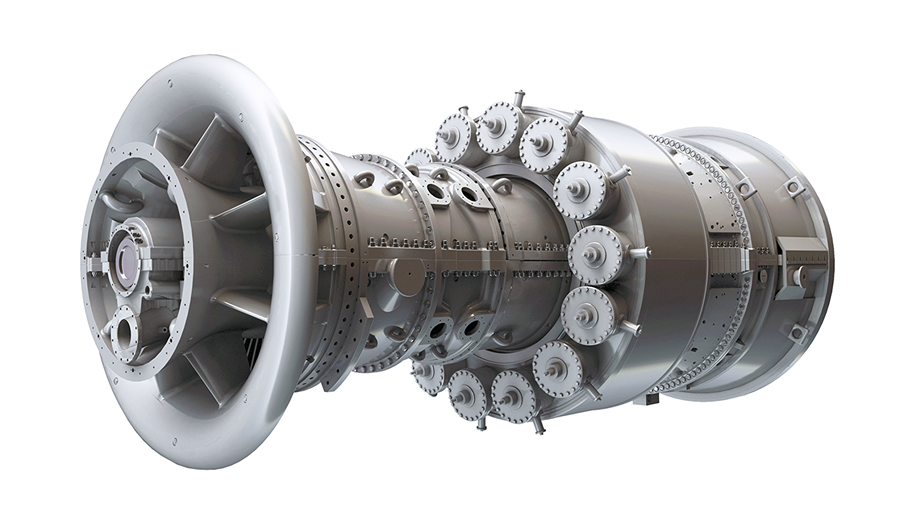 GE Vernova 9E gas turbine.
For procurement and engineering managers, the division of responsibility is the instructive element. An owner-developer carries the financing and offtake logic; an OEM supplies turbine and generator; an EPC contractor is accountable for delivering the station as an integrated whole. Combined-cycle arrangements depend on that boundary being drawn precisely, because the same site, fuel, water and grid-connection assumptions drive both the build schedule and the eventual availability of the 372-MW Songon facility.
Data Anchor: The Demand Curve Behind the Capacity Decision
By 2024, Côte d’Ivoire had reached an electrification rate of 94.3 percent, supported by programs such as the Electricity for All Program, known as PEPT, while national objectives call for universal electrification and better power quality by 2030. Progress of that kind does not close the gap on its own: annual demand is growing at 10 to 15 percent, and rural areas still require expanded access. That arithmetic converts new dispatchable capacity from a policy debate into a scheduling problem.
| Indicator | Reported value | Planning implication |
|---|---|---|
| National electrification rate, 2024 | 94.3 percent | Access is already broad; reliability and power quality become the binding constraints. |
| Annual demand growth | 10 to 15 percent | Sets how fast today’s headroom is consumed and when new capacity is truly needed. |
| Plant rating | 372 megawatts (MW) | Sized against the power needs of approximately 5 million Ivorian homes. |
| Share of installed base | up to 12 percent | Introduces single-asset concentration into system reliability models. |
| Scheduled operations start | 2029 | Fixes the window for fuel logistics, interconnection works and workforce build-up. |
| Employment impact | up to 1,400 new jobs | A labour-market and site-logistics signal for the Songon region. |
| Policy horizon | 2030 | Universal electrification and better power quality are the yardsticks the project answers to. |
Read together, the figures explain why a single station carries disproportionate weight. A contribution of up to 12 percent of the country’s installed base is not a marginal addition; it is a variable that changes outage sensitivity, reserve margin assumptions and the negotiating posture of large industrial offtakers.
Implementation Path: What a 2029 Start Date Compresses
A commissioning date never floats free — it back-schedules everything around it. For the Songon combined-cycle power plant, the chain runs from agreements signed last June, through the selection of a 9E gas turbine and generator by Songon Energies, to EPC execution under China Energy International Engineering Co., Ltd., and finally to scheduled operations in 2029. Civil works, fuel arrangements, spares stocking, grid interface and training all inherit that calendar.
Teams executing comparable projects usually find that the turbine is not the constraint, since major equipment ships on a known lead time. The pressure sits in the surrounding interface work: transmission hardware, long-term service arrangements and the availability of qualified labour. That is why the estimate of up to 1,400 jobs is better treated as a workforce planning input than as a press statistic.
Service Footprint: Why Installed Base Decides Outcomes
The supply commitment covers only part of the operating picture. The supplier’s footprint in Côte d’Ivoire is centered on long-term service contracts, digital software deployments, key power transmission hardware and a large installed base — the combination that determines whether a commissioned unit still meets availability expectations years after handover. GE Vernova’s stated approach pairs worldwide expertise with a local presence, helping power plant operators increase power capacity while supporting a more secure and reliable energy future, and its commitment to the national electrification agenda is rooted in a long history of backing the same goals.
Common Misconceptions Worth Correcting
- A megawatt figure is not an available megawatt. The 372-MW rating describes what the EPC contractor must build; capacity only enters planners’ spreadsheets when the Songon facility begins scheduled operations in 2029.
- A turbine award is not the project. The named scope is a 9E gas turbine and generator, sitting inside an EPC delivery led by China Energy International Engineering Co., Ltd. and underwritten by financing closed last June.
- Electrification progress is not the same as adequate supply. The 94.3 percent outcome reported for 2024 measures access, while the 2030 objectives add power quality and expanded rural reach.
- “Up to” is a ceiling, not a floor. Both the employment estimate (up to 1,400 jobs) and the system contribution (up to 12 percent of installed capacity) should be modelled as ranges in any sensitivity case.
- Equipment delivery does not end the decision. Long-term service contracts, digital software deployments and transmission hardware shape plant availability across the asset’s life, not the nameplate alone.
Action Recommendations for Industrial Planners and Plant Managers
- Re-baseline demand assumptions. Where your sites draw from the same grid as the Songon region near Abidjan, stress expansion cases against growth of 10 to 15 percent instead of historical averages.
- Track the milestone chain. Financing (last June) → equipment selection by Songon Energies → EPC execution by China Energy International Engineering Co., Ltd. → start-up in 2029 gives a usable calendar for offtake, fuel and interconnection negotiations.
- Model concentration risk explicitly. A station sized at up to 12 percent of the installed base changes reserve margins; run that case before signing supply-side commitments or expanding load.
- Price the service layer as an obligation. Long-term service agreements, digital software deployments and key power transmission hardware belong in life-cycle cost models, not in optional line items.
- Start workforce planning early. A project expected to create up to 1,400 new jobs moves local labour markets, so recruitment, training and site logistics need lead time well ahead of commissioning.
- Convert policy targets into procurement triggers. The 2030 goals for universal electrification and power quality, and programs such as the Electricity for All Program (PEPT), define when grid-dependent investments face their hardest reliability tests.
FAQ: The Questions Readers Ask About the Songon Project
Who supplies the technology, and what exactly is being supplied? Songon Energies selected GE Vernova to provide a 9E gas turbine and generator for the Songon combined-cycle power plant, following financing agreements signed last June.
Where is the plant and when does it operate? It is sited in the Songon region near Abidjan, Côte d’Ivoire, with operations scheduled for 2029.
How large is the 372-MW Songon facility in national terms? The plant is expected to deliver 372 megawatts (MW), matching the power needs of approximately 5 million Ivorian homes, and is projected to account for up to 12 percent of the country’s installed base when it begins scheduled operations.
What does the project mean locally? It is expected to create up to 1,400 new jobs — the same ceiling expressed as up to 1,400 jobs — offering economic opportunities for the community around the Songon region.
Is this a one-off order or part of a longer relationship? The supplier describes its footprint in Côte d’Ivoire as long-term service contracts, digital software deployments, key power transmission hardware and a large installed base, aligned with the nation’s electrification goals through 2030.
The practical takeaway for anyone operating industrial assets, engineering services or capital plans in this market is narrow but useful: this award turns a 2030 policy ambition into dated hardware with a named developer, a named equipment supplier and a named EPC contractor. Teams that treat the 372-MW Songon facility as a schedule input — from financing closed last June to service start in 2029 — will be better positioned on fuel, interconnection, service and labour decisions than those that file it as supplier news.