
US$45 Billion in NAND Plans, Hinged on One Export License: Solidigm's Dalian-US Bargain
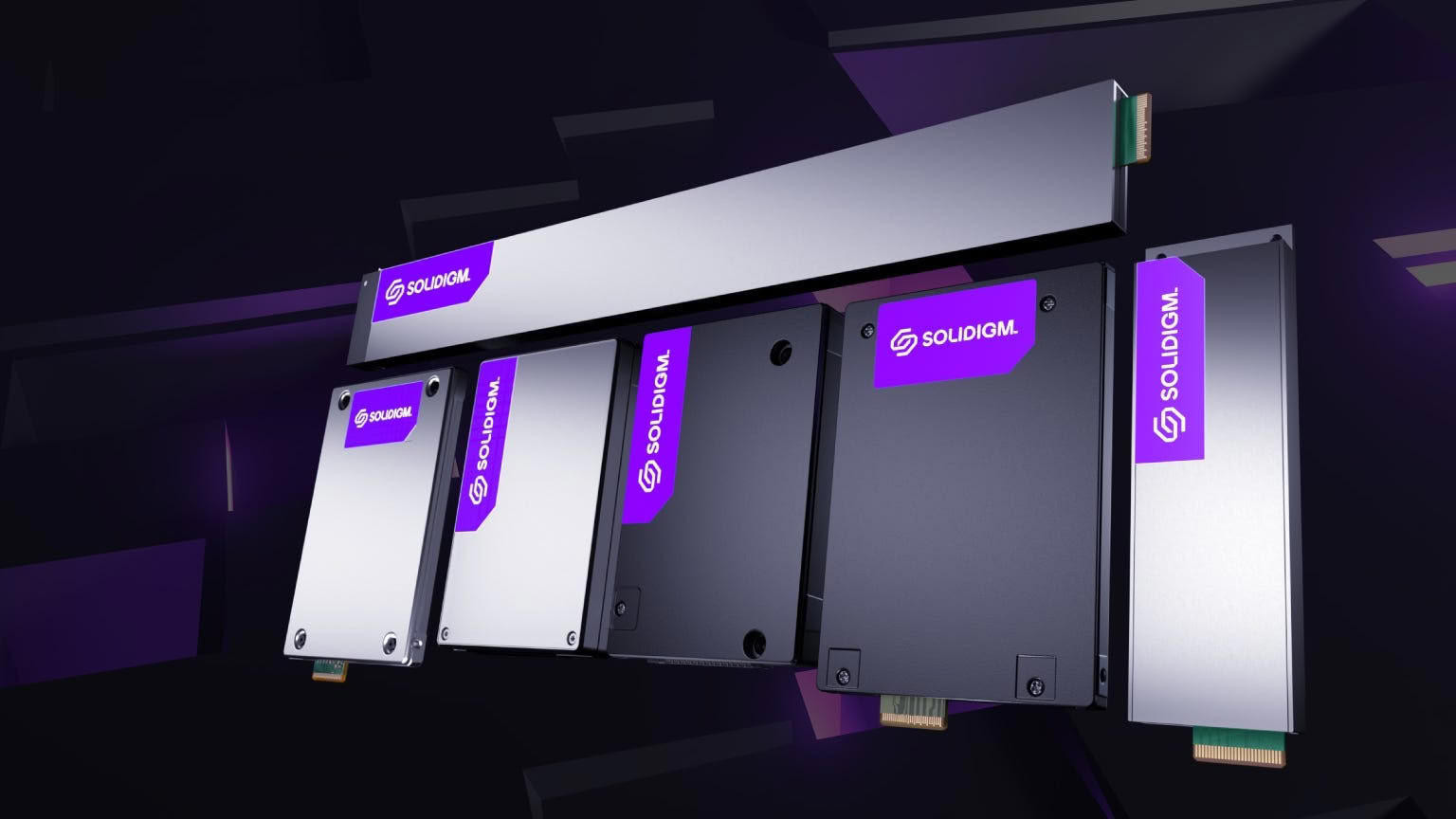
In the memory business, capital plans are no longer gated first by demand forecasts. They are gated by permit queues. The proposal now circulating around Washington - Solidigm weighing a US$45 billion NAND flash plant in the United States - is best read as two linked requests rather than one expansion announcement: a factory investment plan put before US authorities, and an approval to ship upgrade equipment into China for the company's Dalian facility. For plant managers, procurement leads and technology decision-makers, the negotiation format itself is the signal. AI-driven storage demand, semiconductor localization policy and US-China export controls have converged into a single decision path, and the sequencing of that path will shape NAND availability, pricing pressure and siting choices for years.
Two files, one negotiation
According to people familiar with the matter, Solidigm is seeking US government permission to move related equipment to China so it can upgrade the Dalian plant. As one element of the same discussion, the company tabled an investment plan for a new US fab with the US government, hoping the two arrangements can advance in step. Neither has been signed off. The linkage, not the headline number, is what makes this case unusual for industrial readers: an upgrade on one side of the Pacific is being used as the negotiating basis for construction on the other.
Case file: why the brownfield asset drives the story
Dalian holds a structural position in SK hynix's NAND operations. The site originally belonged to Intel's NAND flash business; when SK hynix acquired that business, the plant was folded into its storage portfolio. Solidigm sells mainly into the enterprise SSD market, with products deployed heavily in data centers and enterprise storage applications. With AI infrastructure build-out lifting data storage demand, expanding flash capacity and upgrading existing production facilities has become an unavoidable task for the vendors involved.
Inside that site, the Mod B area is the core of the current negotiation. It was built in 2023, but because the memory chip market was weak at the time, part of the space was never fully equipped. Solidigm wants to install additional manufacturing equipment in the relevant area to raise NAND flash output. If US authorities approve the equipment exports, revenue from the incremental output could help the company finance construction of the new US plant, and could also serve as a transition toward expanding production in the United States later.
Data citations: what the figures on the table do and do not mean
- US$45 billion - the investment plan Solidigm has raised with US authorities for a new NAND flash factory in the United States.
- Up to US$100 billion - the long-term total investment Solidigm indicated to the US Department of Commerce as a potential scale; it does not mean the company has approved or committed the full amount.
- Northern New York - one of the sites under consideration for the US fab.
- 2027 - the earliest the project could break ground.
- 2025 - the year the United States revoked validated end user (VEU) related exemptions covering parts of the SK hynix and Samsung Electronics plants in China.
- 2023 - the year the Mod B area at Dalian was completed, with part of its space still lacking equipment configuration.
The qualifier matters more than any single figure: project site, construction schedule and the specific investment arrangements remain unfinalized. This is one plan still in the negotiation and evaluation stage, not an approved construction program.
The licensing regime is the operative variable
US restrictions on the export of semiconductor manufacturing equipment to China are the key variable this plan faces. After the 2025 revocation of the VEU-related exemptions, companies must apply for licenses annually before shipping the relevant equipment into Chinese plants. US authorities have previously indicated they would allow firms to obtain equipment needed to keep existing factories operating, while review is stricter for tools intended to expand capacity or improve technology level. Equipping a partially idle area such as Mod B sits on the expansion side of that line, which is precisely why the upgrade request and the US construction offer are being discussed together.
Where AI demand meets NAND supply
The arrangement also reflects how deeply the AI boom has reshaped the memory chip industry. As AI data centers keep expanding, demand for enterprise SSDs and high-performance storage products continues to rise, and global memory chip supply has tightened. Samsung Electronics, SK hynix and Micron are all adjusting capacity configurations, directing more resources toward higher-margin data center products. NAND flash is the core storage medium of solid state drives, so its supply condition feeds directly into the build-out cost of cloud computing and AI infrastructure - a cost line that industrial and enterprise technology buyers absorb, whether or not they follow chip policy.
Reading the trade-offs in the proposal
| Dimension | Position reported in the negotiation | Current status | What industrial readers should watch |
|---|---|---|---|
| Capacity expansion | Install more equipment at Dalian's Mod B area to lift NAND output | Requires US government export approval | Whether license scope is treated as maintenance or expansion |
| New US footprint | Possible NAND fab, US$45 billion, potentially reaching US$100 billion long term | Not approved; site and timing undecided | Northern New York and any other named site; groundbreaking as early as 2027 |
| Supply-chain risk | A US plant would dilute reliance on Dalian as a single production base | Strategic rationale, not a committed plan | Trade policy exposure for data center storage sourcing |
| Cost base | US construction costs typically exceed those of existing bases such as South Korea | Long fab cycles keep long-run returns uncertain | Whether incremental NAND supply turns into pricing relief |
| Funding path | IPO and pre-listing financing evaluation for Solidigm paused | Cited capital market conditions and share performance | Continued review of investment scale, timing and funding sources |
SK hynix's risk ledger
For SK hynix, a new NAND flash factory in the United States would add production capacity while also cutting dependence on the single Dalian production base and reducing trade policy risk it might face later. The counterweights are structural: construction costs in the United States usually run higher than at existing bases such as South Korea, and semiconductor fabs take a long time to build, so whether the investment earns an adequate long-term return remains uncertain.
Financing assumptions have moved as well. SK hynix had earlier considered taking Solidigm public to raise capital through an initial public offering. Recently, however, the company paused evaluating that listing and pre-listing funding options, citing capital market conditions and share performance. Despite the change in funding route, SK hynix has said Solidigm still needs additional production facilities to meet the capacity required by rising AI storage demand, and that it will keep evaluating investment scale, timing and funding sources.
Common misconceptions
- Confusing a ceiling with a commitment. The US$100 billion figure describes a potential long-term investment scale; it is not an approved or pledged outlay.
- Reading the plan as an approved fab project. Site, schedule and capital arrangements are still undecided, and groundbreaking as early as 2027 is an outside possibility, not a milestone.
- Treating the two files as separate news items. The US construction proposal and the Dalian equipment upgrade are being negotiated in connection with each other.
- Assuming export licensing only affects new builds. Even equipment destined for an already completed area of an existing plant can be judged as capacity expansion, which triggers stricter review.
- Taking capacity announcements as near-term supply relief. Major vendors are steering resources toward higher-margin data center products, so new capacity does not automatically ease the segments where buyers currently face tightness.
Action guidance for operations, procurement and engineering leaders
- Treat license decisions as a leading indicator. Track whether US government approvals for equipment into China are classified as maintaining existing operations or as expanding capacity; that classification, not plant announcements, is the earliest signal of NAND supply direction.
- Do not build budget forecasts on announced investment ceilings. Scenario-plan around the US$45 billion proposal as an unfinalized negotiation item, with the unfinalized status as the base case.
- Diversify enterprise SSD and NAND sourcing. The concentration of production at Dalian as a single base, plus annual licensing requirements, is a live supply continuity risk for data center and enterprise storage programs.
- Extend planning horizons to match fab cycles. Given long construction periods and costs above existing bases such as South Korea, relief from any new US plant cannot be assumed within short procurement windows.
- Watch the funding gate. The pause on Solidigm listing and pre-listing financing evaluation means investment scale, timing and funding sources remain under review; treat any change in that assessment as a signal of intent.
- Model storage cost into AI and cloud infrastructure budgets. NAND supply conditions feed directly into the cost of building cloud computing and AI infrastructure, so storage assumptions belong in capital project risk registers, not only in IT purchase orders.
FAQ
Is the US$45 billion NAND plant a confirmed project?
No. It is an investment plan raised during the negotiation, and the figures represent potential scale. Site selection, construction timing and the specific investment arrangements have not been finalized.
Why does a US factory proposal involve equipment exports to China?
Because the two are linked in the same negotiation. Solidigm is seeking US government approval to ship equipment to China to upgrade the Dalian plant, and it offered the new US factory investment plan as part of the discussion, hoping both arrangements can progress together.
What changed for equipment shipments in 2025?
The United States revoked VEU-related exemptions for certain SK hynix and Samsung Electronics plants in China. Since then, companies must apply for licenses annually to move the relevant equipment into those Chinese factories, with stricter policy toward tools aimed at expanding capacity or upgrading technology.
What is Mod B and why does it matter?
It is an area of the Dalian plant completed in 2023 but, due to the weak memory chip market at the time, only partly equipped. Installing more manufacturing equipment there would raise NAND flash output, and the resulting revenue could help fund the US construction plan.
How likely is a 2027 groundbreaking?
2027 is described as the earliest possible start, contingent on outcomes that have not yet been decided - including whether Washington approves the equipment exports the company needs in Dalian.
What this case ultimately exposes
Strip away the dollar figures and the more useful lesson for industrial readers is about decision architecture. A US$45 billion construction idea, a partially equipped hall in Dalian, an annual licensing regime introduced in 2025 and a paused financing plan are all pulled into the same review process by Washington. Whether the US fab materializes will turn not only on its own investment return, but on whether the equipment exports for the Dalian upgrade are approved, and on whether SK hynix can balance US construction cost, global supply-chain positioning and future market demand. For anyone budgeting storage capacity, cloud infrastructure or enterprise hardware, the practical takeaway is that this remains one plan under negotiation and evaluation - and that regulatory judgment, not factory steel, is currently the pacing item.