
WorldIndustrialWeekly Brief: Singapore and Saudi Aramco Lock In Jurong Rock Caverns Oil Storage Starting Next Year
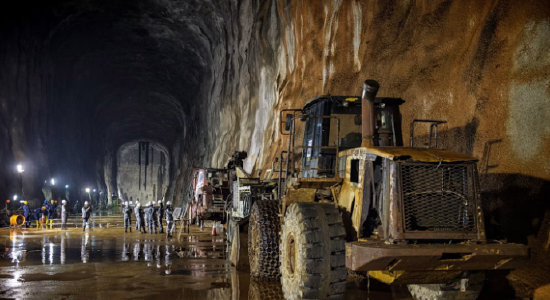
A Middle East war has exposed how quickly global energy supply chains can be interrupted. In response, Singapore and Saudi Aramco have reached an agreement that will place Saudi Arabia’s oil in underground rock caverns in Singapore beginning next year. The move is designed to support Southeast Asia’s energy supply and strengthen Singapore’s ability to withstand global shocks.
The oil will be stored in Jurong Rock Caverns. The facility is located on one artificial island near Singapore’s southern coast, and its maximum storage scale is 9 million barrels of oil.
Singapore’s Energy Minister Tan See Leng described the purpose of the deal on Monday. He said, “We cannot predict every supply disruption, but we will always make sure Singapore is prepared to respond. This will be the largest energy infrastructure expansion in Singapore in decades.”
Why the Singapore storage deal matters for industrial and energy planners
Singapore is an Asian energy trading center, and that gives it greater exposure to global market turbulence. The country’s reliance on imported natural gas for 95% of its power generation gives neighboring policy decisions and export-route disruptions a direct line to manufacturing, utilities, and project delivery.
For Saudi Arabia, the agreement is part of a wider effort by Riyadh to place oil in overseas locations. The Singapore arrangement is one of several agreements with foreign governments that allow Saudi Aramco to store oil at different sites. Since the outbreak of the US-Iran war, the closure of the Strait of Hormuz and attacks on Saudi energy infrastructure have disrupted Saudi Arabia’s global oil supply routes, and the country has been looking for ways to protect its global supply network.
Saudi Energy Minister Prince Abdulaziz bin Salman linked the placement decision to both markets. He said, “Positioning oil supplies closer to Asia, a key market, will increase the flexibility of our supply network, while also helping to secure Singapore’s energy supply and improve its readiness for emergencies.” He added, “We believe that the cooperation between both sides still has potential for further expansion.”
Case context: the Indonesia curtailment and Singapore’s response plan
The vulnerability was highlighted last weekend when Indonesia, one of Singapore’s largest natural gas suppliers, announced that it would reduce pipeline gas delivered to Singapore by about 31 million cubic feet per day to meet domestic demand.
Speaking at the People’s Action Party annual assembly on Sunday, Prime Minister Lawrence Wong said the government had invested in liquefied natural gas import facilities and was seriously evaluating whether nuclear power should be included in Singapore’s energy mix.
On Indonesia’s export reduction, Wong said, “We hope all parties will fulfill their commitments; Singapore’s gas importers will take necessary measures to protect their rights and interests under the relevant contracts.”
The oil-storage agreement sits alongside another infrastructure move. Singapore plans to add five natural gas power plants within the next ten years, which would increase power generation capacity by 26%.
Data anchors from the announcement
| Item | Detail from the announcement | Practical relevance |
|---|---|---|
| Storage location | Jurong Rock Caverns, on one artificial island near Singapore’s southern coast | Physical buffer for oil supply in Southeast Asia’s trading hub |
| Start timing | Beginning next year | Gives planners a near-term signal for stock and risk review |
| Capacity | Up to 9 million barrels of oil | Indicates scale of the storage arrangement |
| Power capacity expansion | Five natural gas power plants within the next ten years | Raises generation capacity by 26% amid import-gas dependence |
| Gas dependence | 95% of electricity depends on imported natural gas | Shows why supplier decisions can affect operations quickly |
| Recent supply pressure | Indonesia cut about 31 million cubic feet per day of pipeline gas exports | Demonstrates exposure to supplier policy shifts |
Common misreadings of the agreement
- The agreement does not mean disruptions can be predicted. Tan See Leng said that Singapore cannot predict every supply disruption but will keep itself prepared to respond.
- The deal is not only a Singapore security measure. It also fits Riyadh’s effort to protect Saudi Arabia’s global supply network when the Strait of Hormuz closure and attacks on Saudi energy infrastructure disturb routes.
- The announcement should not be read as a standalone solution. It appears next to other resilience steps, including liquefied natural gas import facilities, a possible nuclear-energy assessment, five planned natural gas power plants, and a 26% power-capacity increase.
Action suggestions for managers, engineers, and supply-chain teams
- Review energy exposure through the lens of imported natural gas and Asian trading flows, especially where project schedules depend on stable power supply.
- Monitor how Jurong Rock Caverns operations, oil-storage timing, and Southeast Asia supply arrangements could change regional risk buffers.
- Examine gas import contract terms and the possible consequences when supplier countries redirect volumes, as in the Indonesian reduction of about 31 million cubic feet per day.
- Track the broader Singapore build-out—LNG import facilities, five natural gas power plants within the next ten years, and nuclear-energy evaluation—as signals of how supply risk is being managed.
FAQ
Where will Saudi oil be stored under the agreement?
At Jurong Rock Caverns, located on one artificial island near Singapore’s southern coast.
When does the arrangement begin?
Next year.
How large is the storage capacity?
Up to 9 million barrels of oil.
Why is this important for Singapore’s energy picture?
Singapore relies on imported natural gas for 95% of its electricity and is an Asian energy trading center, so external shocks can quickly affect supply preparedness.
What other infrastructure changes are in the stated plan?
Singapore will add five natural gas power plants within the next ten years, raising power generation capacity by 26%.
What did the Singapore energy minister say about preparedness?
Tan See Leng said, “We cannot predict every supply disruption, but we will always make sure Singapore is prepared to respond. This will be the largest energy infrastructure expansion in Singapore in decades.”
The practical conclusion for WorldIndustrialWeekly readers is that a storage site, a supplier cutback, and a generation build-out now form one linked story: Singapore is reinforcing Southeast Asia energy buffers while Saudi Aramco works to protect its global supply network.