
Edge AI Toolchain Bottlenecks: A WorldIndustrialWeekly Guide for Industrial Teams
For engineering teams placing AI and ML workloads on embedded edge devices, the practical bottleneck has shifted from model selection to workflow design. Because target hardware differs, a trained model must pass conversion, quantization or other optimization, runtime compilation, and benchmarking and validation before it is dependable in production. The platform moves by NXP, TI, Renesas, Microchip and Altera make that sequence the focus of edge AI toolchain work.
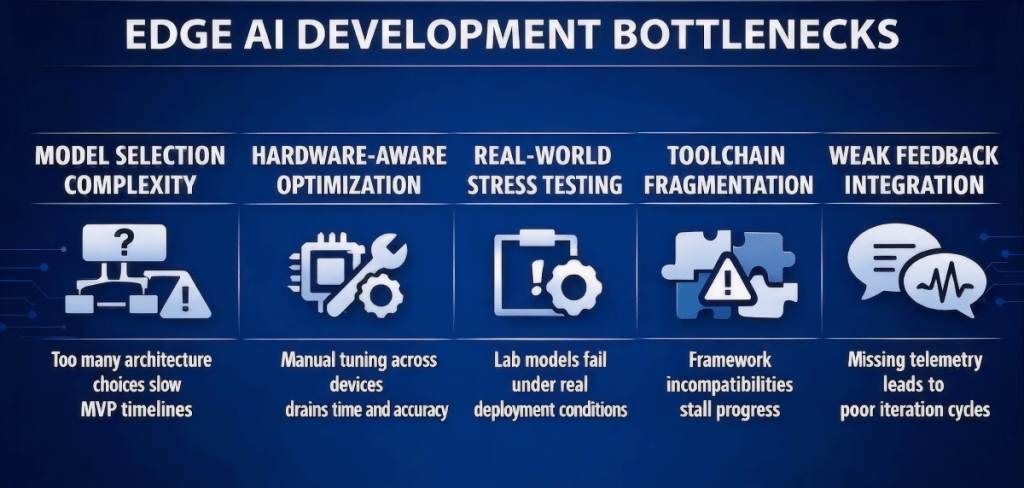
Figure 1: Edge AI development bottlenecks (Source: Saumitra Jagdale)
The pressure point for industrial deployment teams
Heterogeneous embedded architectures require repeated porting and testing across CPUs, GPUs, NPUs, MCUs and programmable logic. When development tools are fragmented, teams spend time rebuilding assumptions rather than improving reliability, latency or security. That is why vendors are extending unified platforms, cloud benchmark access, open model support, and licensing changes.
NXP: eIQ moves from toolkit to agentic AI hub
In 2018, NXP Semiconductor introduced the eIQ software development platform. The route has since moved from a code-heavy inference engine compiler to the GUI-based eIQ toolkit, which uses graph-level profiling and a single workflow for TensorFlow, PyTorch and ONNX model optimization. Quantization, operator fusion, pruning and architectural mapping are the main levers; the platform also imports models from the Nvidia TAO toolkit.
eIQ Time Series Studio addresses real-time decisions by supporting time-series AI/ML development. It is aimed at i.MX 8 and i.MX 9 application processors, QorIQ Layerscape processors including LS1046A, LX219 and 760A, and S32 automotive processors and microcontrollers (MCUs). At CES 2026, NXP introduced the eIQ AI hub as a cloud-based platform that brings together the eIQ toolkit, eIQ Time Series Studio, eIQ GenAI Flow for large language models, and an agentic AI framework. Developers can run functional simulations, hardware-farm models, and benchmarking tests, while shifting from cloud to on-premises work if needed.
The agentic framework is designed for constrained multi-model workloads. It distributes inference across Ara discrete neural processing units (NPUs), i.MX CPU cores and integrated GPU acceleration.
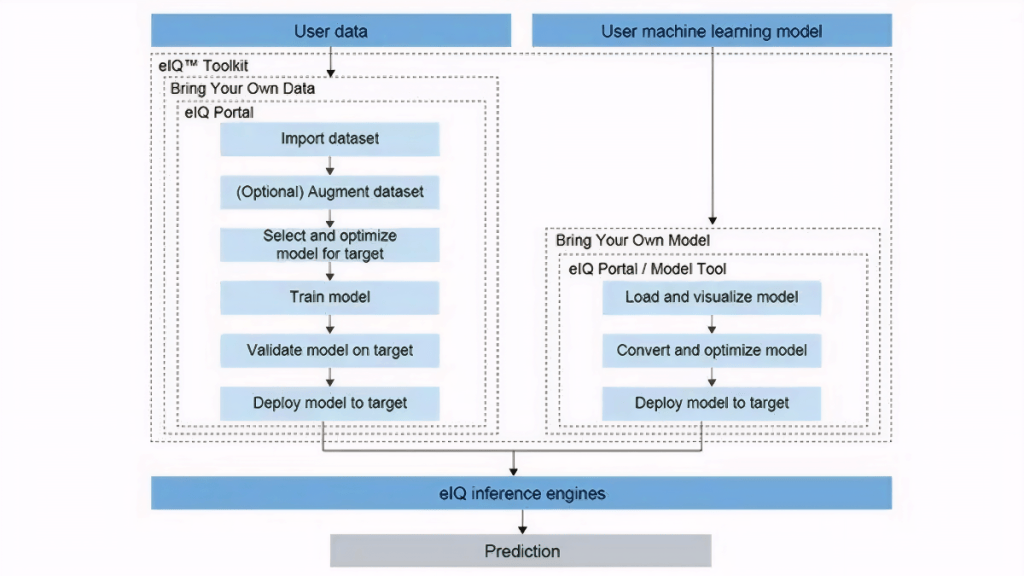
Figure 2: NXP's eIQ Toolkit ML development pipeline (Source: NXP Semiconductors)
TI: CCStudio consolidation across industrial and automotive silicon
For Texas Instruments Inc. (TI), the CCStudio development ecosystem is a consolidation layer. It joins disparate hardware architectures, graphical configuration tools, compilers and edge AI deployment into one workflow. Data collection, training, optimization and deployment are provided across MSPM0, C2000, MSP430, SimpleLink, Hercules, Sitara, Jacinto, mmWave, C6000 and C7x families.
The Model Zoo resource library contains over 200 pretrained and hardware-optimized neural-network models based on PyTorch, TensorFlow and ONNX frameworks for vision, audio, time-series and radar use cases. Developers can use Model Analyzer to benchmark neural networks on TI hardware remotely through the cloud. CCStudio also includes AI agents that accelerate code generation, system configuration and debugging.
TI also worked with Synopsys to create a Virtualizer Development Kit for digital twinning of the TA5 system-on-chip (SoC). When the TDA5 SoC is paired with the C7 NPU launched in January 2026, it can support cross-domain fusion in advanced driver-assistance systems, gateway control and infotainment hosting on one device.
Renesas 365: one ecosystem from board design to embedded software
Renesas Electronics Corp. uses Renesas 365 to expand acceleration beyond software. Altium Designer and e2 studio, the company’s integrated development environment, sit under the same umbrella, which makes hardware-software co-design easier. The platform is built around a System Data Model so board-level hardware design, system-level simulation, component sourcing and embedded software compilation can be treated as one ecosystem.
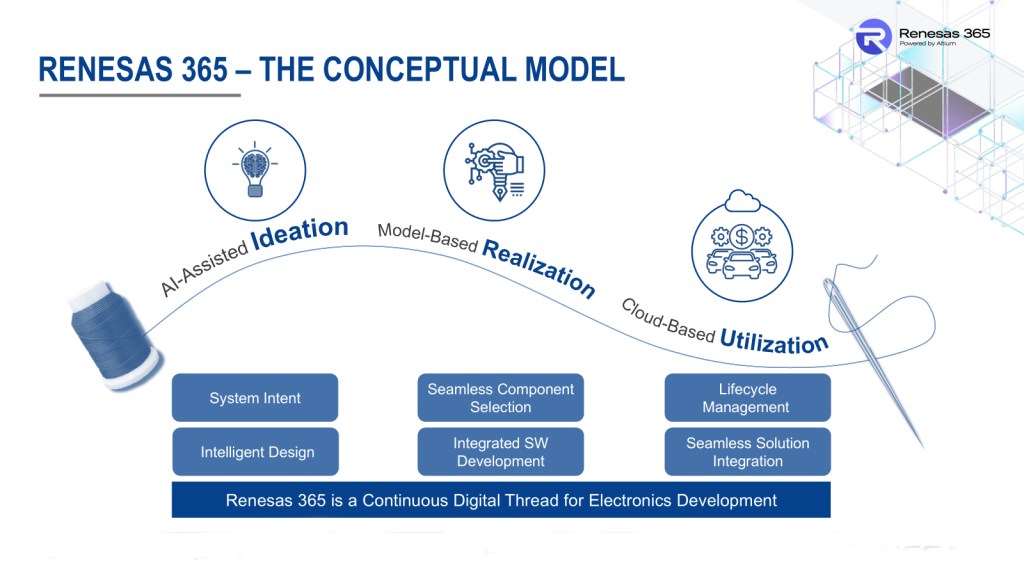
Figure 3: How the Renesas 365 platform is structured to fill gaps in the embedded systems development workflow (Source: Renesas Electronics Corp.)
Reality AI tools, integrated into the cloud-based Renesas 365 platform, support sensor-data analysis, model creation, training and optimization in an end-to-end workflow.
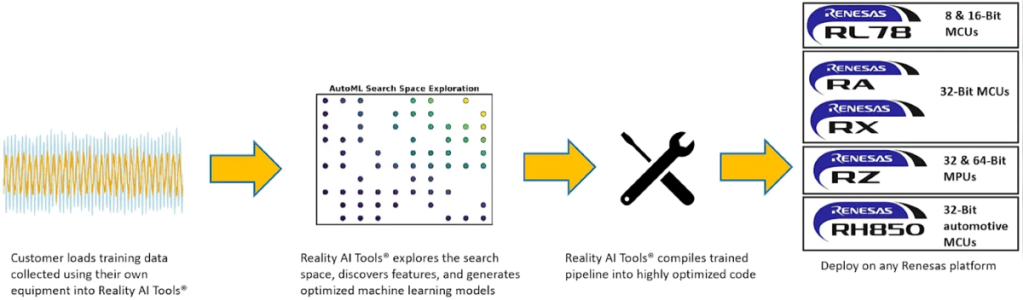
Figure 4: How Renesas's Reality AI tool accelerates model deployment (Source: Renesas Electronics Corp.)
The roadmap also includes Pictorus, acquired in June 2026. Its Rust-based code generator for behavioral modeling is expected to support algorithm validation, virtual prototypes and edge application deployment once assimilated into Renesas 365.
Microchip: licensing removal as a developer adoption tool
Microchip Technology Inc. provides an Edge AI Development Suite for its MCU and microprocessor (MPU) portfolio by combining silicon, software and development tools for edge AI and IoT applications. MPLAB XC Pro Compilers and MPLAB ML Development Suite are now free of charge, so features of the MPLAB XC PRO Compiler, including code size reduction and faster code execution, are not behind a paywall.
The updated model allows unlimited installations for individual users and development teams, and gives access to compiler optimization features and ML development tools across MCU and MPU platforms. MPLAB ML Development Suite covers deployment on devices such as dsPIC33, PIC32 MCUs and SAM MPUs. Model Builder, a Microsoft VS Code extension, generates code from raw sensory data; its licensing costs were also removed.
Altera and FPGA workloads: where co-design remains essential
The previous examples mainly cover fixed-function silicon such as MCUs, SoCs, NPUs and GPUs. FPGA deployment is more nuanced because AI inference requires software-hardware co-design. The hardware-accelerator matrix must align with the memory layout, data types and layer operations defined by the compiled neural-network model.
Altera Corp. offers a way to create AI accelerators on its FPGAs and SoCs. Developers can use Altera's FPGA AI Suite with sequential mapping or newer spatial mapping tools. The suite supports Altera Agilex 5, Agilex 7, Arria 10, Cyclone 10 GX and Stratix 10 FPGAs. Its spatial compiler generates dedicated RTL from pre-optimized library blocks, improving deterministic, higher-throughput behavior for real-time computer vision, video analytics, natural language processing and sensor fusion, while shortening development time.
Microchip also supports deployment on PolarFire FPGAs through the VectorBlox SDK for TensorFlow, TensorFlow Lite, ONNX and OpenVINO-based models.
Case snapshots for decision-makers
| Case | Workflow change | Industrial implication |
|---|---|---|
| NXP eIQ AI hub | Unified cloud platform includes eIQ toolkit, eIQ Time Series Studio, eIQ GenAI Flow and agentic AI framework | Multi-model edge work can be simulated, benchmarked and moved to on-premises |
| TI CCStudio | over 200 models in Model Zoo plus Model Analyzer remote benchmarking | Prototype validation can be tied to specific MCU, DSP and radar families |
| Renesas 365 | Altium Designer and e2 studio join System Data Model; Reality AI handles sensor models | Board design, sourcing and embedded software can be reviewed together |
| Microchip | MPLAB XC Pro Compilers and MPLAB ML Development Suite become free | Licensing cost no longer blocks small and large teams using the same toolchain |
| Altera | FPGA AI Suite adds spatial compiler for Agilex 5, Agilex 7, Arria 10, Cyclone 10 GX and Stratix 10 | Low-latency vision and sensor-fusion projects get a more application-specific accelerator path |
Common misconceptions
- Edge AI is only a software port. Fixed-function devices still need runtime compilation, benchmarking and validation; FPGA work adds explicit hardware configuration.
- A benchmark on one platform proves portability. Because architectures vary, repeated conversion and target-hardware validation remain necessary.
- Open-source framework support removes vendor lock-in completely. Framework compatibility is improved, but model size, latency, security and heterogeneous scheduling still require empirical checks.
- Free toolchains eliminate deployment effort. Removing licenses lowers entry cost, but model optimization and hardware-specific verification remain.
Action recommendations for production and procurement teams
- Map the device portfolio first: identify which projects use MCUs, SoCs, NPUs, GPUs or FPGAs before selecting a development stack.
- Require benchmark evidence on the target hardware, not only framework compatibility lists.
- Treat licensing as a team-scale variable: compare single-seat, unlimited installation and model-tool access across vendors.
- For FPGA or real-time vision, plan software-hardware co-design time and ask whether sequential mapping or spatial mapping better matches deterministic throughput.
- Document conversion, quantization, compilation, hardware-farming and validation steps so a model update does not restart the workflow for every architecture.
FAQ
Why are vendors changing edge AI stacks?
Because models must be converted, optimized, compiled, benchmarked and validated across heterogeneous hardware. Repeating that workflow slows teams and creates bottlenecks, especially under real-time and mission-critical constraints.
What does the agentic AI framework add to NXP eIQ?
It extends NXP's edge AI toolchain work into the agentic AI layer. It is compatible with Ara NPUs and can distribute inference across Ara, i.MX CPU cores and integrated GPU acceleration for multi-model workflows.
Which TI resources help avoid starting from scratch?
Model Zoo provides over 200 pretrained and hardware-optimized neural-network models for vision, audio, time-series and radar. Model Analyzer enables remote benchmarking on TI hardware, while CCStudio adds AI agents for code generation, system configuration and debugging.
How does Renesas 365 differ from a single compiler suite?
It combines Altium Designer, e2 studio, Reality AI and a System Data Model so hardware design, simulation, sourcing and embedded software can be coordinated as one workflow.
When is FPGA deployment more difficult than MCU or SoC deployment?
When the inference model depends on explicit accelerator configuration. On FPGA, software and hardware must be co-designed to match memory layout, data types and layer operations; sequential overlay mapping can create latency issues for real-time applications.
For industrial leaders, the signal from these vendor updates is practical: the competitive variable is moving from isolated model performance to the repeatability of deployment. Teams that monitor unified toolchains, hardware benchmark access, license flexibility, heterogeneous compute and FPGA-specific development paths will be better positioned to choose a stack that matches project constraints.