
WorldIndustrialWeekly Report: AI Data Center Growth Faces a Hard Test Against 15 Years of U.S. Power Sector Emissions Gains
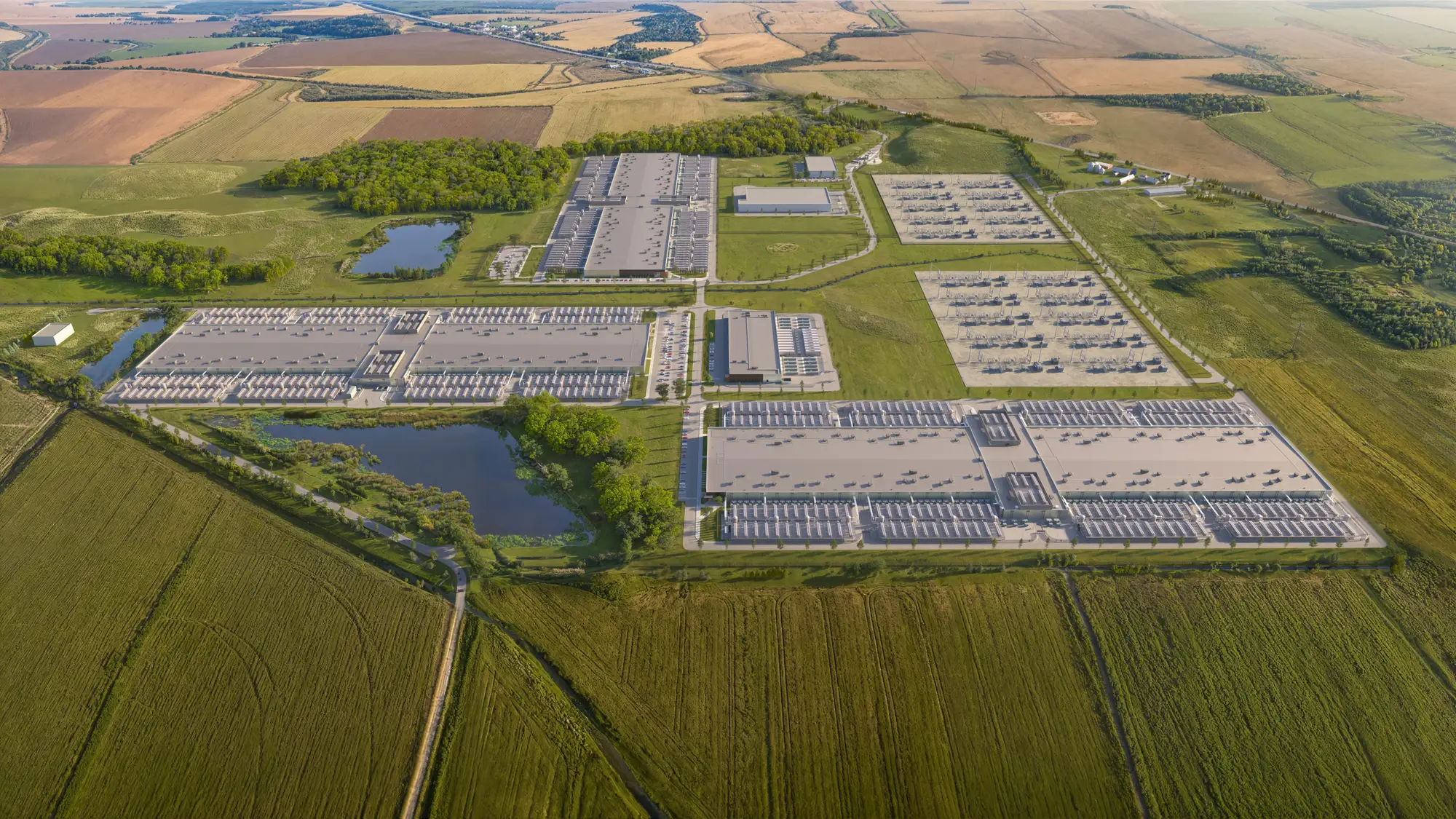
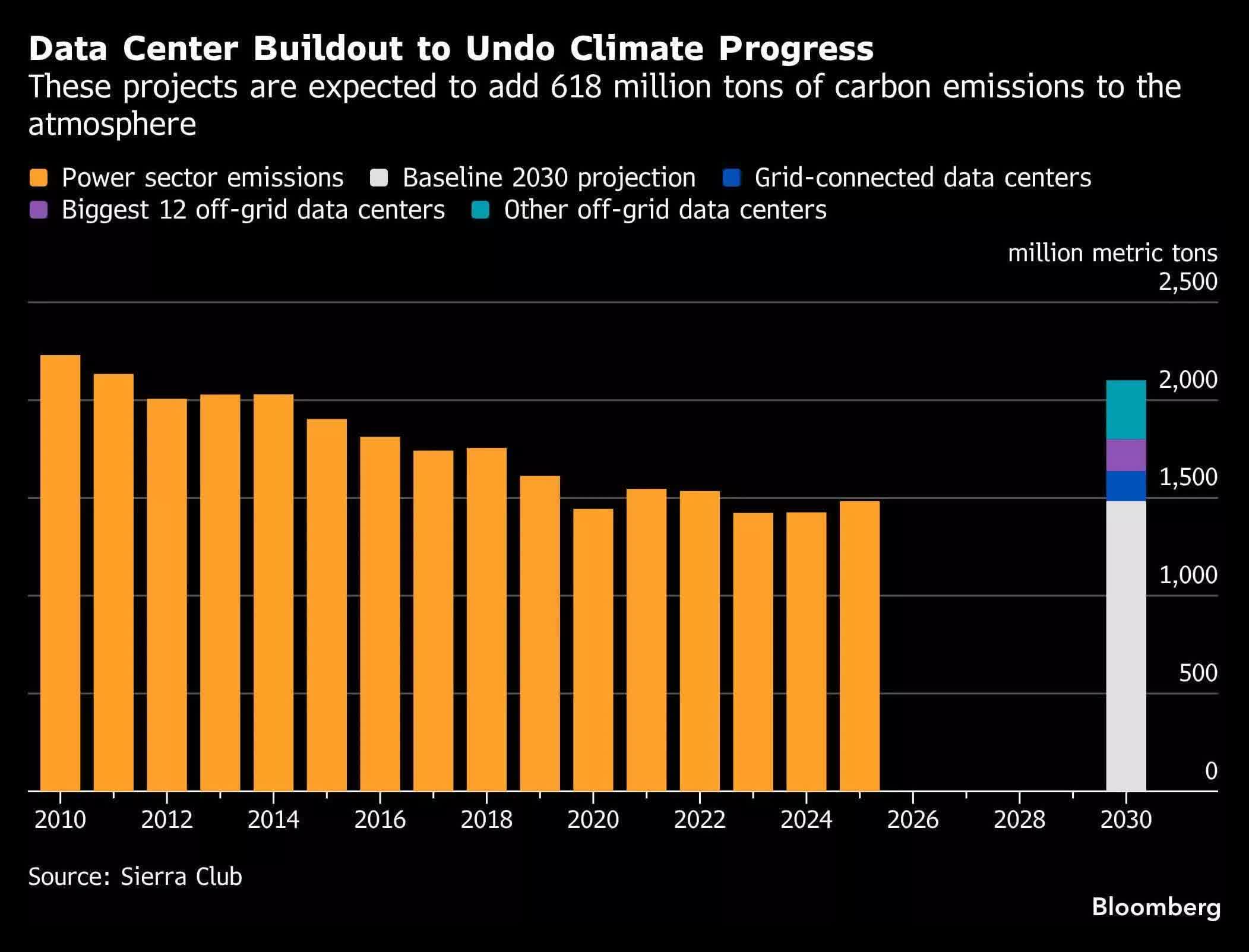
A report examined by Bloomberg, and estimates attributed to the environmental organization Sierra Club, suggest that planned United States artificial-intelligence data centers could weaken a long-running emissions trend in the country's power system. If the projected buildout proceeds, those facilities are expected to generate about 618 million tons of additional carbon dioxide between 2025 and 2030, while power-sector emissions linked to their operations are expected to rise by 42%.
For industrial readers, the question is broader than climate accounting. The concern is that the reductions obtained over 15 years through lower coal use, improved efficiency and expanded renewable capacity could be neutralized by electricity demand from AI infrastructure. That shifts the conversation from environmental policy alone into capital planning, site selection, grid procurement and project scheduling.
The Scale of the Estimate
The forecast contains one headline number for 2030: United States power-sector emissions could climb to 2.1 billion tons of carbon dioxide as a result of AI data-center demand. That value is described as two to four times higher than the estimate published one and a half years ago. The jump itself is an important signal. It implies that the expected size of AI infrastructure expansion has been revised upward materially, and that previous assumptions about load growth may have been too conservative.
| Indicator | Reported value | Planning relevance |
|---|---|---|
| New AI data-center emissions | About 618 million tons of carbon dioxide between 2025 and 2030 | Sets the scale of new demand-side emissions exposure. |
| Power-sector emissions growth | 42% | Shows that grid demand, not only facility operations, is central. |
| 2030 emissions benchmark | 2.1 billion tons of carbon dioxide | Provides a year-end marker for policy and project review. |
| Off-grid systems | More than 460 million tons | Highlights the carbon risk of bypassing interconnection queues. |
Why Operators Are Looking Beyond the Grid
Traditional grid interconnection capacity is described as insufficient for many planned facilities. As a result, operators are considering independent power installations to avoid long connection waits. This path can have local value: it may reduce pressure on residential electricity networks and soften effects on local electricity prices. However, the report warns that such off-grid energy systems may contribute more than 460 million tons of additional emissions. The volume is roughly comparable to Mexico's annual nationwide carbon emissions.
The Forecast Range Is Wide
The uncertainty is not minor. The gap between the highest forecast and the lowest forecast is said to be larger than the combined electricity demand of California and Florida. Such divergence means that companies and investors should not treat a single projection as a fixed future.
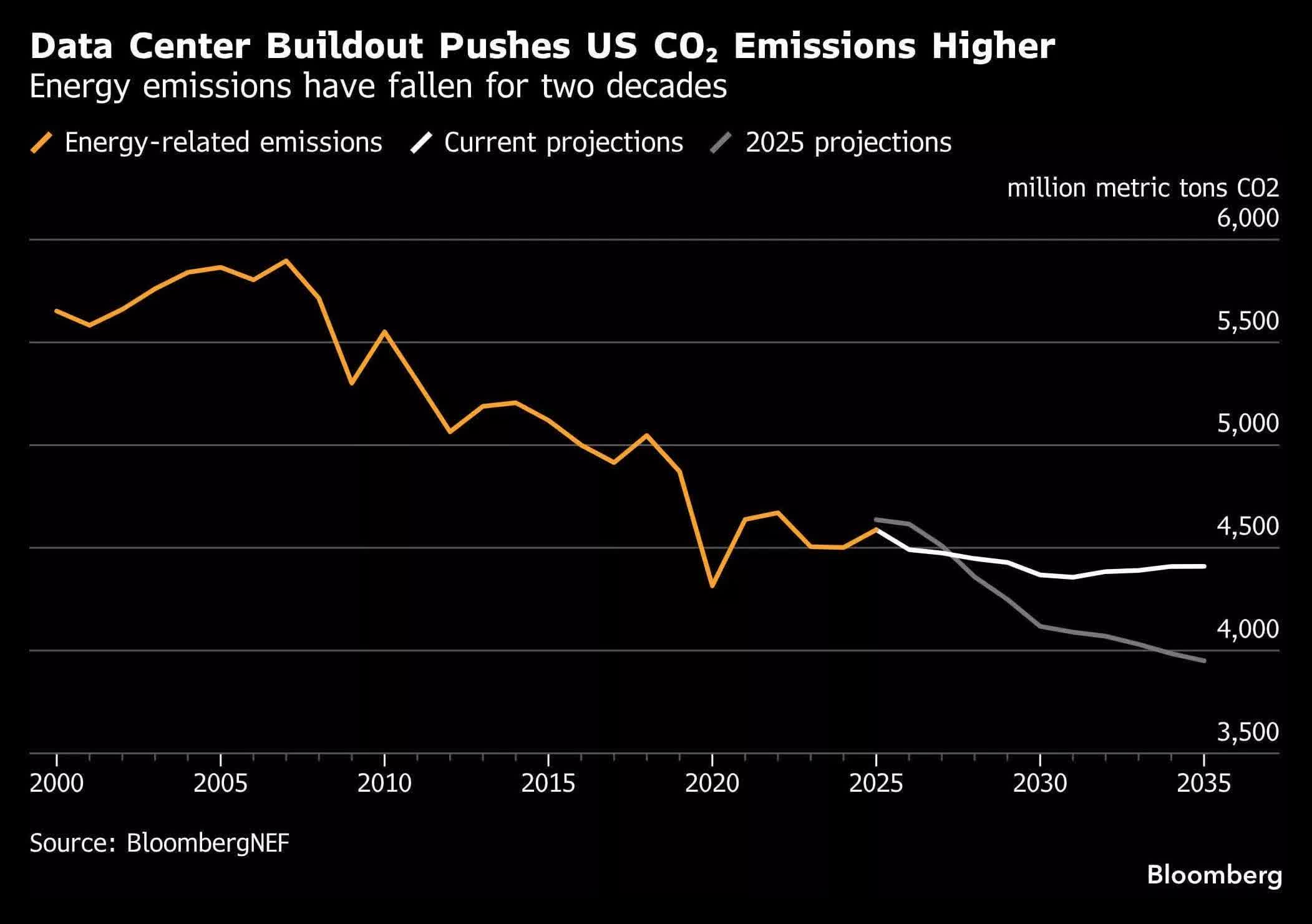
Some studies also argue that broad renewable deployment can substantially ease the emissions pressure. Rhodium Group, for example, projects that even in the most pessimistic emissions scenario, United States power-sector emissions in 2040 would remain 24% lower than in 2025. The report simultaneously notes that it is not certain every announced AI data-center project will actually be built.
Sightline Climate, a climate research organization, previously estimated that about one-third to one-half of United States data-center projects originally scheduled to enter service this year could be delayed or canceled. That caution matters because announced capacity is often treated in planning as if it were already contracted capacity.
Case Study: A Texas Power Agreement Raises the Stakes
Energy availability is already shaping AI industry timelines. The report says electricity infrastructure is not keeping pace with demand growth, which has slowed some GPU deployment. In some cases, high-performance computing equipment purchased by companies may remain idle while they wait for data centers able to supply enough power.
The report cites a planned Amazon data-center project in Texas that would be served by a natural-gas power plant with 7.65 gigawatts of installed capacity. According to approved documents, the plant could emit as much as 33 million tons of carbon dioxide annually. If that level were reached, it could become one of the largest single carbon-emission sources in the United States.
Common Misconceptions
- Off-grid power is automatically a low-impact solution. It may relieve residential grid pressure and regional price effects, but it can still add substantial emissions.
- Announced data-center capacity will definitely become operating capacity. Sightline Climate's estimates about delays or cancellations indicate otherwise.
- All forecasts agree. The difference between highest and lowest predictions is broader than combined demand from California and Florida.
- Renewable deployment will necessarily solve the problem in the short term. The report notes this view exists, but it also preserves large uncertainty.
Action Suggestions for Industrial Decision-Makers
- Treat AI power demand as a range, not a point estimate, and review assumptions regularly.
- Compare interconnection timelines with the cost and carbon exposure of independent generation.
- Require credible evidence about project status before relying on announced capacity in supply planning.
- Align computing hardware procurement with verified electricity availability, because equipment idle time is an operational cost.
- Include water use, community infrastructure pressure and emissions exposure in data-center siting assessments.
Frequently Asked Questions
Could AI data centers erase earlier power-sector gains?
The report says the planned facilities may add about 618 million tons of carbon dioxide between 2025 and 2030, and could offset emissions reductions achieved over 15 years by coal reduction, efficiency gains and renewable expansion.
Why are independent power systems mentioned so often?
They are discussed because grid interconnection capacity is not keeping pace with AI plans. They can reduce pressure on residential systems and regional electricity prices, but may add more than 460 million tons of emissions.
Do all AI-related emissions projections point in the same direction?
No. The spread between the highest and lowest forecasts is said to exceed the combined electricity demand of California and Florida. Rhodium Group projects a lower 2040 emissions level than 2025 even under its most pessimistic scenario.
Will every announced data center be built?
Not necessarily. Sightline Climate estimated that about one-third to one-half of United States data-center projects originally planned to start this year may be delayed or canceled.
Bottom Line
In recent years, data centers have drawn scrutiny for rapidly rising electricity use, large water consumption and pressure on community infrastructure. As AI models continue to expand, the industry must show how compute growth can coexist with emissions targets. For technology firms, energy companies and regulators, the practical test is not simply building more capacity, but proving that capacity can be delivered without erasing 15 years of progress.