
Inside the Storage Squeeze: SanDisk Lifts Adjusted Gross Margin to 85.1% as Data Centers Redraw the Demand Map
A component supplier that sells out its own output for the next two planning years is not just a memory-industry headline; it is an allocation signal that reaches purchasing desks, plant planners and capital-budget owners in discrete manufacturing. WorldIndustrialWeekly reads the latest update from SanDisk through that lens: adjusted profitability has moved to a level that would look implausible on any cost sheet from a few years ago, and the demand mix behind it has shifted toward infrastructure that competes directly with industrial compute and edge deployments for the same silicon.
Where the profit line moved, and what actually drove it
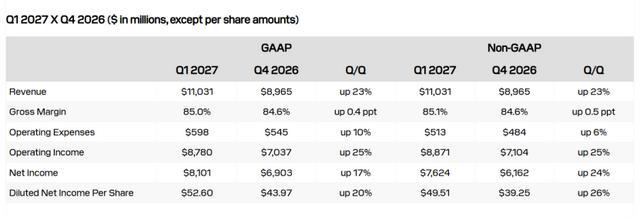
With supply of storage products running tight, the vendor pushed through significant price increases. The reported result for Q1 is an adjusted gross margin of 85.1%, up from 84.6% in the previous quarter and far above the 29.8% posted in the same period last year. Management framed the growth mix explicitly on the earnings call: roughly 60% of this quarter's revenue growth came from higher shipment volume, while 40% came from price. That distinction matters for any operations leader assuming the whole uplift is a pricing story, because volume-led expansion implies real pull from end markets rather than a pure invoice effect.
Cited figures at a glance
| Metric | Reported value | Reference point |
|---|---|---|
| Q1 adjusted gross margin | 85.1% | 84.6% in the previous quarter; 29.8% in the same period last year |
| Composition of this quarter's revenue growth | roughly 60% volume / 40% price | Management commentary on the earnings call |
| Guidance, second quarter of fiscal 2027 revenue | USD 12.2 billion to USD 12.6 billion | Analyst consensus of USD 12.1 billion |
| Guidance, adjusted gross margin | 84.5% to 85.5% | Company outlook for the guided quarter |
| Shareholder return policy | 100% of excess cash | USD 5.0 billion in buybacks executed this fiscal quarter |
| Data-center share of industry volume | close to half today | about 20% ten years ago; more than 55% expected in 2027 |
On outlook, the company guided second quarter of fiscal 2027 revenue to USD 12.2 billion to USD 12.6 billion, ahead of the USD 12.1 billion analyst expectation, with adjusted gross margin projected at 84.5% to 85.5%. Capital policy reinforces the picture of a supplier with constrained output and strong pricing power: the firm has committed to returning 100% of excess cash to shareholders and already spent USD 5.0 billion on share repurchases this fiscal quarter. For industrial buyers, the read-through is that incremental cash is being routed to owners rather than to rapid greenfield capacity expansion, which does not relieve a tight supply position quickly.
Data centers move from side market to main line
Chairman and Chief Executive David Goeckeler put the structural shift in a long arc: ten years ago data-center work accounted for about 20% of industry volume, while the figure is now close to half, and he expects it to exceed 55% in 2027. Quoted bid demand is running about 40% higher year over year, a leading indicator of how much of the next two production years is being contested. He also forecasts that key-value caching (KV Cache) will take about one-third of the AI data-center flash market by the end of this decade, which tells equipment and IT buyers where the highest-value allocation fights will happen.
Case note: what a pre-committed capacity year looks like from the buyer's side
The clearest operational illustration in this disclosure is capacity commitment. Currently about 50% of fiscal 2027 output is already locked by new business module projects, and that share is expected to climb to roughly two-thirds in 2028. Translated into procurement reality: for the fiscal year you are planning today, half of the wafer supply may already be spoken for before your order window opens, and by 2028 only a narrow residual is likely to be available on uncommitted terms. Combined with the data-center ratio moving from about 20% to close to half over the past decade and toward more than 55% in 2027, the arithmetic leaves industrial and edge programs bidding for a shrinking unallocated pool. No new projects, regions or customers are implied here; the numbers come directly from the company's own statements.
HBF sample clock, plus the PC and automotive picture
On the technology front, the first high-bandwidth flash (HBF) storage chip has completed tape-out. The architecture is described as delivering read bandwidth comparable to HBM while offering larger capacity, with the first samples scheduled to reach customers next year. Management's near-term read on personal computing is sober: the current two quarters are the trough of PC shipment volume, and unit sales may still record a single-digit decline next year. The counterweight is capacity per device: PC storage volume measured in exabytes is set to grow, and every segment of the NAND market is expected to post positive growth next year. Automotive electronics, meanwhile, is positioned as one of the largest segments within future edge computing, a point of interest for factory and fleet electrification programs.
Common misconceptions to avoid
- Reading 85.1% as pure pricing. The stated split is roughly 60% of revenue growth from volume and 40% from price, so demand depth, not just list-price moves, is doing part of the work.
- Treating guidance as one uniform end-market forecast. A guided quarter of USD 12.2 billion to USD 12.6 billion can coexist with a PC trough across the current two quarters and a possible single-digit decline in units next year.
- Equating tape-out with supply. HBF is described as the first such chip to reach tape-out, with the first samples due next year, not volume availability today.
- Assuming falling PC units mean falling storage demand. Exabyte capacity in PC storage is expected to rise even as units soften, and all NAND segments are projected to grow next year.
- Assuming supplier cash returns fund relief capacity. With a commitment to return 100% of excess cash and USD 5.0 billion already used for buybacks this fiscal quarter, the allocation balance is unlikely to loosen quickly.
Action guidance for managers and procurement teams
- Re-baseline your exposure. Map which storage line items in your bill of materials sit on capacity that is already committed to data-center programs, given about 50% of fiscal 2027 output is locked now and roughly two-thirds by 2028.
- Plan in bits, not boxes. Replace unit-based forecasts with capacity-based forecasts so a possible single-digit unit decline in PC does not mask growth in exabyte demand.
- Use bid demand as a leading indicator. A roughly 40% year-over-year increase in quoted bids signals allocation pressure well before it shows up as your lead times.
- Sequence qualification windows around the roadmap. Where an architecture comparable to HBM in read bandwidth matters to your product, align evaluation against the stated timeline for first HBF samples next year.
- Build cost pass-through into contracts. With 40% of this quarter's growth coming from price and margin guided at 84.5% to 85.5%, assume pricing strength persists and negotiate index-linked terms rather than fixed ones.
- Watch edge and automotive timing. Because these are framed as among the largest segments of future edge computing, start long-cycle design-in early rather than waiting for spot availability.
FAQ
How high did adjusted gross margin go, and what was it before?
Q1 adjusted gross margin reached 85.1%, versus 84.6% in the previous quarter and 29.8% in the same period last year.
Is the revenue growth mainly about price?
No. Management put the split at roughly 60% of this quarter's revenue growth from volume and 40% from price.
What is the outlook for the guided quarter?
Second quarter of fiscal 2027 revenue is guided to USD 12.2 billion to USD 12.6 billion, above the USD 12.1 billion analyst expectation, with adjusted gross margin of 84.5% to 85.5%.
How much future supply is already sold?
Currently about 50% of fiscal 2027 capacity is locked by new business module projects, with the share rising to about two-thirds in 2028.
When does HBF become relevant to product planners?
The first HBF chip has completed tape-out, and the first samples are expected to reach customers next year; read bandwidth is described as comparable to HBM with larger capacity.
Bottom line for the shop floor and the boardroom
The story carried by this quarter is a supply-side one. A margin trajectory from 29.8% a year ago to 85.1% today, guided at 84.5% to 85.5%, tells you the pricing environment has reset. A demand mix climbing from about 20% ten years ago to close to half now, and toward more than 55% in 2027, tells you who is setting that reset. Industrial organisations that treat storage as a routine commodity line will find it behaves like a rationed input; those that plan in bits, track bid momentum and qualify architectures on the supplier's own sample clock will keep schedule and cost control. Contact the newsroom at news@industrialweekly.com for follow-up on this coverage.