
Recovering Installed Memory: An Industrial Playbook for Keeping AI Infrastructure Buildouts on Schedule
For industrial organizations that are adding AI to design, production, logistics, or energy operations, the schedule risk is now often found inside the server rack before it appears in the GPU queue. The Center for Strategic and International Studies reports that data centers will absorb 50% to 70% of all memory chips produced this year. In the U.S., a small set of manufacturers and factory programs that can take years to bring additional output online magnify the risk. Facilities can have compute, power, cooling, and racks prepared, yet deployment may pause because memory modules cannot be secured. That changes the management question: memory is no longer a narrow bill of materials item; it is a capacity planning constraint.
A practical example is emerging in operator practice. Some facilities recover memory from retired servers and place it into AI deployments, rather than treating those modules as scrap. When reusability is made a requirement during platform selection and rack architecture work, three benefits become available: near-term capacity from modules already in the fleet, a more efficient use of scarce high-bandwidth memory (HBM), and a move away from full-system refresh habits. The following sections translate that pattern into a playbook for manufacturing, engineering, operations, procurement, and technology decision-makers.
Near-term capacity starts with installed DRAM
The most immediate relief comes from supply already paid for and sitting in earlier equipment. Upgrade cycles often leave large server fleets containing substantial dynamic random access memory (DRAM). Operators can redeploy that DRAM through Compute Express Link (CXL) memory expansion devices. These devices attach memory over PCI Express (PCIe) instead of relying only on the CPU’s native memory channels. The effect is that newer DRAM-based servers can use memory from older generations as added capacity. One expansion controller can host a dozen reclaimed modules and provide more than one terabyte of memory; some controllers also include in-line compression, which nearly doubles the usable amount.
That path becomes far easier when compatibility is designed in. Platforms that support open interconnect standards and reserve physical and electrical layout space for expansion devices give reclaimed modules a defined place to connect. Without that preparation, teams may be forced into one-off adapter projects for each server generation, increasing integration effort and schedule uncertainty.
Recovered capacity also changes exposure to supply. Each module that is reused does not compete for new factory output. New memory hardware does not need to be manufactured for that capacity increment, which reduces dependence on distant fabrication plants at a time when allocations can shape deployment timing.
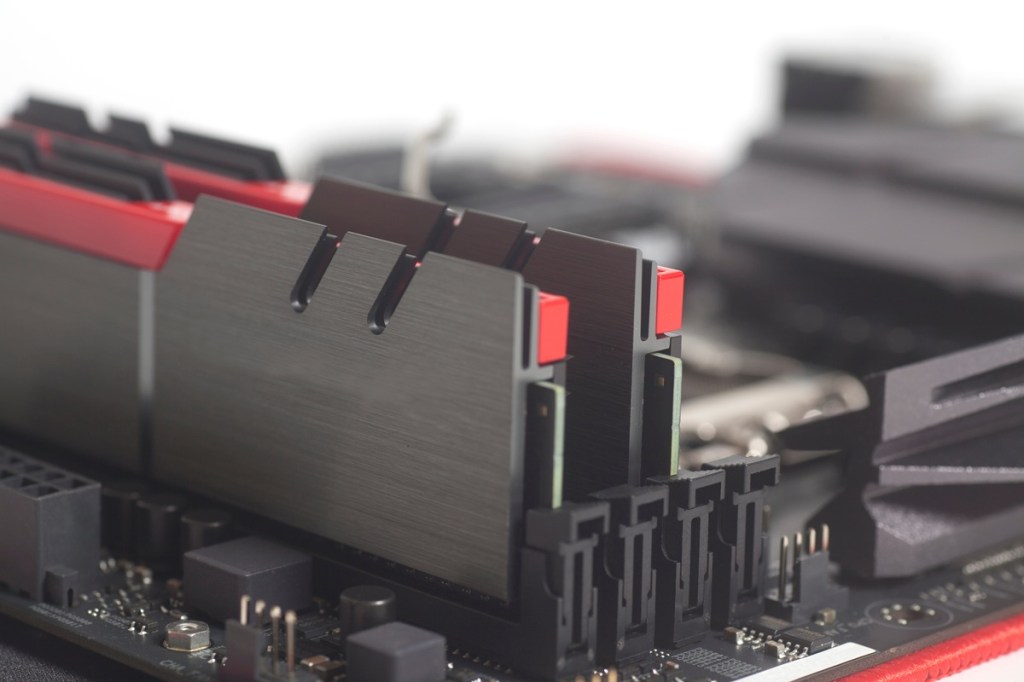 Recovering memory from older systems supports capacity additions before new fabs are ready, extends the reach of scarce HBM, and helps break full-system refresh cycles (Source: Adobe Stock).
A layered approach can stretch scarce HBM
AI systems use memory in tiers, balancing speed, cost, and purpose. HBM sits adjacent to the GPU or accelerator, and one HBM stack can deliver over 1 terabyte per second of bandwidth. Conventional DRAM is much less costly in bandwidth terms, and a DDR4 module tops out at 25.6 gigabytes per second. CXL is an open interconnect standard built on PCIe that introduces an additional layer of expanded or pooled memory while preserving data coherence across the hierarchy. Older modules fit naturally in that tier when the workload can tolerate the difference.
HBM is usually the most constrained layer because its supply cannot be adjusted quickly. Vertically stacked memory is more expensive and slower to manufacture than ordinary memory. For systems or GPUs designed around HBM, there is no equivalent substitute. The practical response is to reserve HBM for workloads that truly need it. Support functions such as caching, data preprocessing, and retrieval can run on reclaimed memory, leaving HBM for latency-sensitive training and real-time inference. Right-sizing each deployment also helps prevent expensive accelerator memory from being overprovisioned across many servers.
Layering requires testing. CXL-attached memory has more latency than directly attached DRAM, so operators need to evaluate configurations against real workloads before making commitments. Qualifying older modules on new platforms before procurement becomes tight turns reuse from a stopgap into planned capacity.
Breaking the habit of whole-system refresh
The third benefit is structural, not merely tactical. Servers contain components that advance at different speeds, yet many refresh programs retire an entire system because one element has aged. Modular, disaggregated designs let GPUs, CPUs, and memory move through replacement on different schedules. A server designed to support several component generations can retain memory that is already in the fleet while accelerators are upgraded.
Separating memory decisions from accelerator upgrades reduces the volume of new memory that must be bought at shortage prices or waited out because of long lead times. It also reduces electronic waste and Scope 3 emissions tied to manufacturing and sourcing new parts. For operators with sustainability objectives, that creates a more direct link between infrastructure architecture and environmental reporting.
Common misconceptions
- Misconception: Reuse is only a cost tactic. It can reduce cost, but its larger value is schedule control and capacity assurance when memory allocations are constrained.
- Misconception: Old modules can be inserted anywhere without qualification. CXL expansion introduces latency and platform compatibility questions, so real workload testing is necessary.
- Misconception: HBM can be replaced by pooled DRAM for every AI task. For systems designed around HBM, there is no substitute; reuse works by handling other tiers of memory.
- Misconception: One-off adapters are a normal long-term path. Designing for open standards and reserved expansion space is more repeatable than custom fixes for each generation.
- Misconception: Reuse eliminates supply risk. It lowers dependence on new fab output for specific capacity needs, but it still requires inventory mapping, validation, and disciplined refresh policy.
Action recommendations
- Make reusability a platform requirement. During procurement, ask whether servers support CXL or comparable expansion paths and whether the rack layout can accommodate reclaimed modules.
- Inventory memory assets before new purchasing. Map installed DRAM by generation, quantity, and condition so that operators know what capacity can be redeployed.
- Qualify modules in advance. Test older memory with new servers, applications, and latency-sensitive workloads before allocations become difficult.
- Match memory tiers to workloads. Keep HBM for tasks that need it and assign caching, preprocessing, and retrieval to reclaimed or expanded memory when performance targets allow.
- Move to component-level refresh. Define replacement schedules for GPUs, CPUs, and memory separately, and require modular designs that can support several generations.
- Connect the plan to sustainability reporting. Track the reduced waste and emissions benefits that come from keeping usable components in service.
- Build a schedule buffer. Use reuse to reduce dependence on a single allocation or supplier while new capacity comes online over years.
FAQ
Why has memory become a central constraint for AI buildouts?
Because demand for memory chips is no longer spread thinly across markets. The Center for Strategic and International Studies reports that data centers will absorb 50% to 70% of all memory chips produced this year. In the U.S., a small set of manufacturers and multi-year factory expansion programs mean that shortages can block deployments even when other infrastructure is ready.
What does CXL do in a memory reuse strategy?
CXL connects memory to servers through PCIe rather than only through native CPU channels. This creates a capacity tier where older or reclaimed DRAM can support newer systems, helping operators use installed modules more effectively.
Can reclaimed DRAM replace HBM?
No. HBM is positioned next to accelerators for extreme bandwidth, and one stack can provide over 1 terabyte per second. Conventional DRAM operates at a different level; a DDR4 module tops out at 25.6 gigabytes per second. Reuse complements HBM strategy by handling workloads that do not require HBM-class bandwidth.
What is the biggest operational risk in reusing older memory?
Untested compatibility and latency differences. Operators should run real workload validation and qualify older modules on new platforms before relying on them during tight procurement periods.
Does memory reuse support sustainability goals?
Yes. Keeping modules in service can reduce electronic waste and lower Scope 3 emissions associated with producing and sourcing new components, while also reducing purchases made at constrained supply prices.
The takeaway for industrial decision-makers
For a general industrial audience, the relevant lesson is not that every facility should chase a particular hardware trend. The lesson is that reusable infrastructure is now an operations lever. Teams that define memory compatibility, validate installed assets, and design for component-level refresh can turn scarce chips into a managed constraint rather than an unpredictable blocker. That approach gives planners a clearer path through buildouts, helps keep programs moving when supply allocations are tight, and aligns technology decisions with both capacity needs and sustainability targets.