
WorldIndustrialWeekly Analysis: Optivolt Secures $32M to Move Power Balancer Electronics Inside Solar Panels
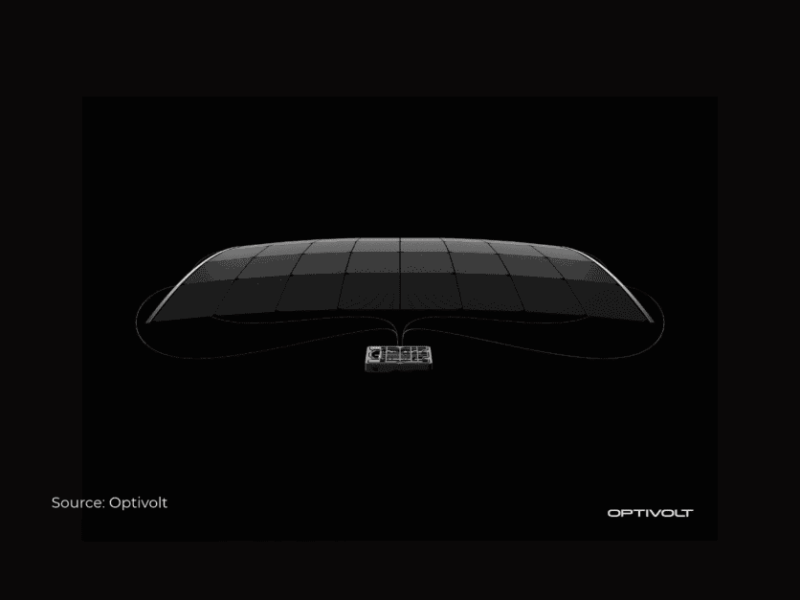
For industrial energy, automation, and project-development teams watching photovoltaic system design, a San Francisco company named Optivolt is betting that the next efficiency lever sits inside the module rather than only in the solar cell. The company has raised $32 million to scale its Power Balancer electronics, moving active power management from external optimizers into the panel itself. For eeNews Europe readers and a broader industrial audience, the story points to a possible shift in how arrays handle shading, mismatch loss, monitoring, and installation architecture.
Case Context: Why Module-Level Power Electronics Matter
In standard photovoltaic modules, cells are grouped together so that one weakened cell can constrain the output of a larger section. Shade, dirt, contamination, and uneven degradation are common in real installations. Bypass diodes can protect the circuit, but they may also take entire sections out of power generation when conditions become unfavorable.
Optivolt’s approach is different: Power Balancer actively redistributes energy among cell groups as operating conditions change. The electronics replace conventional bypass diodes and include monitoring and rapid shutdown functions. According to the company, this design can remove the need for separate module-level optimizers, microinverters, and rapid-shutdown devices in some system configurations.
The engineering challenge is durability and thermal management inside a panel that may operate for decades. Optivolt says it brought in engineers with satellite power system experience to address those constraints. In typical operating conditions, the company reports 99.4% conversion efficiency for the Power Balancer.
Key Data Points: Funding, Testing, Patents, and Deployment
| Category | Reported detail |
|---|---|
| Financing | $32M Series A led by VXI Capital, with participation from RA Capital, Valo Ventures, and Atlas Innovate; total funding now stands at $42 million. |
| Technology | Power Balancer integrated power electronics; 99.4% conversion efficiency under typical operating conditions, according to the company. |
| Shading test | Sixfold result: panels with the technology generated up to six times more power than panels using external optimizers in internal tests under defined shading scenarios. |
| Development history | Optivolt has spent nine years developing the technology and holds 19 issued patents, with another 27 applications pending. |
| Certifications | UL certifications covering integrated electronics, enclosure, rapid shutdown, and module safety. |
| Deployment | More than 20,000 panels incorporating the Power Balancer have already shipped. |
| Leadership and investors | Founder and CEO Rohit Kalyanpur leads the company; investors include former Enphase CEO Paul Nahi and former SunPower CEO Tom Werner. |
“Solar became cheap enough to compete. I founded Optivolt to make it intelligent enough to power the world,” said Rohit Kalyanpur, founder and CEO of Optivolt.
Implementation View for Project Owners and Buyers
For manufacturers, energy managers, EPCs, and asset owners, the practical question is not only whether a solar cell has improved. It is whether the module can recover more of the electricity that cells already produce under imperfect field conditions. Optivolt argues that improving the solar cell is only part of the equation, and that managing electrical mismatches closer to their source can affect efficiency, architecture, and installation cost.
The company plans to use the funding to expand manufacturing and serve applications from residential rooftops to utility-scale installations. It is also targeting large solar projects intended to supply electricity to AI data centers, where demand for reliable power continues to shape infrastructure investment.
Common Misconceptions
- The Sixfold figure is not presented as a typical gain across all conditions; it comes from internal tests under defined shading scenarios.
- Panel-integrated electronics are not only a small convenience feature; they can reshape module-level design by combining power management, monitoring, and rapid shutdown inside the panel.
- External optimizers, microinverters, and rapid-shutdown devices may be unnecessary in some system configurations, but the company does not claim they are obsolete in every installation.
- The central comparison is not simply cell efficiency versus cell efficiency; it is whether the module architecture can preserve more usable output when cells are unevenly affected by shade, dirt, or degradation.
Action Suggestions for Industrial Teams
- Map real-world loss patterns first: shade, contamination, mismatch, degradation, and partial-output conditions should be documented before selecting a module-level electronics architecture.
- Ask suppliers for clear testing boundaries: whether performance data reflects typical annual generation or specific scenarios such as the Sixfold shading-test claim.
- Verify certification scope, including UL coverage for electronics, enclosure, rapid shutdown, and module safety, before integrating new designs into project standards.
- Review operational history and scale readiness, especially when evaluating technologies that move electronics inside the module rather than adding them outside the module.
FAQ
What did Optivolt raise?
The company secured $32 million in Series A funding, presented in the financing context as a $32M round.
What is Power Balancer?
Power Balancer is Optivolt’s module-integrated power electronics system designed to redistribute energy among cell groups when shading, dirt, or uneven degradation affects output.
How efficient is the reported conversion performance?
The company states that the Power Balancer achieves 99.4% conversion efficiency under typical operating conditions.
What is the funding background?
The round was led by VXI Capital, with RA Capital, Valo Ventures, and Atlas Innovate participating. Total funding now stands at $42 million.
Does the technology claim six times more power everywhere?
No. The reported result of up to six times more power applies to internal tests under defined shading scenarios, not universal field performance.
The broader takeaway for WorldIndustrialWeekly readers is that solar hardware progress may increasingly be judged by how intelligently modules manage electricity after the cell is built. Optivolt’s next challenge is to prove that its panel-integrated Power Balancer can scale from engineering concept and funded development into practical deployments across homes, industry, utility projects, and the energy infrastructure linked to AI data centers.