
Quantum-Resilient Encryption Comes to the CNC Controller: What the Event Horizon Group and MSP4MFG Manufacturing License Means for Plant Operators
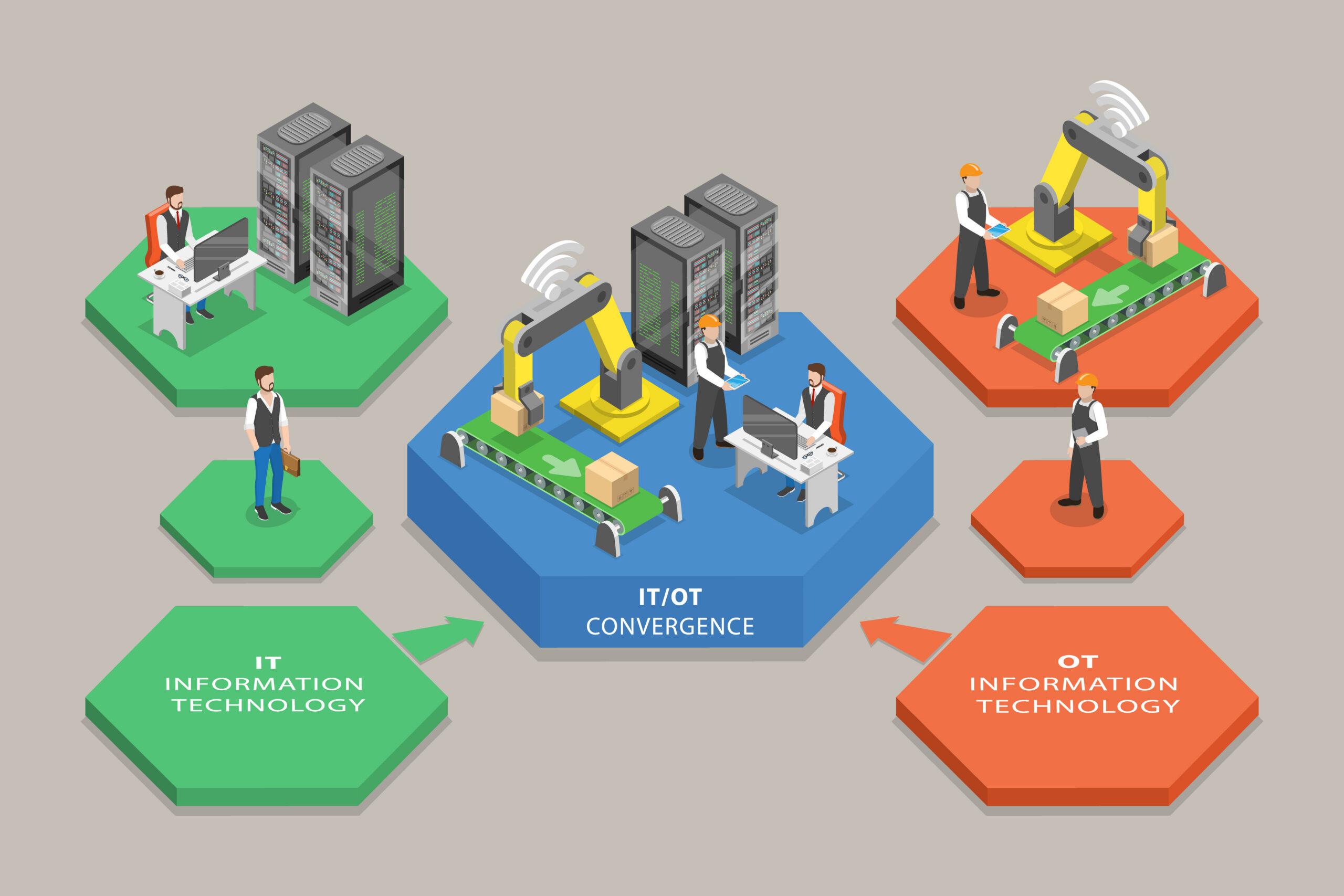
Operations, IT/OT and compliance leaders who have spent years bolting corporate IT controls onto machine tools are the intended audience for an agreement signed at McCormick Place in Chicago: MSP4MFG now holds exclusive worldwide rights to deploy Quantum resilient encryption (QRE) across the manufacturing sector, and the scope of that license is the machine tool itself rather than the office network behind it.
Read from a plant-management perspective, the announcement is less about a contract than about a diagnostic. It confirms that the most valuable industrial assets — part programs, drawings, models and other controlled technical information — still move daily between engineering networks and shop-floor machines, and that protection at the controller has been an open gap. The paragraphs below unpack the deal, the technical claims, the market figures and the practical steps readers can take.
Where the technology claims to differ
QRE was developed by CEW Systems Canada and rests on bi-symmetric encryption — a hybridized handshake method positioned for the quantum era. Four properties define the pitch:
- Credentials never cross the wire. A challenge / counter-challenge handshake is used so that login credentials are never transmitted, eliminating the attack surface most frequently exploited today.
- Handshake traffic is salted and randomized. The design goal is to defeat interception, replay and pattern analysis.
- Brute force is pushed past physical feasibility. An exponentially nested formula produces false-positive spaces that exceed manufacturable data storage limits — including for quantum-capable adversaries.
- The footprint is light enough for industrial edge hardware. A built-in password manager supports complex credentials and two-factor authentication on resource-constrained devices.
Within the MSP4MFG platform, quantum resilient encryption is positioned to support manufacturers working toward CMMC 2.0, NIST SP 800-171, ITAR, NERC-CIP, CIS, ISO / IEC, SOC2, OWASP, CRA, NIS2, OT360™ and DFARS obligations, by protecting Controlled Unclassified Information (CUI) throughout the production environment.
What is actually being deployed on the floor
Two applications carry the technology first: the MSP4MFG manufacturing security platform and the new “MSP4” secure edge device, both unveiled this week at IMTS 2026 in Chicago. Hardened, manufacturing-native security is extended to CNC machine tool environments used worldwide in aerospace, automotive and defense supply chains, plus job shops and fabrication, together with other MSP4MFG cyber technologies. Future development is planned for PLCs and related industrial control systems.
Coverage follows the data rather than the network perimeter: part programs, drawings, models and other controlled technical information are protected at rest, in motion and at the machine, on smart edge devices that connect legacy and modern CNC equipment. Direct aim is taken at industrial espionage and the theft of engineering data.
Encryption sits inside a broader service stack. Security operations center (SOC), security incident event management (SIEM), endpoint detection and response (EDR), vulnerability management (VM), patch management and penetration testing are all built on a hardened operating system.
The numbers behind the urgency
| Indicator | Figure cited | Source / context |
|---|---|---|
| Industrial cybersecurity market, 2024 | approximately US$84.5 billion | Industry analysts DataM Intelligence estimate |
| Same market, 2029 | US$135.9 billion | 9.6% CAGR |
| Ransomware consequence | downtime commonly exceeds US$100,000 per hour | Manufacturing described as the number-one ransomware target |
| Rising compliance bar | Requirements continue to climb | Insurers alongside CMMC / NIST frameworks |
| Served segment | Mid-market plants underserved | Generic, office-centric security providers leave the gap MSP4MFG was formed to close |
Case study in miniature: one part program, one shift
The scenario the partners describe is unremarkable — which is precisely why it matters. A defense-chain machining house or an automotive supplier releases revisions to a part program. The file leaves an engineering network, is staged on a shop-floor controller, and is executed on a CNC asset that has been in service long before any current security standard existed. Every step of that journey is an exposure point for industrial espionage, and the loss is not merely financial: controlled technical information has compliance consequences under ITAR, DFARS and CUI-handling rules.
The stated remedy is to place protection where the file actually lands — at the machine, on an edge device that bridges legacy and modern CNC equipment — while keeping production running rather than offline.
How the principals frame it
“The machine tool is where a manufacturer’s intellectual property is most exposed, and it is the one place traditional security vendors never seem to reach. Exclusive access to QRE lets us protect part programs and engineering data all the way to the spindle — without taking production offline,” said Tom Gaasenbeek, Managing Director, MSP4MFG LLC.
“Manufacturing is exactly the environment Quantum Resilient Encryption was built for: high-value data, legacy equipment and adversaries with growing computational power. MSP4MFG’s plant-floor reach makes them the right exclusive partner to carry QRE into this important sector, ” said David Palachik, chief executive officer of Event Horizon Group.
Common misconceptions this announcement corrects
- “Securing the enterprise secures the shop floor.” Traditional vendors do not reach the machine tool, which is where intellectual property is most exposed.
- “Quantum-safe is a 2026-and-later problem.” The design also addresses present-day interception, replay and pattern analysis, not only future quantum-capable attacks.
- “Protecting legacy CNC means replacing it.” The MSP4 secure edge device is aimed at connecting legacy and modern equipment instead.
- “Taking production offline is the safe option.” The stated objective is protection of part programs and engineering data without stopping machining.
Action checklist for industrial readers
- Map the routes controlled technical information actually travels between engineering networks and CNC controllers, and record which legacy assets have no security footprint.
- Ask incumbent providers a single question: does your coverage include the machine tool environment, or only office endpoints and the corporate network?
- Prioritize edge-level controls on assets machining aerospace, automotive and defense supply-chain work, where theft of part programs, drawings and models carries both competitive and regulatory cost.
- Cross-check encryption claims against obligations you already carry — CMMC 2.0, NIST SP 800-171, ITAR, NERC-CIP, CIS, ISO / IEC, SOC2, OWASP, CRA, NIS2, OT360™ and DFARS — and confirm CUI is addressed throughout the production environment.
- Validate that a vendor stack covers the operational basics: SOC, SIEM, EDR, VM, patch management and penetration testing on a hardened operating system.
- Re-run downtime assumptions using US$100,000 per hour before setting security budgets for 2026, and track any roadmap items for PLCs and related industrial control systems.
FAQ
What was announced at IMTS?
At the International Manufacturing Technology Show (IMTS) at McCormick Place, Event Horizon Group — the parent company of Q, WARP10 and CEW Systems Canada — and MSP4MFG LLC of Cheyenne, Wyoming announced today an exclusive worldwide licensing agreement covering the deployment of quantum resilient encryption across manufacturing.
Is QRE a product or an underlying technology?
It is a technology licensed to a platform operator. The first applications are MSP4MFG’s manufacturing security platform and the MSP4 secure edge device, announced this week at IMTS 2026.
Who built it?
CEW Systems Canada, an Event Horizon Group company, developed QRE. Event Horizon Group is described as the developer of Bi-Symmetric Quantum Resilient Encryption.
Which assets benefit most?
CNC machine tool environments in aerospace, automotive, defense supply chains, job shops and fabrication, including legacy equipment connected through smart edge devices. PLCs and related industrial control systems are named as future development.
Why mid-market plants?
Generic, office-centric security providers still underserve mid-market plants — the gap MSP4MFG was formed to close, in a sector that is now the number-one ransomware target.
The parties involved
Headquartered in Cheyenne, Wyoming, MSP4MFG LLC operates as the plant-floor managed services provider focused on securing operations. Three specialized partners — Excellerant (production intelligence and machine monitoring), Nexas (machine connectivity and OT integration) and OBETEC (cybersecurity and compliance) — are united under MSP4MFG to deliver integrated IT, OT and cybersecurity services built for manufacturers rather than adapted from office IT: connect, monitor, optimize, secure, comply and continuously improve.
Event Horizon Group is the parent company of Q, WARP10 and CEW Systems Canada, and is the licensor in this agreement.
Bottom line
The exclusivity arrangement signals that plant-floor encryption has moved from a research topic into a commercial category, backed by compliance pressure, insurance expectations and a market growing toward US$135.9 billion by 2029. For manufacturers, the near-term task is not choosing a vendor but locating the gap: identify where controlled technical information touches a CNC controller, test whether current providers reach it, and decide whether the exposure of part programs and drawings is worth more than the cost of an edge-level fix.
Written by Michael Torres for WorldIndustrialWeekly. Editorial questions and reader tips: news@industrialweekly.com.