
WorldIndustrialWeekly: Tesla FSD Approvals in Latvia and Slovakia Show Supervised Driving Is Not a Safety Shortcut
Industrial mobility decisions rarely turn on a single software toggle. They turn on whether a regulator, a manufacturer, a fleet user and a driver share the same understanding of risk. That is why the Oct 27 news that Tesla FSD received approvals in Latvia and Slovakia deserves attention beyond enthusiast circles: it tests how a supervised driving function moves from marketing language into public road use, and what gaps remain for safety planning.
How the approval reached Latvia and Slovakia
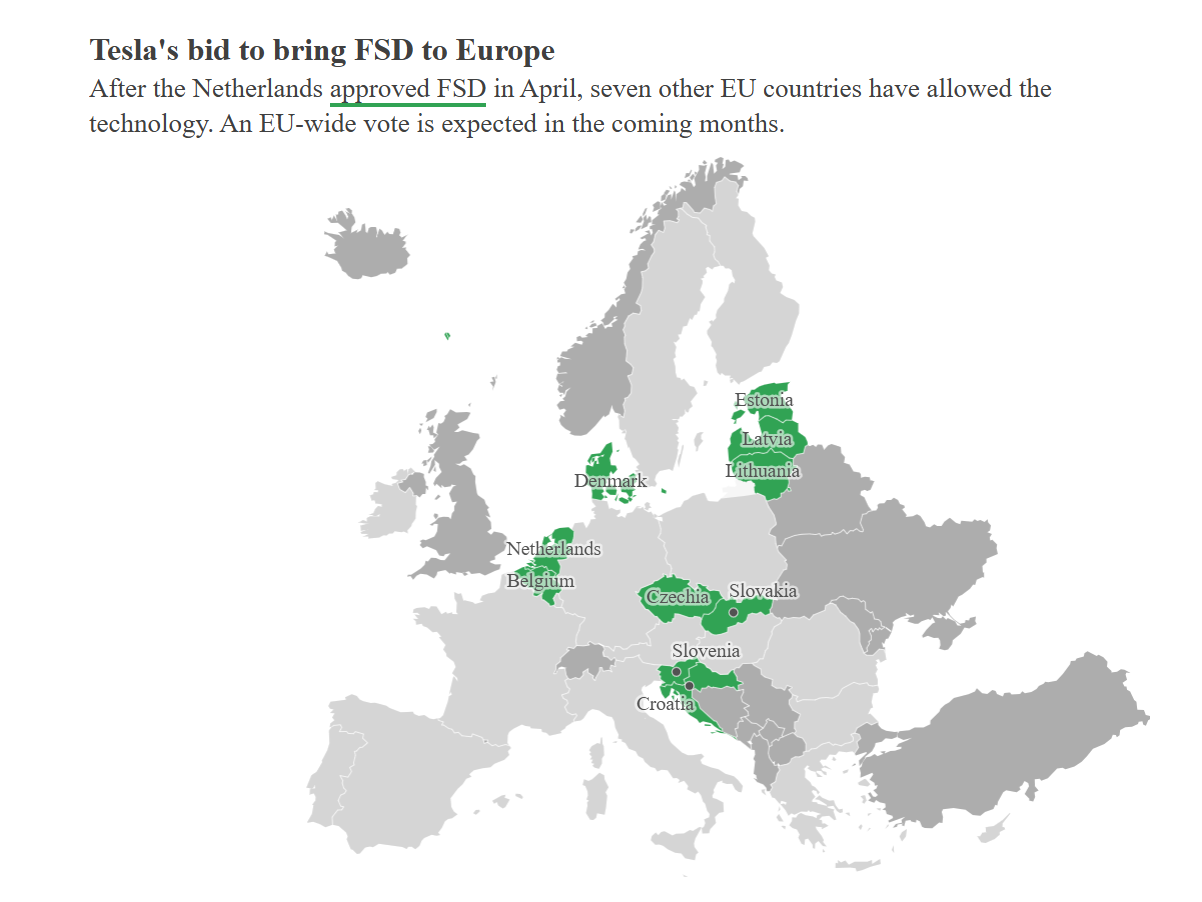
On Monday, Latvia became the 10th European country to approve the driver-assistance software that Tesla had recently renamed in Europe from Full Self-Driving (Supervised), or FSD (Supervised), to Tesla Assisted Driving, abbreviated TAD. Earlier this month, Slovakia also cleared the technology. Latvia's transport ministry said the national road-safety authority accepted a temporary European Union type approval granted by the Dutch vehicle authority RDW. Tesla Europe then confirmed the approval and said software deployment would start soon, without giving a date.
The broader European picture still includes regulatory waiting. Tesla is seeking support while a key vote remains pending; that vote could create a wider path for the technology across the EU.
What the test drive revealed about driver readiness
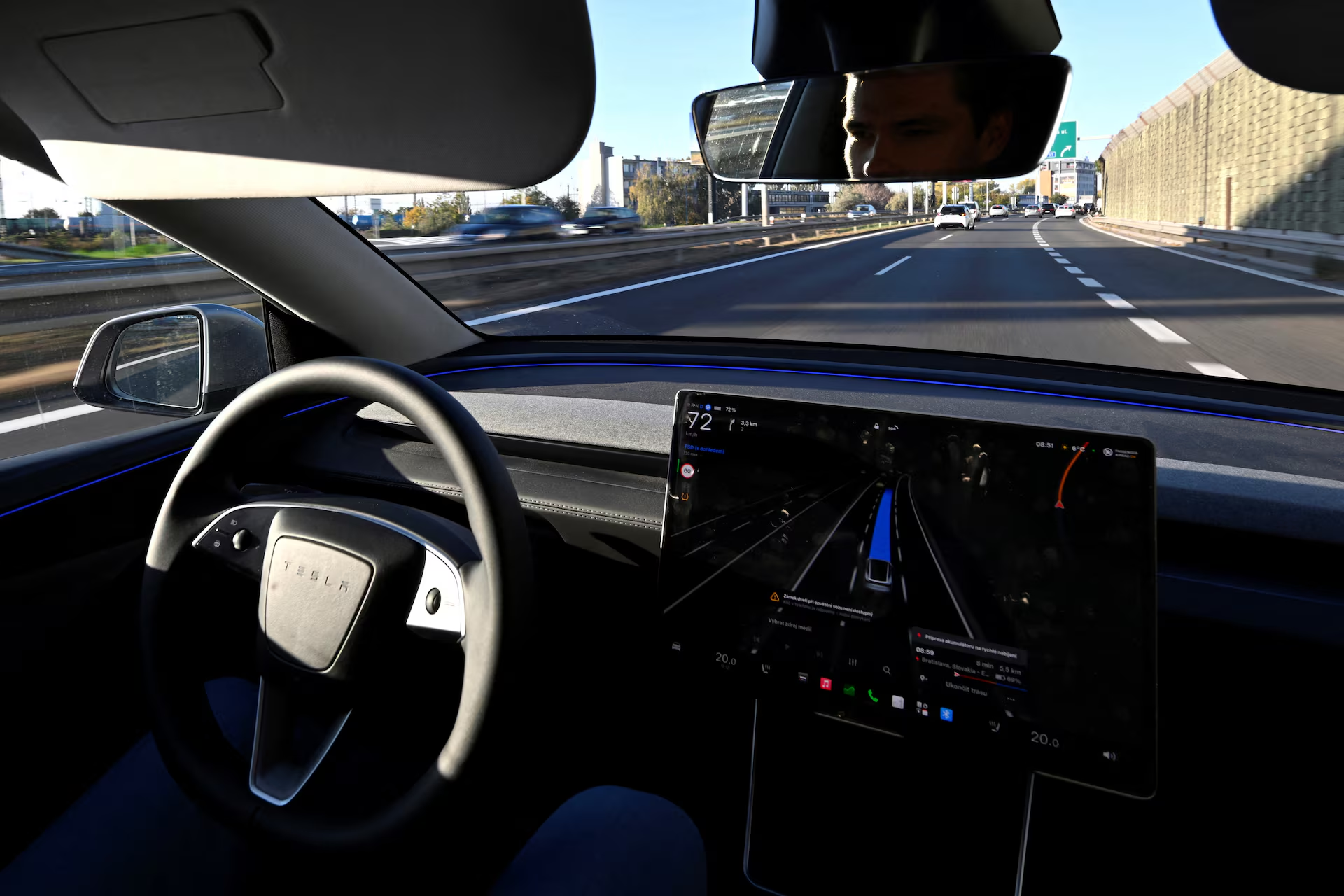
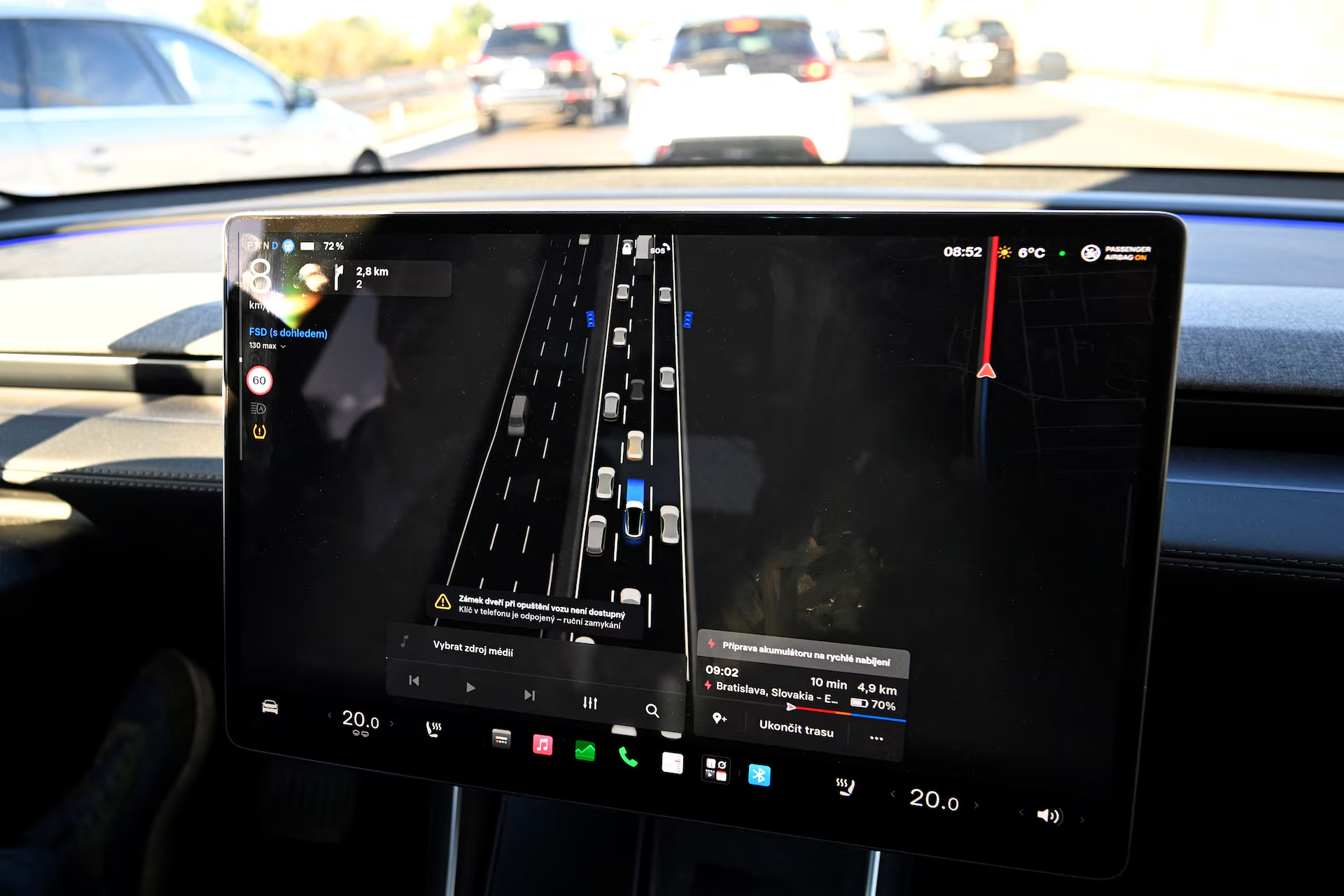
A Reuters ride-along involving a Tesla equipped with TAD offered practical context. The 35-year-old Igor Marcek, who bought his car in Slovakia two years earlier and works in Bratislava as a financial agent and life-planning adviser, said he hopes vehicles will eventually drive themselves so owners can save energy and use travel time for other tasks.
The ride was not uniformly reassuring. On congested highways and when merging into traffic, the system handled situations smoothly. But when approaching a closed barrier, the car did not slow, forcing Marcek to brake hard. At a Tesla Supercharger station, the vehicle also failed to enter an empty charging bay, and Marcek took over again. He summarized the operating reality in one line: "The technology is still evolving, so you must stay alert and watch what the vehicle is doing."
This quote matters because Latvia's transport ministry classifies TAD as an L2 driver-assistance system. In such systems, the driver must continuously monitor traffic, stay ready to take control, and remain responsible for traffic violations or crashes.
Advocacy, data claims and regulatory friction
Tesla owners in Europe have pushed for faster deployment, and Tesla and CEO Elon Musk have encouraged users to contact local authorities. In Slovakia, the Tesla owners club, with 1,500 registered members, held a vehicle light show outside the ministry building. Club chairman Kristian Kratochvil said that after the Netherlands issued the first approval, the club contacted the Slovak transport ministry and has frequently asked for updates.
Tesla says the system can make collision-avoidance performance improve by more than four times and save lives. Reuters reported that safety researchers strongly dispute such claims. Regulatory resistance is growing in the EU, with some authorities raising doubts about system safety and whether drivers can maintain sufficient attention during use.
Why managers should treat the approvals as an operating case
For manufacturers, logistics teams and service operators, the case value is not that a feature was enabled, but that a supervised automation package can be legally accepted while still requiring human correction in edge scenarios. A closed barrier and a charging-station slot are mundane industrial environments: access control, charging, parking, and handoff points are where policy, facility design and software behavior meet. If a vehicle does not respond as expected at a gate, the failure is operational before it is legal.
Data citations that should anchor the discussion
| Fact | Why it matters |
|---|---|
| Oct 27 approvals in Latvia and Slovakia | Shows staged national approvals under an EU-type route, not a single region-wide launch. |
| Latvia is the 10th approved country in Europe | Indicates incremental market access, while rollout speed may vary. |
| TAD is classified as L2 | The driver, not the software, remains the accountable operator. |
| Monthly subscription EUR 99, about USD 110.92 | Advanced assistance is becoming a recurring software cost that must be budgeted and justified. |
| Tesla claims more than four times collision-avoidance improvement | Supplier claims should be verified through independent test data before being used in safety cases. |
| Reuters ride recorded brake takeover and charging takeover | Real-world edge cases remain relevant to facility gates, charging areas and handoff design. |
Common misconceptions
- Approval equals autonomy. It does not: L2 means supervision.
- Renaming solves controversy. The shift from FSD (Supervised) to TAD changes label, but the operational duty stays similar.
- Smooth highway behavior means gate-ready. The closed-barrier and Tesla Supercharger examples show simple infrastructure can break expectations.
- Owner enthusiasm equals safety evidence. Advocacy can explain demand, but regulators still need demonstrable risk control.
Action suggestions for industrial readers
- Build a supervised-driving policy before enabling any feature: named driver responsibility, attention checks, route restrictions and takeover log review.
- Map facility touchpoints: gates, barriers, loading zones, charging bays and parking handoffs; treat each as a test scenario.
- Require vendor evidence to distinguish marketing claims from validated collision-avoidance performance, especially when claims such as more than four times improvement are cited.
- Train users on cost and status: a recurring EUR 99 monthly subscription does not remove the driver's legal or insurance exposure.
- Monitor EU regulatory signals, including the pending vote that could affect broader deployment across the EU.
FAQ
What did Latvia approve?
Latvia approved Tesla Assisted Driving, referred to as TAD, through acceptance of a temporary EU type approval issued by the Dutch vehicle authority RDW. Latvia's transport ministry described it as an L2 system.
Was Slovakia part of the same announcement?
No. Slovakia approved the technology earlier this month. Latvia's Monday approval made it the 10th European country to clear the software.
Why does the Reuters test matter to factories and logistics sites?
It showed takeover requirements in two non-exotic settings: a closed barrier and a Tesla Supercharger charging bay. Those are analogous to industrial site controls and charging infrastructure, where failure to slow or select an available position creates a safety and workflow event.
The deeper lesson for decision-makers is that supervised automation is a systems problem, not just a software feature. Approval may open the door, but facility design, driver training, evidence review and liability clarity determine whether the technology improves operations or simply relocates risk.