
JSW Greentech Limited Picks Siemens Xcelerator: A Hands-On Teamcenter and Mendix Playbook for AMPSTAR's India EV Build-Out
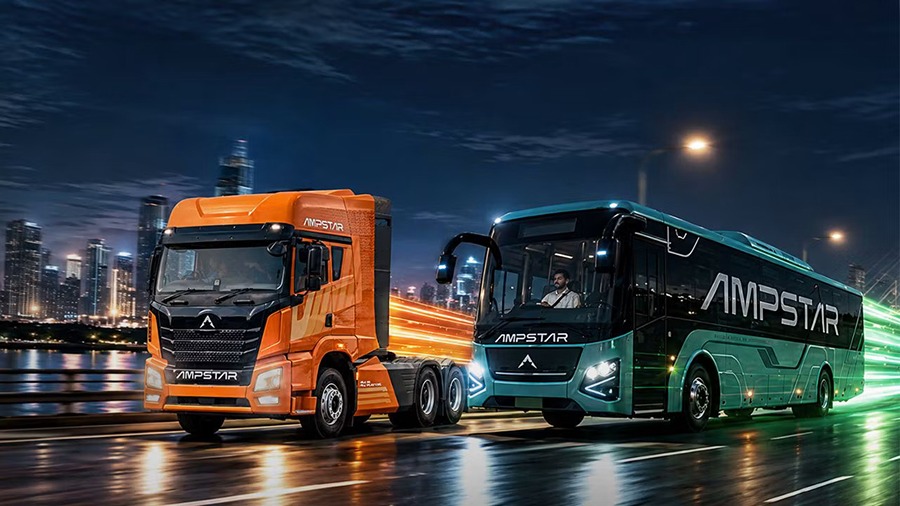
Short answer: In its November 2026 announcement, Siemens reported that JSW Greentech Limited selected Siemens Xcelerator software as the digital foundation for commercial electric vehicle development. For production, program and supply-chain readers the takeaway is architectural rather than promotional: Teamcenter becomes the single source of truth for product data, Mendix forms a low-code boundary layer for suppliers and business processes, and ERP integration is the seam that keeps engineering and operations telling the same story. The rest of this guide turns that pattern into steps, checklists and traps you can apply on your own programme.
What exactly is being connected under the AMPSTAR programme?
Conclusion first: this is one lifecycle spine stretched across four functions that normally run on separate data. The programme links engineering, product development, manufacturing and supplier collaboration across JSW Greentech operations in India, spanning the R&D centre in Pune and the greenfield manufacturing facility in Chhatrapati Sambhajinagar, all in service of electric buses, trucks and other sustainable mobility products built under the AMPSTAR brand.
Two site details, absent from the software announcement but relevant to anyone planning a comparable rollout, raise the stakes. JSW Group has described the Chhatrapati Sambhajinagar plant, sited at the AURIC industrial zone in Maharashtra, as India's largest integrated EV manufacturing facility, laid out across roughly 90 acres with a planned annual output of 15,000 electric buses and trucks (see the JSW Group press release of 22 September 2026). Trade reporting at the AMPSTAR launch indicated the site would cover truck-cabin manufacturing, electric-bus body building and battery-pack assembly (Autocar Pro, September 2026). A multi-line, high-mix plant that is still being commissioned is precisely the case where a PLM strategy decided on paper beats one retrofitted after SOP.
Why does the architecture matter more than the vendor name?
Because the same three failure modes appear in nearly every digital thread programme, whichever tools you buy. Teamcenter is positioned here as the backbone: it connects sources of product and engineering information, supports bills of materials (BOMs) and product structures, and carries requirements management, program planning, change management and collaboration across mechanical and electrical engineering disciplines. Mendix is positioned as the boundary layer, running a supplier-facing portal that extends digital processes beyond internal teams. Teamcenter-to-ERP integration is the bridge that synchronises engineering and business data.
Read as a responsibility map rather than a product list, the stack looks like this:
| Layer | What it must own | Typical accountable role | Early failure signal |
|---|---|---|---|
| Requirements and program plan | Voice-of-customer and regulatory requirements traced to design objects; phase gates | Programme manager | Requirements live in spreadsheets while CAD moves ahead |
| Mechanical and electrical design | Geometry, schematics, simulation, revision control across both disciplines | Engineering lead | Wiring harness and body-in-white iterations conflict at prototype build |
| BOM and product structure | As-designed, as-planned and as-built views of one item master | Manufacturing engineering | Torque or part numbers hand-corrected on the line |
| ERP integration | Item, change-order and cost data synchronised in one direction of authority | IT and operations together | Purchasing buys superseded revisions |
| Supplier collaboration | Portal-based release, acknowledgement, PPAP and status exchange | Supplier quality and sourcing | Drawings circulated by e-mail and WhatsApp, no audit trail |
How would a plant actually roll this out? A six-phase sequence
The announcement does not publish a project plan, so the phasing below is our editorial analysis, drawn from common PLM deployment practice rather than from JSW Greentech Limited. Treat the durations as planning ranges, not promises.
- Baseline the data, not the toolset (weeks 1-6). Inventory where every product object lives today: CAD vaults, spreadsheets, ERP item masters, supplier drawing folders. If you skip this, you will migrate chaos at speed.
- Fix the item master and BOM rules before go-live (weeks 4-12). One owner per object, one naming convention, explicit as-designed versus as-manufactured semantics.
- Model the workflows, then write the statement of work (weeks 8-16). Change management, engineering release and supplier authorisation should be documented before vendors price the configuration; a fixed-scope SOW signed against generic workflow templates is where many projects stall.
- Install the Teamcenter backbone for one credible product family (months 4-9). For an EV newcomer this usually means one bus variant or one battery-pack family, end to end, including requirements traceability.
- Open the Mendix boundary layer (months 6-12). Ship the supplier portal with two or three narrow jobs - drawing acknowledgement, change status, PPAP submission - rather than a mirror of every PLM screen. Publish role-based access and single sign-on rules on the same page you publish the portal URL.
- Close the ERP loop and instrument it (months 9-15). Define which system is authoritative for items, changes and costs, then measure release cycle time and change rework weekly from that day forward.
A useful sequencing note: Addverb Technologies, an Indian robotics and warehouse-automation manufacturer, paired the same Teamcenter and Mendix combination with Tecnomatix Plant Simulation when it announced its Siemens Xcelerator deployment in August 2025. Adding a simulation layer before line commissioning is the difference between validating a process and discovering it at ramp-up - directly applicable to a greenfield site still under construction.
Why pair Teamcenter with Mendix instead of just extending PLM screens?
Because the people who touch product data most often are the least willing to learn a PLM client. Siemens and Mendix published a dedicated Teamcenter extension in May 2024 precisely so domain experts, rather than only professional developers, could build tailored applications on top of Teamcenter data. That is a governance argument as much as a convenience one: an application built against the managed BOM is safe; a re-keyed spreadsheet copy of it is not.
A comparable case from race-car manufacturing, published by Mendix, illustrates the practical decision. Team Penske's PLM business analyst Steven Abbey described the value of proactive connections: when someone updates data in Teamcenter, the Mendix view refreshes automatically on next access, so teams stop worrying about whether everyone is looking at the same information. Reported in the same account, the reason the low-code layer was chosen over a wider PLM client rollout was training load on the shop floor, plus role-tailored interfaces, single sign-on and permission-based access.
Translated into checklist items for an EV programme:
- Give suppliers scoped portal access to released objects, not read access to the whole engineering repository.
- Make the mobile and shop-floor view task-centred - one job, one screen, one status action.
- Log every external write-back so the audit trail survives an IATF or customer process audit.
- Put an owner on the low-code layer: unmanaged app sprawl around a clean PLM core recreates the silos you paid to remove.
What market pressure makes this kind of change control urgent?
Indian commercial electrification is policy-paced and price-sensitive, which compresses development cycles and multiplies variants - the exact conditions under which weak change management destroys margin. The International Council on Clean Transportation reported in 2026 that e-bus adoption in India rose from two vehicles registered in 2014 to 4,444 registered in 2025. Subsidy architecture has shifted again: NITI Aayog's 2025 electric-vehicles review notes that FAME-II operated from 2019 to 2024 with an allocation of ₹11,500 crore, after which PM E-DRIVE took over; research from the Council on Energy, Environment and Water reported on 16 December 2025 that PM E-DRIVE had delivered 1.13 million EVs at roughly half the subsidy per vehicle seen under FAME-II.
For a plant and engineering reader, the arithmetic behind those figures matters more than the headline: thinner per-unit subsidy support means cost-down programmes, supplier re-qualification and mid-year content changes arrive faster than any team is used to, and each change must be traceable across mechanical, electrical and supply-chain records.
Which traps stall PLM and digital thread programmes?
- Buying a file vault and calling it lifecycle management. If requirements, BOM and change records are not objects with states and owners, the system is a warehouse with better search.
- Writing the SOW before modelling workflows. Generic approval templates get delivered, real processes get worked around, and a "second phase" re-configuration project appears later.
- Letting legacy systems dictate integration. Older tools without API support force manual re-entry, and data inconsistency enters the thread at the very first hop.
- Two masters for one BOM. An unresolved PLM-versus-ERP authority question is the single most expensive ambiguity in a rollout.
- Ignoring supplier readiness. A portal nobody can log into becomes an e-mail channel with extra licensing cost.
- Skipping manufacturing simulation. Commissioning a greenfield facility without a validated process plan converts digital thread benefits into launch firefighting.
- No metric baseline. Without pre-go-live cycle-time and rework numbers, the programme is judged on sentiment.
How does this deployment compare with other Indian adopters?
| Dimension | JSW Greentech Limited | Addverb Technologies (announced August 2025) |
|---|---|---|
| Product context | Commercial EVs under the AMPSTAR brand, buses and trucks | Industrial robotics and warehouse-automation systems |
| Core PLM | Teamcenter as digital thread backbone | Teamcenter for product lifecycle management |
| Low-code layer | Mendix supplier and business-process collaboration portal | Mendix for service, operations and maintenance workflows |
| Manufacturing simulation | Not specified in the November 2026 announcement | Tecnomatix Plant Simulation in scope |
| Distinguishing driver | Greenfield plant commissioning plus variant-heavy, subsidy-sensitive demand | After-sales uptime and proactive maintenance economics |
What should a plant or program leader do in the first 90 days?
- Name one accountable owner for item master and BOM semantics, with authority over both engineering and manufacturing change requests.
- Pick one product family as the pilot spine and freeze its scope in writing.
- Baseline three metrics before configuration starts: engineering release cycle time, change-driven rework hours, and first-time-right supplier drawing acknowledgements.
- Audit the top ten supplier interfaces by transaction volume and flag any hop without an API - those are your re-entry risks.
- Design two workflows completely - engineering change and supplier release - before inviting vendor quotations.
- Decide, and document, whether PLM or ERP is authoritative for items, revisions and costs.
- Run a simulation pass of the ramp-up plan before the first equipment order if your facility is greenfield.
- Set the supplier-facing boundary layer: who logs in, from where, seeing what, and what actions they may take.
Frequently asked questions
Do suppliers need full PLM licences to collaborate?
No, and the arrangement described here is the reference model: Teamcenter holds the authoritative data while a Mendix-based portal exposes scoped, task-centred views to external partners. That keeps licence cost down and keeps audit control with the OEM. The exception is joint-development suppliers whose CAD data must be checked in against your product structure.
Should PLM or ERP own the bill of materials?
The healthy pattern is PLM as the author of as-designed structure and ERP as the executor of as-planned and as-built transactions, with a single synchronisation rule and one owner for each direction. The master description of this programme makes the point by naming Teamcenter-to-ERP integration as a key element intended to synchronise engineering and business data across the organisation.
Is a cloud PLM the right starting point for a new EV OEM?
Often yes, when the alternative is waiting on infrastructure. Siemens has positioned Teamcenter X as a SaaS deployment of the same PLM capabilities, aimed at teams that want to connect users and systems quickly. The real test is integration depth: if your ERP, CAD and simulation chains are on-premise, model the connectivity first. This is analysis, not a conclusion drawn from the JSW Greentech Limited announcement, which does not specify deployment model.
What does success look like on a greenfield EV line?
Measurably: shortened development cycle times, higher engineering quality, faster delivery of new electric vehicles to the Indian market and end-to-end visibility and traceability across the organisation and supply chain - the stated objectives of this programme. Practically, expect the first hard evidence in change-rework rates and supplier acknowledgement turnaround, not in software utilisation dashboards.
Sources and further reading
- Siemens newsroom, "JSW Greentech scales EV development with Siemens", November 2026: https://news.siemens.com/en-us/siemens-jsw-greentech/
- JSW Group, "JSW Group powers into Electric Commercial Mobility with AMPSTAR", 22 September 2026: https://www.jsw.in/newsroom/press-releases/jsw-group-powers-into-electric-commercial-mobility-with-ampstar/
- Autocar Pro, "JSW Greentech Launches Ampstar Brand for Electric Trucks and Buses": https://www.autocarpro.in/news/jsw-greentech-launches-ampstar-brand-for-electric-trucks-and-buses-134840
- ICCT, "Electric bus market readiness in India", 2026: https://theicct.org/wp-content/uploads/2026/07/ID-481-%E2%80%93-India-e-bus-readiness_ZEBRA_final-1.pdf
- NITI Aayog, "Electric Vehicles in India", 2025: https://www.niti.gov.in/sites/default/files/2025-08/Electric-Vehicles-WEB-LOW-Report.pdf
- CEEW press release on PM E-DRIVE delivery, 16 December 2025: https://www.ceew.in/press-releases/pm-edrive-delivers-113-million-evs-half-subsidy-vehicle-compared-fame-ii-ceew
- Mendix, "New Teamcenter Extension Makes Low-Code Development Even Easier", May 2024: https://www.mendix.com/blog/new-teamcenter-extension-makes-low-code-development-even-easier/
- Siemens Digital Industries Software, "Addverb reinvents its factory automation development with Siemens Xcelerator", August 2025: https://www.prnewswire.com/in/news-releases/addverb-reinvents-its-factory-automation-development-with-siemens-xcelerator-302533165.html
Compiled by Michael Torres for WorldIndustrialWeekly's General desk, published by Industrial Weekly. If you are running a PLM, low-code or digital thread programme and want a different angle covered, reach the editorial team at news@industrialweekly.com.