
Intel Redirects 18A Capacity Toward Xeon Servers as Panther Lake Steps Aside
A manufacturing tradeoff surfaced during Intel’s Q3 2026 earnings call: Intel is moving selected Intel 18A resources at its Oregon fab toward Intel 3 to support server processors, with Xeon 6 Granite Rapids as the clearest beneficiary. The shift answers a supply problem first and a product-roadmap problem second, because Xeon server demand is now pulling capacity that might otherwise have served Panther Lake PC silicon. 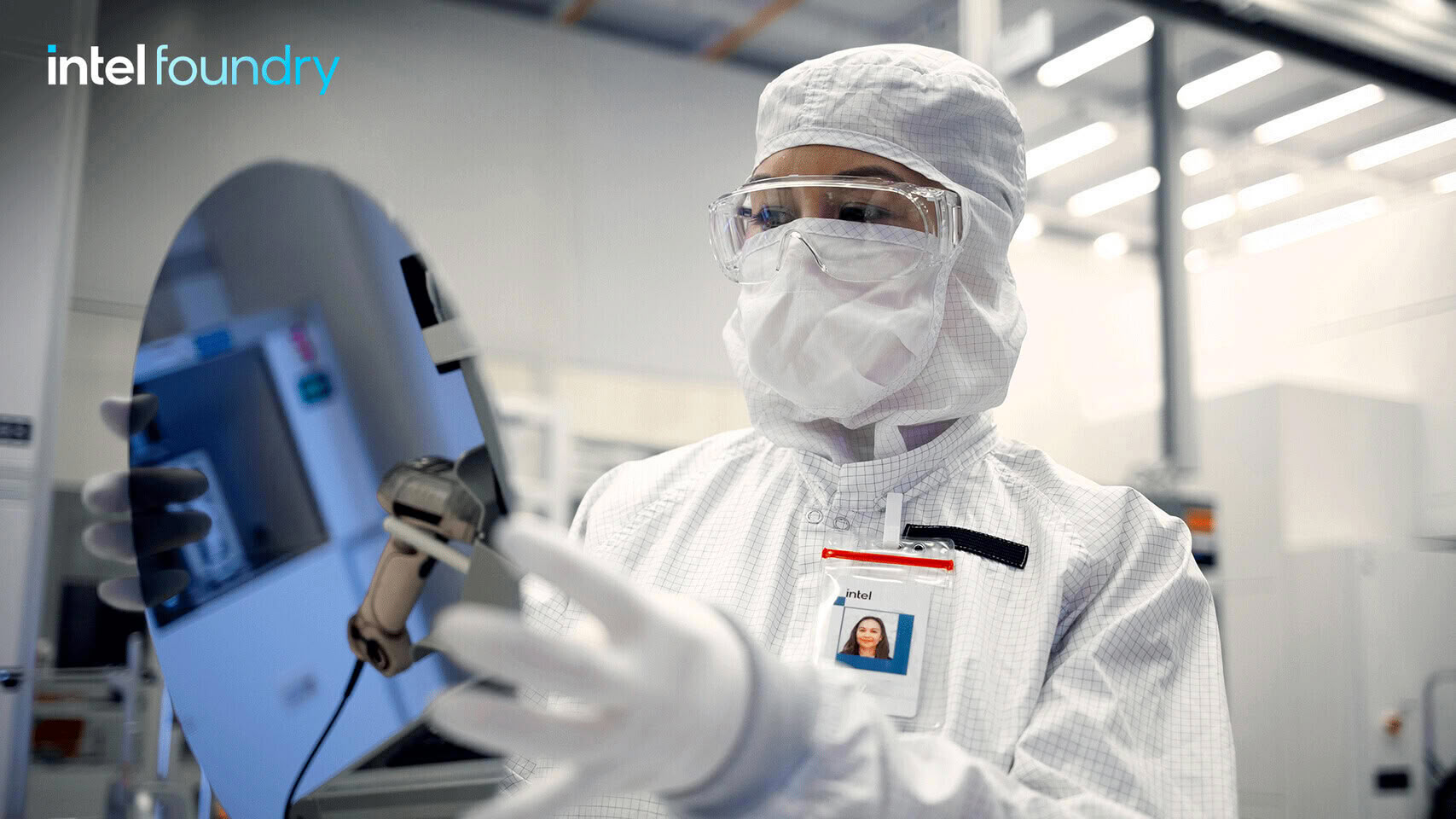
Case View: Oregon Node Conversion
CFO Dave Zinsner framed the re-purposed 18A wafer starts as capacity that, in his wording, was "generally used to produce Panther Lake products". The adjustment became available because PC demand has weakened; Intel expects the PC-market slowdown to continue at least into the first half of next year.
CEO Lip-Bu Tan supplied the demand context. The added Intel 3 capacity is expected to reach volume production in the second half of 2027. In the company’s call remarks, he said: "The entire industry is still dealing with one of the most severe supply shortages in history, driven by unprecedented demand from super intelligence. Against this backdrop, I am pleased with the progress made in third-quarter server supply growth. But I also know that we face continued challenges in keeping up with server demand over the next several quarters."
Zinsner added that Intel is "similarly constrained in substrates". The company’s planned 40% substrate capacity expansion is not a near-term fix: much of it appears aligned with the second half of 2027.
The change does not mean Intel has stopped working on client products. Lip-Bu Tan said Nova Lake, built on Intel 18A-P, is ahead of its original schedule. The effect of the Oregon conversion on Panther Lake availability remains unclear, while Intel has stated that Wildcat Lake is sold out.
Data Anchors From the 2026 Third-Quarter Call
| Item | Disclosed point | Decision context |
|---|---|---|
| Node conversion | Selected Intel 18A resources at the Oregon fab are being redirected to Intel 3. | Server supply pressure is changing wafer use. |
| Server product link | Xeon 6 Granite Rapids uses Intel 3. | The process shift is tied to a named Xeon family. |
| Wafer baseline | The reallocated 18A wafer starts were "generally used to produce Panther Lake products". | PC silicon is the capacity source for the adjustment. |
| New Intel 3 timing | Added Intel 3 capacity is expected in volume production in the second half of 2027. | Relief is not positioned as an immediate 2026 event. |
| Substrate constraint | Intel said it is "similarly constrained in substrates" and plans a 40% expansion, much of it in the second half of 2027. | Supply limits extend beyond wafers. |
| Client roadmap | Nova Lake on Intel 18A-P is ahead of schedule; Wildcat Lake is sold out; Panther Lake impact is unclear. | The capacity move is selective, not a client-business pause. |
Common Misreadings
- Assuming server supply can be corrected by wafer capacity alone. The call explicitly highlighted substrate constraints as a parallel limit.
- Assuming the 18A-to-Intel 3 shift means Panther Lake or client work has been paused. Nova Lake on Intel 18A-P is ahead of schedule, and Wildcat Lake is sold out.
- Treating new Intel 3 capacity as available before the second half of 2027.
- Reading the 40% substrate expansion as near-term relief, when much of it is described as arriving in the second half of 2027.
Action Guidance for Industrial Readers
For readers tracking industrial supply risk, Intel’s disclosures point to a sequence rather than a single switch. First, treat the 2026 third-quarter node conversion as an operational signal that server products are absorbing manufacturing headroom once PC demand weakens. Second, watch Intel’s stated dates for new Intel 3 volume production and substrate expansion, both concentrated in the second half of 2027. Third, separate product families: Xeon 6 Granite Rapids is the Intel 3 server anchor, Panther Lake is the product historically associated with the reallocated 18A wafer starts, Nova Lake is progressing on Intel 18A-P, and Wildcat Lake is already sold out.
FAQ
Why did Intel redirect Intel 18A capacity?
The stated reason is Xeon server supply pressure. Dave Zinsner described the shifted 18A wafer starts as capacity that was generally used to produce Panther Lake products, while the receiving process, Intel 3, supports Xeon 6 Granite Rapids.
What process node supports Xeon 6 Granite Rapids?
Intel 3.
When will new Intel 3 capacity reach volume production?
Intel expects the added Intel 3 capacity to reach volume production in the second half of 2027.
Are substrates part of the bottleneck?
Yes. The call described Intel as similarly constrained in substrates, with a planned 40% expansion largely associated with the second half of 2027.
Does this mean Panther Lake disappears?
No. The disclosed effect on Panther Lake supply is unclear. Intel also said Nova Lake, built on Intel 18A-P, is ahead of its original schedule, and Wildcat Lake is sold out.
The capacity decision is therefore less about choosing between server and PC products in the abstract than about moving scarce wafer starts where near-term demand and customer commitments are strongest. Intel’s 2026 third-quarter update makes the tradeoff concrete: Intel 18A headroom created by a softer PC market is being converted to Intel 3 to relieve Xeon 6 Granite Rapids supply, while substrate limits, Nova Lake timing, Panther Lake uncertainty, and Wildcat Lake sell-through show that the company’s next several quarters will be managed through sequencing, not through a single production fix.