
WorldIndustrialWeekly General: Great Wall Motor Locks In Bulgaria Manufacturing Deal for Ora 5 Q1 2027 Production
A newly confirmed manufacturing arrangement in Bulgaria gives Great Wall Motor an industrial route into the EU that is less about a single product launch and more about how an automaker rebuilds its regional position through assembly capacity, local sourcing, and staged model rollouts. According to Reuters, the company has reached a deal with Bulgaria Automotive Industry to produce the Ora 5 compact SUV in the first quarter of 2027, with a planned annual capacity of 50,000 vehicles. The partners did not disclose financial details, but the disclosed facts make the project a useful case for managers assessing localization, tariff exposure, and slow market re-entry.
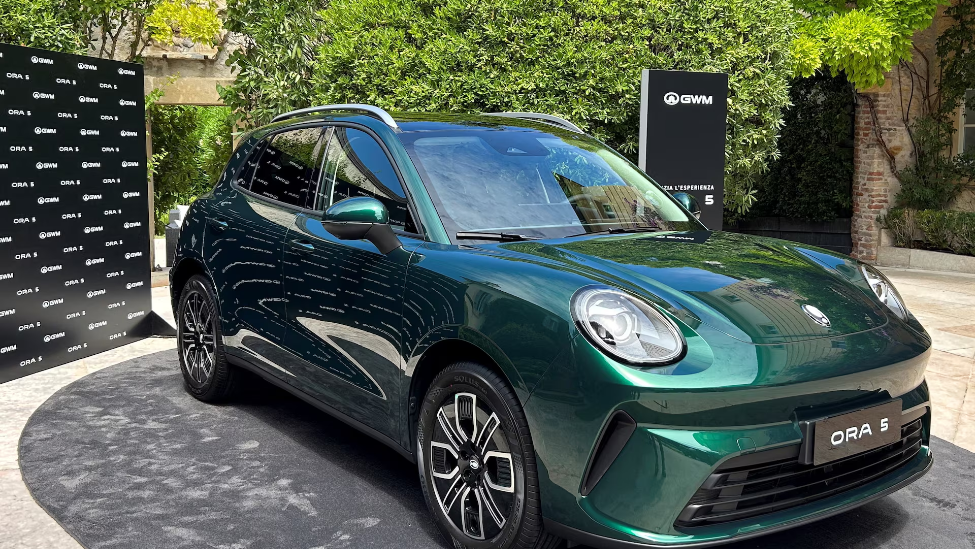
Case Snapshot: Bulgaria as an Entry Point, Not a Shortcut
The core case is straightforward but layered. Great Wall Motor will use Bulgaria Automotive Industry, which operates one factory near Lovech in Bahovitsa, and the two sides had worked together before. The initial model is the Ora 5 pure-electric version, after which the programme is planned to extend to other powertrain versions and other vehicles. For European customers, the Ora 5 line is described as having three powertrain options: pure electric, hybrid, and petrol. This sequence is important. The launch is framed as the first step in a broader manufacturing and product plan, not a one-off assembly operation.
Wu Huixiao, Great Wall Motor's chief technology officer, described the start-up mode as semi-knocked-down assembly, or SKD. In this model, partly assembled vehicle kits are imported and then completed in local final assembly. The company also said it intends to begin local procurement of some components from the outset. She made the remarks during a technology event in Milan and tied the approach to a wider ambition of joining Europe through local research and development, manufacturing, and long-term investment.
That framing gives the Bulgaria project a second purpose. It is not simply a factory deal; it is part of a method for testing whether a manufacturer from China can embed operations in Europe while also managing cost, regulation, and commercial acceptance. The facts do not show that all targets will be met, but they do show the intended path: start small, build local content early, then scale the product range.
Data Points That Shape the Decision
| Fact | Value | Why it matters |
|---|---|---|
| Start of local production | first quarter of 2027 | A fixed near-term industrial milestone. |
| Planned annual capacity | 50,000 vehicles | Sets the scale of the plant commitment. |
| Initial product | Ora 5 pure-electric version | The programme opens with one variant before expansion. |
| Powertrain range in Europe | three powertrain options | The model line is wider than a single electric vehicle. |
| European tariff context | 10% plus 20.7% | Shows the trade-barrier pressure behind localization. |
| 2025 sales | about 3,500 units, down nearly 30% | Recent performance explains the need for change. |
| 2027 sales goal | 60,000 vehicles in Europe | A steep ramp relative to 2025. |
| 2030 market-share goal | 3% to 5% | Defines the long-term commercial ambition. |
| 2029 output goal | 300,000 vehicles in Europe | Mentioned last year by an executive. |
| Model rollout window | over the next two years | At least 10 new models and derivatives are planned. |
| R&D base | Munich since 2021 | European research, regulation, compliance, and validation work is already established. |
The numbers should be read as a progression rather than a single forecast. Great Wall Motor's Europe sales fell in 2025 to about 3,500 units, down nearly 30% from a year earlier, after an earlier push focused on electric vehicles that did not meet expectations. The response combines product breadth, local assembly, and a higher sales target: 60,000 vehicles in Europe in 2027. Beyond that, the company aims for a 3% to 5% market share in Europe by 2030. Last year, an executive also told Reuters that the company targeted production of 300,000 vehicles in Europe by 2029.
At the same time, the tariff context clarifies why localization is strategically urgent. Great Wall Motor's electric vehicles exported from China to the EU currently face a 10% standard car import duty plus an additional 20.7% countervailing duty. For managers building regional supply chains, those two rates together are more than a cost detail; they are a design constraint. The Bulgaria plan can be understood as an attempt to reduce part of that exposure by moving final assembly and some component sourcing closer to the market.
Implementation Path: SKD, Local Sourcing, and Product Sequencing
The implementation sequence reveals how the company plans to balance speed with depth. SKD assembly is usually faster than building a fully localised stamping, body, paint, and component supply system from zero. It also allows partial local procurement to begin while the assembly process is still being tuned. The disclosed plan does not claim immediate full localisation. Instead, the factory starts with imported kits and selected local parts, then expands the scope over time. The initial vehicle is the Ora 5 pure-electric version, but the same base is intended to support other powertrain versions and models.
Product sequencing also matters. The company plans to introduce at least 10 new models and derivative vehicles over the next two years and to broaden its offerings beyond pure-electric vehicles. That is consistent with a market where a single propulsion technology may not absorb enough demand to support the sales ramp. It also aligns with the stated three powertrain options for the Ora 5 in Europe. For industrial planners, this suggests a route that is closer to multi-powertrain platform management than to a narrow EV-only entry.
The Munich research and development operation, running in Germany since 2021, provides the local knowledge layer. The disclosed function of that centre includes European market demand research, regulation, compliance, and validation. That is not a sales office; it is the kind of capability needed to connect engineering choices with local requirements. In a European context, the ability to move from imported product to locally validated product can determine whether an assembly plan remains commercially viable.
Common Misconceptions to Correct Before Reading the Headline
- A planned annual capacity of 50,000 vehicles does not mean the factory will immediately sell or produce 50,000 vehicles. Capacity is a target framework, not realised output.
- The Ora 5 pure-electric version is the starting point, not necessarily the only product. The programme is planned to extend to other powertrain versions and models.
- SKD assembly is not full manufacturing localisation. It imports partially assembled kits and completes vehicles locally, though some local procurement is planned from the start.
- The three powertrain options should not be read as proof that every version will launch simultaneously. The plan states that the programme starts with the pure-electric version and then extends.
- Europe sales goals and production goals are different measures. The 2027 target is 60,000 vehicles sold in Europe, while the 2029 target of 300,000 vehicles refers to European production mentioned last year by an executive.
- The Munich centre is not only a design site. It is described as performing market research, regulation, compliance, and validation for European requirements.
Action Recommendations for Industrial Managers
For decision-makers, the case is useful because it shows how localization can be broken into testable steps. First, map tariff and cost exposure by route. The disclosed EU tariff stack of 10% plus 20.7% makes the case for comparing imported finished vehicles, SKD assembly, and deeper sourcing arrangements. A team should not stop at headline duty rates; it needs to trace which elements remain imported, which parts become local, and when.
Second, treat SKD as a phased procurement programme, not a one-time switch. If local procurement begins at launch, the organisation must be able to qualify parts, manage quality, and align schedules while still receiving imported kits. The practical question is how much content is truly local at the start, and how quickly the share can rise without destabilising output.
Third, align product sequencing with capacity. Starting with the Ora 5 pure-electric version may limit complexity, but the longer-term plan to add other powertrain versions and at least 10 models over the next two years requires manufacturing flexibility. A plant designed around one narrow variant could constrain the stated expansion. Managers should read capacity and product roadmap together, not separately.
Fourth, build compliance and validation capability early. The Munich centre since 2021 is a warning that Europe entry is not only a factory problem. Local demand research, regulation, compliance, and validation can decide launch timing and product fit. Any plan that postpones these functions until after assembly is running may create a gap between production capability and market acceptance.
Fifth, manage expectations against recent performance. The 2025 sales result—about 3,500 units in Europe, down nearly 30%—is a base against which the 2027 target of 60,000 vehicles looks ambitious. For operators, this means sales ramps cannot be solved by capacity alone. Dealer readiness, product breadth, and confidence matter as much as assembly.
What This Means for Supply-Chain Teams
The disclosed facts point to a supply-chain model with three layers: imported vehicle kits, local final assembly, and some locally purchased components from the start. For planners, the main risk is underestimating the coordination burden. SKD reduces the need for the entire supply base to be local on day one, but it still creates cross-border dependency on kit timing and quality control. The plan to grow local procurement then adds supplier qualification, capacity assurance, and cost management to the agenda.
The case also shows why a regional manufacturing footprint can be used as a market-access tool. Great Wall Motor is not only opening a factory; it is using the Bulgaria plan, the Munich research operation, and a staged product roadmap to address weak recent sales and trade barriers. For a manufacturer from China, the Europe strategy now has to combine product choice, assembly method, sourcing depth, and regulatory readiness at the same time.
FAQ
What was confirmed?
Reuters reported that Great Wall Motor reached a manufacturing agreement with Bulgaria Automotive Industry to start local production of the Ora 5 in the first quarter of 2027, with a planned annual capacity of 50,000 vehicles.
Where is the plant located?
Bulgaria Automotive Industry operates one factory near Lovech, in Bahovitsa, Bulgaria, and it had previously worked with Great Wall Motor.
Which model will be built first?
The programme starts with the Ora 5 pure-electric version. The plan is to extend to other powertrain versions and models. In Europe, the Ora 5 is offered with three powertrain options: pure electric, hybrid, and petrol.
What does SKD mean here?
Wu Huixiao said the project will initially use semi-knocked-down assembly, meaning partly assembled vehicle kits are imported and final assembly is completed locally. Some components are also planned to be procured locally from the start.
Why is localization relevant now?
Great Wall Motor's electric vehicles exported from China to the EU face a 10% standard car import duty plus an additional 20.7% countervailing duty. Localization is presented as a way to manage that trade-barrier pressure.
What are the sales and production targets?
The company targets 60,000 Europe sales in 2027, a 3% to 5% European market share by 2030, and 300,000 vehicles of European production by 2029, as stated last year by an executive. It also plans at least 10 new models and derivatives over the next two years.
What role does Munich play?
The company has operated a research and development centre in Munich, Germany, since 2021. It supports European market demand research, regulation, compliance, and validation.