
WorldIndustrialWeekly General Analysis: GE Vernova Inc. Moves for Trench Group in a $9.0 billion USD Grid Equipment Deal
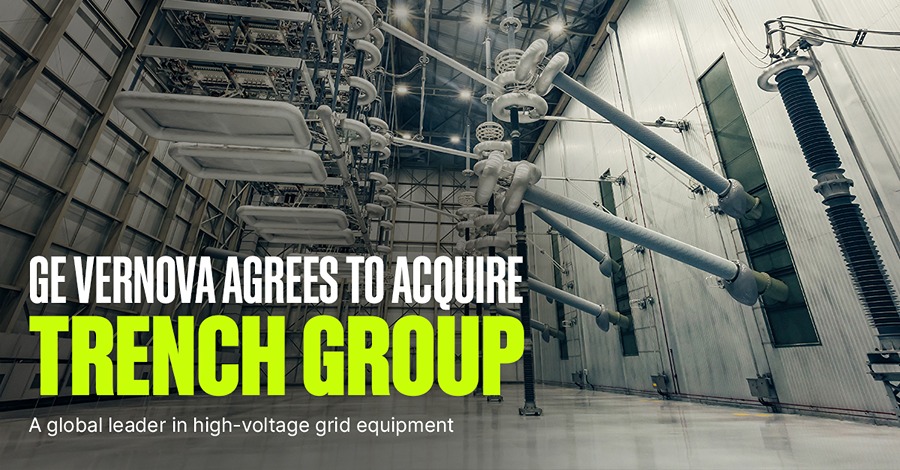
WorldIndustrialWeekly's General coverage frames this transaction as an industrial capacity signal: GE Vernova Inc. has signed to purchase Trench Group from Triton Partners. The move shifts a high-voltage grid equipment specialist into a larger Electrification portfolio and gives manufacturers, utilities, infrastructure owners, and supply-chain teams a concrete case study in how grid demand is reshaping supplier consolidation.
For operations leaders, the relevance is not only the price tag but the operational assets behind it. The transaction combines engineering heritage, installed product reach, multi-region production sites, and an existing customer base. It also shows that grid equipment consolidation includes components such as bushings, transformers, and coils, which sit at critical points inside transmission networks. The stated rationale is that electrification demand, energy security needs, and infrastructure upgrades are expanding faster than some supplier ecosystems can respond.
Deal Logic for Electrification and Grid Systems
The agreement is presented as adding scale across GE Vernova's Electrification product lines. It also broadens capabilities for serving customers with integrated solutions shaped by demand for grid modernization, energy security, and electrification technologies. Because Trench Group is described as an existing supplier with a complementary portfolio, the acquisition can be read as vertical integration: it directly strengthens GE Vernova's two largest Electrification businesses, Grid Systems Integration and Power Transmission.
That logic matters for industrial readers because it connects corporate strategy to physical manufacturing. A larger integrated supplier may have more visibility into grid equipment needs, but the stated timeline, regulatory conditions, and capacity ramp-up also create a transition window for procurement and project planning.
Case View: Trench Group as a Grid Equipment Platform
As a case in industrial M&A, Trench Group is presented as a platform that combines heritage with installed reach. Its stated history spans more than 130 years, while another description refers to over 130 years of engineering heritage. The company serves more than 800 global utilities and hyperscalers through high- and medium-voltage bushings, instrument transformers, and coils.
The operating footprint includes 11 sites across Europe, North America, and Asia. In workforce terms, the transaction materials cite 3,000 employees, while the broader footprint description states more than 3,000 employees. The target also carries a backlog of approximately $5 billion. Those figures help explain why GE Vernova can frame the purchase as an immediate capacity and customer-access lever rather than a distant development project.
Potential acquisition synergies are tied to complementary products, geographic footprint, customer relationships, and advanced manufacturing capabilities that use automation, robotics, and AI-supported processes. For plant and operations teams, this combination is important because it links traditional high-voltage equipment production with factory digitalization.
Data Citation Table: What the Stated Facts Establish
| Decision Lens | Stated Fact Anchor | Industrial Interpretation |
|---|---|---|
| Transaction structure | GE Vernova Inc. signs to acquire Trench Group from Triton Partners. | A large electrification manufacturer is absorbing a specialized grid component supplier. |
| Financial scale | GE Vernova will pay $9.0 billion USD equivalent at closing. | The price signals that grid equipment capacity is being treated as strategically scarce. |
| Portfolio fit | The purchase supports Electrification, Grid Systems Integration, and Power Transmission. | The acquisition is adjacent integration, not unrelated diversification. |
| Heritage | more than 130 years; over 130 years. | Long product history can support installed-base replacement, specification continuity, and mature engineering credibility. |
| Customer reach | more than 800 global utilities and hyperscalers. | The customer base spans traditional utilities and large digital infrastructure buyers. |
| Manufacturing footprint | 11 sites across Europe, North America, and Asia. | Multi-region production may help serve local grid demand while spreading operational exposure. |
| Workforce | 3,000 employees; more than 3,000 employees. | Skilled production capacity is one of the core assets being transferred. |
| Contracted demand | approximately $5 billion. | Backlog size gives a view of contracted demand rather than future-only projections. |
| Environmental technology | SF6-free and mineral oil-free technologies. | Material choices and lifecycle emissions are becoming part of grid equipment evaluation. |
| North America capacity | Charlotte, North Carolina; 765kv equipment; late 2027. | Global consolidation is tied to a regional manufacturing expansion with a defined expected start period. |
Funding, Conditions, and Risk Points
Under the purchase agreement, the consideration is $9.0 billion USD equivalent at closing, and funding is currently expected to be split equally between cash and debt. Closing is expected in late 2027, subject to completion of customary regulatory approvals and consultation with employee representatives where legally required.
For operations teams, the funding structure and approval path matter as much as the strategic fit. A large cash-and-debt commitment can influence capital allocation, while regulatory and employee consultation steps mean the integration timeline is conditional. Readers evaluating supply-chain risk should note that an expected close in late 2027 gives customers, plants, and regional partners a defined window to monitor production continuity, specification stability, and service arrangements.
Products, Environmental Standards, and Grid Needs
Trench components are present in the majority of high-voltage direct current lines built globally and are part of larger grid systems with many suppliers. This product role is not isolated: bushings, instrument transformers, and coils interact with other grid equipment and influence system reliability, voltage performance, and maintenance planning.
The portfolio is also linked to environmental standards. Across its portfolio, the company has SF6-free and mineral oil-free technologies that reduce hazardous materials and lifecycle emissions. These are capabilities GE Vernova customers are increasingly seeking. In practical terms, grid equipment buyers are weighing not only voltage ratings but also materials, sustainability requirements, and future regulatory exposure.
These offerings are described as enabling more efficient, higher voltage electrical grids, increasing affordability for consumers. That framing connects component technology to end-use outcomes: transmission networks can move power more effectively, and lower system friction may improve cost outcomes over time.
North America Capacity and the Transmission Corridor Argument
The source points to aging infrastructure, data centers, renewable energy, and industrial electrification as forces driving grid demand. The transmission implication is that higher voltage lines are increasingly becoming the backbone of the system, carrying up to six times more power per corridor than conventional lines.
The transaction is described as enhancing GE Vernova's capabilities in manufacturing grid components for North America. The mechanism is a newly opened Trench facility in Charlotte, North Carolina, where manufacturing of 765kv equipment is expected to begin in late 2027.
For plant managers, project developers, and industrial energy planners, that North America capacity point is one of the clearest operational takeaways. It connects the M&A story to physical manufacturing, a regional footprint, and a voltage class relevant to large transmission corridors.
Common Misconceptions
- Misconception: This is only a balance-sheet transaction. Correction: The stated value includes engineering heritage, a customer base spanning more than 800 global utilities and hyperscalers, 11 sites across Europe, North America, and Asia, and a backlog of approximately $5 billion.
- Misconception: The target's product set is narrow. Correction: High- and medium-voltage bushings, instrument transformers, and coils serve transmission systems, while SF6-free and mineral oil-free technologies address environmental and lifecycle concerns.
- Misconception: Charlotte simply confirms a generic manufacturing plan. Correction: The source links the newly opened facility in Charlotte, North Carolina, to expanded North America grid component manufacturing and to 765kv equipment production expected to begin in late 2027.
- Misconception: Closing means immediate product transition. Correction: Expected timing is late 2027, and regulatory approvals plus employee representative consultation remain conditions of completion.
Action Recommendations for Industrial Decision Makers
- Map component dependencies. Buyers of grid equipment should identify where Trench products such as bushings, instrument transformers, and coils are embedded in current and planned projects, because integration can affect specification, service, and delivery planning before closing in late 2027.
- Watch manufacturing continuity. The acquisition includes a newly opened Trench facility in Charlotte, North Carolina, and 765kv equipment manufacturing expected to begin in late 2027, so North America supply strategies should track commissioning and qualification steps without assuming an immediate capacity jump.
- Evaluate environmental specifications. Customers seeking lower hazardous materials and lifecycle emissions should compare SF6-free and mineral oil-free options with project standards, replacement cycles, and long-term regulatory exposure.
- Assess advanced manufacturing benefits. The stated synergy list includes automation, robotics, and AI-supported processes, which can influence throughput, quality control, and lead-time stability over time.
- Track regulatory and consultation milestones. Because closing depends on customary regulatory approvals and consultation with employee representatives where legally required, procurement and operations teams should treat the timetable as conditional rather than fixed.
FAQ
What does GE Vernova Inc. agree to acquire?
GE Vernova Inc. has signed an agreement to purchase Trench Group from Triton Partners. The transaction adds grid equipment scale across GE Vernova's Electrification businesses.
Why does this matter for grid modernization?
The deal is framed as strengthening Grid Systems Integration and Power Transmission while broadening integrated solutions for demand shaped by grid modernization, energy security, and electrification technologies.
What assets does Trench Group bring?
The target is described as bringing heritage of more than 130 years, also referenced as over 130 years, a customer base of more than 800 global utilities and hyperscalers, 11 sites across Europe, North America, and Asia, a workforce stated as 3,000 employees and more than 3,000 employees, and a backlog of approximately $5 billion.
How is the purchase funded and when is it expected to close?
The purchase price is stated as $9.0 billion USD equivalent at closing, with funding expected to be split equally between cash and debt. Closing is expected in late 2027, subject to customary regulatory approvals and consultation with employee representatives where legally required.
What is the North America manufacturing angle?
The source states that the acquisition will enhance GE Vernova's capabilities in manufacturing grid components for North America through a newly opened Trench facility in Charlotte, North Carolina, where manufacturing of 765kv equipment is expected to begin in late 2027.
Closing Perspective
The most useful way to read this transaction is as an industrial capacity signal. GE Vernova is aligning Electrification scale, component heritage, multi-region manufacturing, and North America expansion around a demand cycle driven by grid modernization, energy security, and electrification technologies. For industrial decision makers, the practical questions are timing, production continuity, environmental specifications, and integration readiness through late 2027.