
Ferrari Luce Case Retrospective: How a Controversial First EV Filled Maranello's Order Book Through 2027
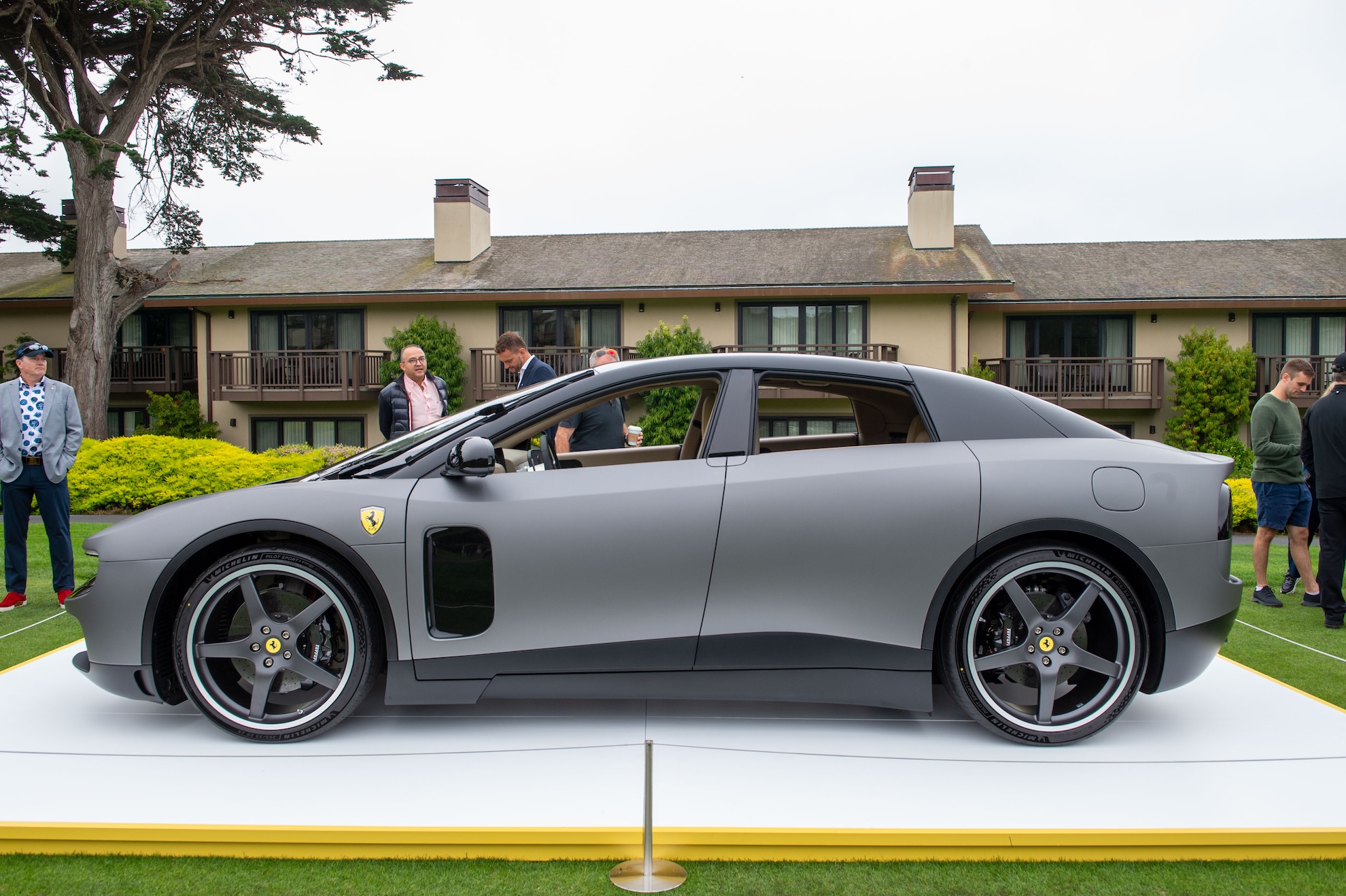
A case retrospective prepared for the General desk of WorldIndustrialWeekly, written by Michael Torres.
Sooner or later every capacity planner runs into the same awkward setup: the loudest public criticism and the strongest order book arrive in the same quarter. Ferrari's first battery-electric model, the Luce, has become a live laboratory for exactly that situation. The five-seat car went on stage in May of this year to some of the sharpest design commentary the industry has heard in years — the styling work involved Jony Ive, the former Apple chief design officer — and the negative reaction briefly put pressure on the share price. Yet when chief executive Vigna presented the third-quarter numbers in early November, the message from the order desk was unambiguous: the Luce is fully allocated, and every unit Ferrari plans to produce in 2027 is already committed to a customer. A new order placed today means a wait of at least one year, with the first handovers scheduled to start in the fourth quarter of this year. The part of this story that matters to plant managers, supply-chain leads and product planners is not the aesthetics argument. It is the operating machinery underneath a sold-out headline: a deliberately capped build plan, in-house high-voltage manufacturing, and a personalisation pipeline that behaves less like an options list and more like a production process.
1. The case at a glance: how the order book closed
- May of this year — launch. Ferrari presents the Luce, its first fully electric model, positioned as a five-seat flagship rather than a volume product.
- Weeks one to eight — backlash and absorption. Design debate dominates social feeds while dealership allocation reportedly absorbs the planned build for the year; reporting in the Financial Times says Ferrari hit its annual sales target for the model roughly two months after the debut, on strong demand from China.
- Third quarter of this year — the results carry the proof. Net revenues of EUR 1.9 billion, up 7% year on year; operating profit of EUR 563 million; net profit of EUR 431 million, up 13%.
- Early November — capacity locked. Vigna confirms the car is fully allocated and that the entire 2027 plan is booked by customers, with entry pricing of about USD 615,000.
- Fourth quarter of this year — deliveries begin. The first customer cars leave Maranello, and the wait for a new order starts to lengthen toward at least one year.
2. How to read a "sold out" claim when the factory publishes no volume
An order book that is sold out is not the same thing as a large order book, and this is where most coverage of the Luce stops short. Ferrari has never disclosed the detailed production scale of the model, so the sellout cannot be measured directly from company data. What is known comes from press reporting: the Financial Times, citing people familiar with the plan, reported that Ferrari intends to sell close to 500 units of the Luce this year, and that the long-term objective is 2,500 vehicles sold cumulatively by 2030 — an average of about 600 units a year.
Put those numbers next to the delivery data in the same quarterly release, and the strategic shape of the programme becomes visible. Ferrari logged 3,368 vehicle deliveries in the third quarter alone, according to its own results announcement. A run rate of roughly 600 cars a year for the Luce therefore represents a rounding error in volume terms and a meaningful lever in margin, brand-fortress and channel-renewal terms. Anyone benchmarking this launch against mass-market electric ramps is using the wrong yardstick: this is a scarcity and configurability play executed on an electric platform, not an electric volume play.
The industrial lesson is transferable. When the total build quantity is undisclosed, the order desk becomes the primary demand instrument, and "sold out" functions as a scheduling decision rather than a market verdict — which is precisely why the negative commentary did not translate into cancelled slots.
3. The supply-side spine: e-Building capacity and in-house powertrain work
The part of the Luce story that trade media covered least is the manufacturing foundation laid before the product arrived. Ferrari's engineering documentation describes a dedicated 880V battery pack assembled entirely in Maranello, delivering an energy density of 195 Wh/kg; Assembly Magazine's launch report likewise notes a 122-kilowatt-hour pack feeding four electric motors on a dedicated high-voltage architecture, and workshop reporting describes the pack as 210 cells arranged in 15 modules, mostly under the floor.
Equally important is where that work sits in the value chain. Coverage by Supply Chain Digital frames the Luce as a pivot toward in-house production of key powertrain components instead of outsourcing them to conventional automotive suppliers, following roughly five years of development with LoveFrom, the creative collective led by Jony Ive together with industrial designer Marc Newson. The purpose-built Maranello facility often described as the e-Building was presented as the physical home of that capability, covering high-voltage battery, electric-axle, inverter and motor work alongside final assembly.
For an operations reader, the causal chain is worth stating plainly: owning the battery and e-axle line converts a marketing promise — "every 2027 slot is yours" — into something schedulable. A brand that buys its powertrain from third parties cannot promise a one-year-plus lead time with any confidence, because it does not control the constraint. Ferrari, in effect, bought the constraint before it sold the car. Note the boundary of the evidence: technical architecture figures come from manufacturer documentation and trade reporting, while programme volumes remain unpublished, so capacity claims should be treated as indicative rather than audited.
4. Margin architecture: personalisation as an order-to-build system
Two of the most quotable lines in the Luce story are really about the factory. Management states that customisation income now accounts for more than 21% of revenue from cars and spare parts, and points to deliveries of the limited-run supercar F80 together with rising personalised demand as evidence that customers increasingly want a car no one else owns. That guidance strength fed the raise in the full-year outlook: adjusted profit is now expected to be at least EUR 3.0 billion, up from the previously indicated EUR 2.97 billion.
| Metric, third quarter of this year | Reported value | Year-on-year / context |
|---|---|---|
| Net revenues | EUR 1.9 billion | up 7% |
| Operating profit (EBIT) | EUR 563 million | operating margin of 29.7%; the company release reports a 12% increase |
| Net profit | EUR 431 million | up 13%; diluted EPS of EUR 2.44 against EUR 2.14 a year earlier |
| Vehicle deliveries | 3,368 units | disclosed in the company's results release |
| Customisation share of car and parts revenue | more than 21% | cited by management as a profit driver |
| Full-year adjusted profit outlook | at least EUR 3.0 billion | raised from EUR 2.97 billion |
The 29.7% operating margin deserves a second look, because it means that for every USD 1 of revenue, roughly 30 cents converts into operating profit. To size that against the rest of the automotive value chain: weighted-average operating margins for the US public dealership group tracked by The Presidio Group for the first half of 2026 sat near 3.6%, a reminder that the retail layer and the brand-and-factory layer are structurally different businesses, and that pricing and configuration control sits with the latter.
Operationally, a personalisation mix above one fifth of revenue is not a sales flourish; it is a manufacturing burden that has to be engineered away. Order-specific trim, paint and interior content force one-off bill-of-material structures, line-side kitting discipline, tighter traceability and rework-proof scheduling at low volumes. The reason the personalisation trend can raise profit guidance instead of eroding it is that the complexity is priced and absorbed inside a capped build plan, where slots are sold first and configured second.
5. Demand geography: who signs, and what the company will not say
Vigna declined to describe the buyer mix, saying only that the customer base shows healthy diversity by geography and by client type, and adding that no specific owner profile or obvious purchasing pattern has yet emerged for the Luce. Surrounding reporting gives the outline he would not draw. Financial Times coverage, echoed by Reuters, attributes the early completion of the annual target to demand from China; follow-up reporting from carnewschina described Chinese buyers being pushed into 2027 slots as the 2026 global allocation filled. Other trade and Chinese-language coverage has described a channel policy in which dealers are discouraged from leaning on traditional collectors and instead directed at first-time Ferrari customers, including technology-sector buyers in the United States.
Taken together, this reframes the Luce from "electric halo" to "channel-renewal instrument": a capped product used to widen the customer funnel without discounting the core range. That is a portfolio decision industrial companies in other categories copy more easily than it sounds — introduce one controlled, distinctive SKU whose purpose is to acquire a new cohort rather than to add volume.
6. Four misconceptions the Luce case exposes
- "Polarising design kills demand." The order book says otherwise for this product, but the honest reading is narrower: a capped, one-cohort product can absorb criticism that a volume model could not survive. Design sentiment is survivable only where supply is already limited.
- "Sold out means big numbers." Programme volume is undisclosed. The public reference points are close to 500 units this year and 2,500 cumulatively by 2030, so sellout is a ratio, not a count.
- "The EV switch means volume growth." An average of about 600 units a year is a margin, mix and audience-expansion programme — a brand-positioning play executed on an electric platform.
- "Personalisation is a dealer upsell." At more than 21% of car and parts revenue it is a production system, with engineering, scheduling and supply consequences that show up in guidance.
7. Reusable playbook: six actions other industrial teams can take from this case
- Install the bottleneck before you sell against it. Battery, e-axle and inverter capability in Maranello preceded customer slots. If lead time is the value proposition, process capacity is the marketing budget.
- Publish constraints, not volumes. Communicate allocation windows, wait length and configuration cut-off dates. Scarcity that is explained reads as governance; scarcity that is hidden reads as a stunt.
- Give one SKU a job description. Assign the new product a defined role — cohort acquisition, technology proof, or channel renewal — and judge it on that, not on unit growth.
- Instrument configuration like a production metric. Track customisation revenue share, attach rate by option family, and the delivery-date impact of one-off content. Anything above roughly one fifth of revenue needs a dedicated planning cell.
- Protect the collector base deliberately. Reports of dealer instructions not to pressure long-standing clients show that a channel-renewal product can backfire if it is used to tax existing customers; segment the outreach instead.
- Stress-test the wait list. A wait of at least one year invites resale distortion, spec drift and cancellation risk. Define deposit terms, configuration freeze dates and a documented production sequence, then publish progress against it.
8. Risks to watch on the far side of the sellout
- Delivery-execution risk. Handovers start in the fourth quarter of this year; a low-volume, high-content build is where schedule slippage hurts reputation most.
- Opacity risk. Because volume is not disclosed, any future restatement of the plan will re-price the credibility of the allocation message.
- Concentration risk. Demand reportedly strong from China and technology-sector buyers concentrates the funnel in two cohorts whose sentiment can swing faster than a collector base.
- Complexity-cost risk. A richer option mix lifts revenue per unit but raises engineering-change and rework load; margin gains can be quietly consumed if change control is weak.
FAQ
Is the Luce really the first electric Ferrari?
Yes. It is the brand's first battery-electric model and one of its most contested launches: a five-seat car whose design work involved Jony Ive, the former Apple chief design officer, shown in May of this year.
What does it cost and how long is the wait?
Entry pricing starts at about USD 615,000, and customers ordering now face a wait of at least one year, since the 2027 production plan is already booked. The first deliveries are expected from the fourth quarter of this year.
How many units will actually be built?
Ferrari has not published programme volume. Reporting in the Financial Times puts this year's intention at close to 500 units, with a longer-term target of 2,500 vehicles cumulatively by 2030, equal to an average of about 600 units per year.
Did the criticism change the commercial outcome?
Not in the order book as described by Vigna: the model is fully allocated and the whole 2027 plan is sold out. The share price absorbed short-term pressure at launch, and the company raised its full-year outlook, with adjusted profit expected at least at EUR 3.0 billion, above the earlier EUR 2.97 billion.
Which numbers matter most to manufacturing readers?
The operating margin of 29.7% on third-quarter net revenues of EUR 1.9 billion (up 7%), net profit of EUR 431 million (up 13%), the customisation share above 21% of car and parts revenue, and 3,368 deliveries in the quarter disclosed in the company's release.
Follow the story for WorldIndustrialWeekly: the industrial signal in the Luce case is not that a controversial sports car sold out, but that a capped, configured, in-house-built product line can carry a brand through a technology transition without diluting price. Questions, corrections or plant-level perspectives on allocation-driven manufacturing are welcome at news@industrialweekly.com.
Sources referenced
- Ferrari, third-quarter 2026 results press release — margin, delivery and guidance detail: ferrari.com
- Ferrari, Luce engineering documentation — 880V battery pack assembled in Maranello, 195 Wh/kg: ferrari.com/en-EN/auto/ferrari-luce-engineering
- Financial Times, "Ferrari hits 2026 sales target for polarising Luce EV within two months" (ft.com), corroborated by Reuters (reuters.com)
- Assembly Magazine, "Ferrari Unveils Four-Door EV" (assemblymag.com) — 122 kWh pack, four motors, 880-volt architecture
- Supply Chain Digital, "Ferrari Luce: A Pivot to In-House EV Production" (supplychaindigital.com) — localisation of powertrain components, LoveFrom collaboration
- GT Spirit workshop reporting (gtspirit.com) and carnewschina (carnewschina.com) — module layout and China allocation pressure
- The Presidio Group, Q2 2026 public dealership group trends (thepresidiogroup.com) — dealer-level margin comparison