
The Operator's Playbook: What GE Vernova's $9 billion Grid Bet, a Fed Pause and Permit Reform Mean for Your Plant
Direct answer: For plant, project and procurement leaders, this was never a story about one deal. Rates are on hold, grid hardware is effectively sold out years ahead, permitting reform is still a bill rather than a law, and low-carbon materials are becoming financeable commodities. The practical response is to reserve long-lead equipment slots now, stress-test 2027 capital plans against a 3.75% to 4% policy range, and write schedule and tariff optionality into every major contract.
Here is how five separate headlines from a single news cycle convert into decisions for operations, engineering, supply chain and finance — and where operators usually get them wrong.
What this week's storms tell facility and supply teams
Begin with the physical layer, because it is the part no purchasing office controls. A Pineapple Express — a powerful atmospheric river, not the marijuana strain — is bearing down on the West Coast, while the Southwest may face heavy rain on Halloween. In the Bering Sea, the remnants of Typhoon Champi are driving a severe storm, with four-foot waves lapping on Alaska's shore. In India, an evacuation of nearly 200,000 people did not stop Cyclone Arnab from killing at least nine and destroying tens of thousands of acres of crops in Andhra Pradesh.
Regulators are repricing exactly that kind of disruption. The European Commission this week unveiled new climate rules requiring governments to establish who is responsible for protecting citizens from climate disasters, Euronews reported. Brussels wants major cities to prepare for as much as 3 degrees Celsius of warming above pre-industrial norms, more than double the warming already seen from El Niño. U.S. site owners sit outside those rules, but insurers, lenders and municipal utilities increasingly underwrite to the same logic.
- Rank every feeder and transformer on the single-line diagram by downtime cost per hour, not by asset value.
- Confirm flood elevations and clearance for switchgear, and re-check them after any site regrading.
- Track standby generation in fuel days rather than kilowatts; a rated genset with two days of supply is a two-day plant.
- Map inbound logistics for castings, resins and glass to storm-exposed ports and rail corridors.
Why a Fed pause — not a cut — still changes capital planning
Conclusion first: a hold issued alongside an inflation warning is a budgeting problem, not a stop sign. On Wednesday, the Federal Reserve chose to keep benchmark rates unchanged, even after inflation statistics rose last month. The Federal Open Market Committee said the federal funds target range would remain between 3.75% and 4%, preserving the quarter percentage-point increase made last month. “Inflation remains elevated,” the statement warned. “The accumulation of more information will help the Committee determine the policy stance appropriate to ensure a timely return of inflation to the Committee’s 2% goal.”
For clean-energy developers, whose projects depend on borrowing costs, a pause is preferable to a hike, though a cut would be better still. Industrial borrowers funding electrification retrofits now inherit the same arithmetic, which is why The Fed's hold belongs inside the base case rather than in a footnote. The signal in the language is sequencing: information first, action later.
- Re-run every capital request at the upper bound of the range and require the project to clear its hurdle rate there.
- Convert floating equipment leases to fixed schedules or cap them, since a 2027 start no longer implies 2025 money.
- Split approvals into engineering spend (cheap at the margin) and hardware purchase orders (expensive and lead-time-bound) so a pause does not freeze the whole program.
What GE Vernova's $9 billion bet does to equipment lead times
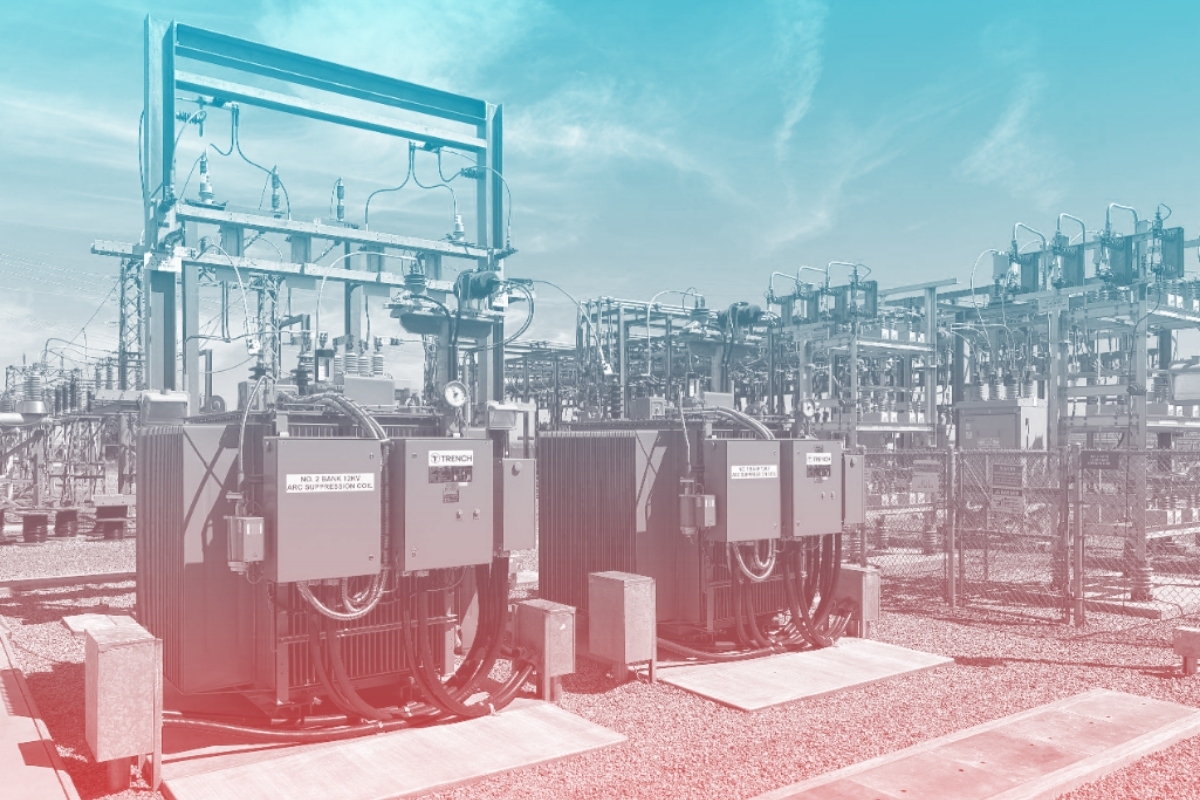
Conclusion first: capacity reservations now beat price haggling later. GE Vernova’s gas turbine unit is thriving as data centers create demand for new generators, while its nuclear joint venture with Hitachi is advancing an order book for the 300-megawatt small modular reactor, the BWRX-300. On Wednesday, the General Electric spinout said it would pay $9 billion for Trench Group, a global maker of high-voltage transmission equipment and grid components, with the deal expected to close at the end of next year. “Trench’s differentiated high-voltage grid technology, strong execution, and deep customer relationships are key enablers of the modernized, resilient grid required to keep pace with the electricity supercycle,” Scott Strazik said in a press release.
Other companies are also placing bets on grid construction: Hitachi announced a $1 billion investment in a U.S. transformer factory last year, and a former Tesla executive launched Heron Power to make transformers for data centers and renewables. The Department of Energy has in recent weeks pumped billions of dollars into upgrading the U.S. power grid.
Two additions matter to buyers. First, per reporting by Bloomberg and The Wall Street Journal, Trench supplies high- and medium-voltage bushings, instrument transformers and coils to more than 800 utilities and hyperscale customers from 11 plants across Europe, North America and Asia, and arrives with an order book of roughly $5 billion that extends into the next decade; GE Vernova plans a cash-and-debt structure, having already bought out the remaining half of its Prolec GE transformer joint venture in October 2025 (see GE Vernova's own release). Second, the queue in front of your project is measurable. Reuters reported in July 2026 that generator step-up transformer lead times had surpassed 160 weeks by the first quarter of 2026, against an average of 143 weeks in 2024; Wood Mackenzie's series shows typical power transformer waits moving from around 50 weeks in 2021 to roughly 120 weeks in 2024.
| Long-lead item | Reported market signal | Operator action this quarter |
|---|---|---|
| Generator step-up transformers | More than 160 weeks in Q1 2026 vs. 143 weeks average in 2024 (Reuters) | Reserve a factory slot before FEED freeze; make EPC delivery windows back-to-back with the equipment order |
| Large power transformers, above 100 MVA | Waits stretching beyond two years as suppliers add lines, not capacity (Wood Mackenzie) | Standardize voltage, impedance and cooling specs across sites so spares pool across plants |
| HV bushings, instrument transformers, coils | Supplier base consolidating around GE Vernova's $9 billion purchase, closing at the end of next year | Qualify a second source now; assume datasheet and test changes will follow integration |
| Interconnection and grid upgrade studies | Federal money flowing through the Department of Energy, billions of dollars committed in recent weeks | Track grant-funded regional pilots; large-load cost-allocation rules are moving and will hit your tariff case |
How to plan around permitting reform in Congress
Conclusion first: price permitting change as an option, not as a new baseline. More than 40 clean-tech startups urged both parties in Congress to pass permitting reform legislation before the session ends. In a letter published Thursday morning, they said the Bipartisan American Affordability and Jobs Act “helps innovators spend more time building and less time waiting.” The signatories read like a technology roadmap rather than a lobby list: Fervo Energy, Quaise, Zanskar, Heirloom, Commonwealth Fusion Systems, and Realta. The bill, they added, “restores confidence that American projects can move from concept to construction on predictable timelines.”
The objections are equally concrete, and they are the reason schedule risk does not disappear if the bill passes. The National Association for the Advancement of Colored People issued a statement warning lawmakers against BAAJA, saying it would “lock in dirty energy for decades” and make it “harder for people to show they are harmed by pollution.” Sympathetic audiences at the upper rungs of the Democratic Party will undoubtedly be available to the group. In remarks obtained by Jael Holzman, John Podesta, the Biden White House’s senior climate policy advisor, said at a conference last week that he worried the bill could hand Trump “a loaded Howitzer.”
For project teams, the verifiable timeline is the working assumption: senators released the bill on Sept. 30, 2026, the Senate has scheduled a first procedural cloture vote on the motion to proceed for Nov. 9, 2026, and a Congressional Research Service summary (IN12746, on congress.gov) notes that the bill’s pre-filing and application deadlines would not change the criteria a state applies when it weighs a permit. Columbia University’s Center on Global Energy Policy published a timeline-modeling tool on Oct. 21, 2026; the Natural Resources Defense Council’s Oct. 26, 2026 assessment called transmission and grid provisions the bill’s principal strengths while pressing large loads, data centers included, to pay the system costs their demand drives — a point that lands directly on industrial tariff exposure.
- Build the schedule twice: status-quo approvals and reformed approvals, with litigation risk held in the second case.
- Front-load biological, hydrological and air-quality data collection now; faster procedure does not mean thinner evidence.
- Model interconnection cost allocation as a tariff variable over the next 24 months, not a one-off study fee.
Can a city green bank finance your retrofit?
Conclusion first: the pitch is a pipeline mechanism, and corporate energy managers can use it even if they never see a grant dollar. New York City may have something to learn from Connecticut, New York’s neighbor, which in 2011 established the nation’s first green bank. As of this year, the agency has directed more than $3 billion toward projects such as solar and storage systems on public housing. “What we saw in Connecticut was a way to get community-scale renewable projects built that markets alone were not delivering,” Jason Kowalski, executive director of the Public Renewables Project, said. “With New York City, similarly, we’re looking to fill market gaps.” A new report released Wednesday by his group, along with Public Power NY and the Climate & Community Institute, proposed that NYC create its own green bank modeled on Connecticut’s experiment.
“We’re not thinking about public versus private,” Kowalski said. “We’re thinking of public versus nothing. We’re targeting places where nothing is getting built. This is a mechanism for building revenue-positive projects that are not being built because of the transaction costs or because there is no planning function that’s brought in to plan at any scale.”
The politics may help the idea along. The proposal could find sympathetic eyes in Zohran Mamdani’s administration. The democratic socialist has embraced venturing where, since the 1990s, government has rarely gone. City Hall brokered a deal two weeks ago to chip in $30 million for New York University’s next-generation computing lab in exchange for 15% of the proceeds from any technology the facility develops and sells. I called the agreement “New Dealism for quantum computing.”
The comparison case is instructive because it is arithmetic, not ideology. Connecticut’s bank reports that in fiscal 2023 it used $362.7 million of public dollars to attract $2.06 billion of private investment — about $6.70 of private money for every public dollar — and that a $51 million investment in fiscal 2024 drew $393 million more (annual reports, ctgreenbank.com). Public money that is recycled, not spent, is what makes sub-station, rooftop and process-load retrofits bankable for small and mid-sized manufacturers whose project sizes fall below institutional minimums.
Is low-carbon cement a procurement category now?
Conclusion first: attribute certificates are a financing instrument, so buy them the way you buy any forward contract. Cement produces roughly 8% of global emissions of heat-trapping carbon dioxide — four times the output of airplanes. Cutting emissions across the wider economy requires building a lot of stuff, which paradoxically means using more cement and adding to emissions. But startups are rolling out new approaches to make low-carbon cement. Meta, the Facebook owner, agreed to buy environmental attribute certificates associated with 200,000 tons of San Jose-based Fortera’s low-carbon cement.
“Agreements of this scale and duration are what unlock financing and move projects from plans to production,” Ryan Gilliam, Fortera CEO, said in a statement. “They also show the market that low-carbon cement is a product that buyers are serious about and planning around for years to come.” The clean cement sector has been, as Katie Brigham wrote, riding the artificial intelligence wave. Market trackers such as Sylvera report in its 2026 survey that other hyperscale buyers have signed comparable agreements spanning low-carbon cement and steel, which is steadily shifting these certificates from voluntary gesture to priced commodity.
How exposed is your bill of materials to antimony?
Conclusion first: watch conversion capacity, not just mine approvals. The closing item this cycle concerns an antimony mine in Tajikistan. Antimony is a lustrous, silvery-gray metalloid needed for solar panel glass and all kinds of batteries, and the U.S. overwhelmingly relies on imports from China and Tajikistan. Maybe not for long, Mining Technology hinted. On Wednesday, Alaska’s Department of Natural Resource gave final approvals to startup Nova Minerals. The project, funded with nearly $45 million from the Department of Defense, aims to begin production next year.
Reporting on the approval (Yahoo Finance, Oct. 27, 2026) indicates the paperwork cleared roughly three months after the application was filed, with the federal award flowing to the company’s U.S. unit. For buyers, the practical read is that a domestic chain still needs roasting, refining and conversion steps that do not exist at scale inside the country today; dual sourcing and a price-collar clause remain cheaper than a line stop.
Six misconceptions that make these decisions worse
- “A pause means cheap money is coming.” The Federal Open Market Committee conditioned the next move on more information, so treat 3.75% and 4% as planning inputs, not a countdown.
- “Capital buys hardware.” It buys a place in a queue that is currently measured in years.
- “Permitting reform equals automatic approval.” Deadlines compress process, not evidentiary standards.
- “Green banks hand out grants.” Their economics run on recycled capital and leverage ratios.
- “An EAC delivers low-carbon concrete to my site.” Book-and-claim certificates are claims on a portfolio, not a truck.
- “One domestic mine fixes critical-mineral risk next year.” Midstream conversion is the bottleneck.
A 30/60/90-day action plan for the site leadership team
- Days 1-30: freeze a long-lead equipment register (transformers, bushings, switchgear, gensets), and request written slot availability from at least two suppliers per line.
- Days 1-30: reprice all FY2027 projects at the upper bound of the federal funds range; require payback recalculation for anything financed.
- Days 31-60: file a parallel schedule for any project awaiting federal or state approvals, and start data collection that survives either statutory outcome.
- Days 31-60: ask the utility and public utilities commission what share of your billed demand is exposed to large-load cost allocation.
- Days 61-90: put one retrofit bundle — lighting, compressors, process heat recovery — through a third-party-financing or green-bank-style structure to test whether aggregation clears transaction costs.
- Days 61-90: write an embodied-carbon clause into one materials contract and define how attributes will be verified, retired and reported.
Frequently asked questions
Which is the bigger threat to my 2027 project: rates or equipment availability?
Equipment availability. Borrowing costs move in quarter percentage-point steps and are knowable in advance; a transformer booked at a two-to-three-year lead time determines whether your line starts on schedule at all.
Should we wait for BAAJA before committing to a build?
No. Signatories such as Fervo Energy and Commonwealth Fusion Systems argue the bill would restore predictable timelines, but as of late October 2026 the Senate had not voted. Build on current rules and treat any acceleration as upside.
What does a $9 billion acquisition change for a mid-sized industrial buyer?
Less selection, more standardization. Expect rationalized part numbers, revised test protocols and tighter allocation rules as suppliers prioritize strategic accounts — so lock in your specification and service terms early.
Does a green bank proposal outside my state help anyone?
Indirectly, yes. It publishes working contract templates and leverage ratios that equipment vendors and financiers re-use elsewhere, lowering the cost of putting a plant retrofit into a bankable package.
Sources and further reading
- Bloomberg, “GE Vernova to Pay $9 Billion for Grid Supplier Trench Group,” Oct. 28, 2026 — https://www.bloomberg.com/news/articles/2026-10-28/ge-vernova-agrees-to-pay-9-billion-to-acquire-trench-group
- The Wall Street Journal, GE Vernova–Trench Group deal coverage — https://www.wsj.com/business/energy-oil/ge-vernova-to-buy-high-voltage-grid-equipment-manufacturer-for-9-billion-b29dd2ef
- GE Vernova press release on the Prolec GE joint-venture buyout — https://www.gevernova.com/news/press-releases/ge-vernova-fully-acquire-prolec-ge-joint-venture
- Reuters, “US power companies scramble to secure equipment as surging data center demand strains the grid,” July 9, 2026 — https://www.reuters.com/business/energy/us-power-companies-scramble-secure-equipment-surging-data-center-demand-strains-2026-07-09/
- Wood Mackenzie, power transformer lead-time commentary — https://www.woodmac.com/news/opinion/supply-shortages-and-an-inflexible-market-give-rise-to-high-power-transformer-lead-times/
- Congressional Research Service, “The Bipartisan American Affordability and Jobs Act of 2026” (IN12746) — https://www.congress.gov/crs-product/IN12746
- Center on Global Energy Policy, permitting-timeline modeling tool, Oct. 21, 2026 — https://www.energypolicy.columbia.edu/how-the-senate-permitting-reform-bill-could-impact-energy-project-timelines/
- Natural Resources Defense Council, assessment of BAAJA, Oct. 26, 2026 — https://www.nrdc.org/media/nrdc-assessment-baaja-2026-permitting-transmission-bill
- Connecticut Green Bank annual reports (fiscal 2023 and 2024 leverage data) — https://www.ctgreenbank.com/wp-content/uploads/2026/07/Connecticut-Green-Bank-Annual-Report-2023-1.pdf
- Fortera, decarbonization and EAC agreements — https://forteraglobal.com/decarbonization/
- Yahoo Finance, “Nova Minerals clears final permitting hurdle for Alaska antimony project,” Oct. 27, 2026 — https://finance.yahoo.com/energy/articles/nova-minerals-clears-final-permitting-031200919.html