
WorldIndustrialWeekly Analysis: Emerson Rosemount QX1400 Hazardous-Area Gas Monitoring for Process Teams
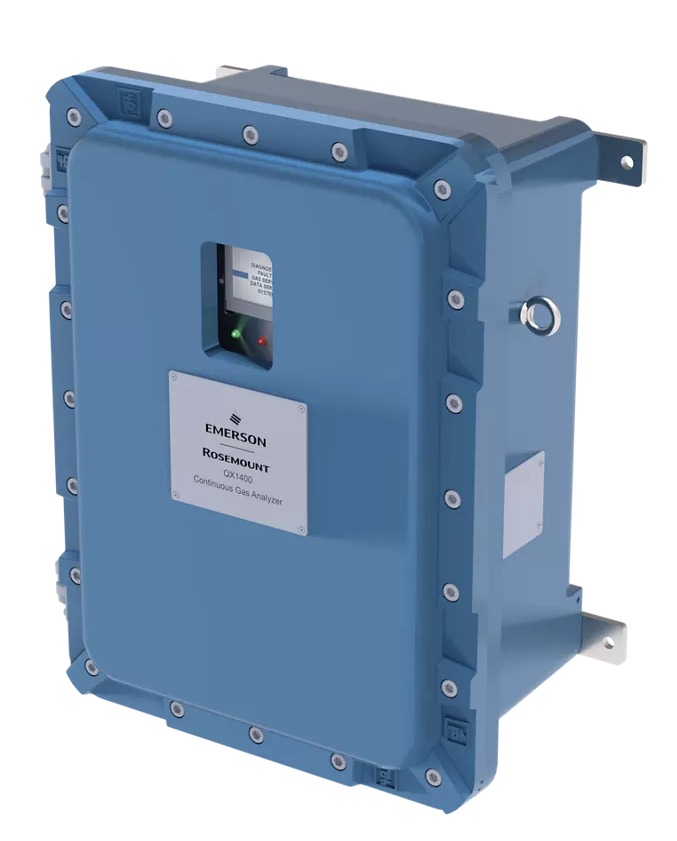
For plant, emissions, and process-analytics teams working in classified areas, the product story around Emerson and the Rosemount QX1400 Continuous Gas Analyzer is less about a new instrument alone and more about how certified measurement, gas selectivity, and sample transport can be arranged in one configuration. The analyzer continues the Rosemount QX1000 measurement concept, relies on two sensing approaches, and adds hazardous-area certifications that matter for Europe and international projects. North American Class 1, Division 2, Groups B, C, D, T4 status is expected by the end of 2026, so teams should read the specification sheet as a phased approval landscape rather than a single global certificate.
This WorldIndustrialWeekly rewrite turns the announcement into an operational view: what is certified, which gases can be monitored, where placement helps, what assumptions are risky, and what buyers should check before adding the QX analyzer line to a project list.
Why the Emerson Rosemount QX1400 matters in classified areas
The Rosemount QX1400 is presented as a continuous gas analyzer for natural gas quality monitoring, continuous emissions monitoring systems (CEMS), and other industrial uses. Its measurement architecture is described as hybrid, combining laser and paramagnetic sensing so that key process gases can be analyzed while maintenance demand remains low. The continuity with the Rosemount QX1000 is explicit: the same two technology families—quantum cascade laser direct absorption spectroscopy and paramagnetic detection—are carried into the newer instrument, but hazardous-area certification becomes the more visible change for facility teams.
For engineering leaders, the practical significance is that certified measurement can reduce the installation overhead created by classified-area requirements. The analyzer can be placed in designated hazardous locations without secondary explosion-proof or purged enclosures, which lowers installation complexity. Where suitable, mounting the analyzer nearer to the sample tap can also shorten sample lines and reduce sample transport delay.
Case view: where the analyzer scope fits
| Application context | What the product information supports | Project consideration |
|---|---|---|
| CEMS installations | CEMS is named as a continuous gas analysis setting, and the laser-based approach supports gas selectivity for continuous monitoring of multi-component sample streams. | Verify the selected gas set against the monitoring objective before treating the analyzer as interchangeable with a single-gas solution. |
| LNG plants | Oxygen measurement is required in liquefied natural gas (LNG) operations situated in classified areas. | Confirm whether the hazardous-area certificate relevant to the site is in force; for North American work, Class 1, Division 2, Groups B, C, D, T4 approval is expected by the end of 2026. |
| CCUS, ethylene purity, and hydrogen purity | The source identifies O₂ needs in carbon capture and underground storage (CCUS), ethylene purity, and hydrogen purity, alongside chemical and petrochemical operations in classified areas. | Use the configuration table early, because O₂ is measured by paramagnetic detection while other target gases use quantum cascade laser direct absorption spectroscopy. |
| Chemical and petrochemical processing sites | These sites are listed among facilities that typically need hazardous-area gas analysis, together with CEMS installations and LNG plants. | Review sample tap placement. Near-tap mounting can be helpful where suitable, but it should be evaluated against process access, maintenance routes, and certified zone boundaries. |
Data reference: the facts that drive selection
- Measurement approach: O₂ is measured by paramagnetic detection, and quantum cascade laser direct absorption spectroscopy is used for the other target gases.
- Standard gas coverage: one to four gases among CO, CO₂, O₂, NO, NO₂, and SO₂.
- Optional gas coverage: CH₄ and N₂O are described as extending coverage beyond the standard configuration set.
- European certification: ATEX II 2G Ex d IIB H2 T4 applies in Europe.
- International certification: IECEx Ex db IIB+H2 T4 Gb covers international markets.
- North American status: Class 1, Division 2, Groups B, C, D, T4 approval is expected by the end of 2026.
- Lineage: the product extends the QX analyzer line from Emerson while carrying over the measurement concept associated with the Rosemount QX1000.
Implementation path: how to turn certification scope into a layout decision
- Map each classified location against the applicable certificate: Europe ATEX II 2G Ex d IIB H2 T4, international IECEx Ex db IIB+H2 T4 Gb, and North American Class 1, Division 2, Groups B, C, D, T4 expected by the end of 2026.
- Confirm whether O₂ is a required measurement for LNG, carbon capture and underground storage (CCUS), ethylene purity, hydrogen purity, or chemical and petrochemical operations situated in classified areas.
- Choose the gas list early: one to four among CO, CO₂, O₂, NO, NO₂, and SO₂, and decide if CH₄ or N₂O require optional coverage.
- For multi-component sample streams, validate the laser-based selectivity logic and ensure the final configuration still matches the continuous monitoring objective.
- Review mounting: where suitable, closer placement to the sample tap can shorten sample lines and reduce sample transport delay.
- If a North American project schedule runs before the end of 2026, build the pending Class 1, Division 2 approval status into procurement and installation sequencing.
Common misconceptions to challenge before specification
- Assuming one standard build covers every possible analyte. The standard path covers one to four gases among CO, CO₂, O₂, NO, NO₂, and SO₂; CH₄ and N₂O are optional.
- Assuming a single global approval package. The product information distinguishes Europe ATEX II 2G Ex d IIB H2 T4, international IECEx Ex db IIB+H2 T4 Gb, and North American Class 1, Division 2, Groups B, C, D, T4 expected by the end of 2026.
- Assuming hazardous-area mounting always forces long sample lines. Where suitable, analyzer placement nearer to the sample tap can shorten sample lines and reduce sample transport delay.
- Assuming certification eliminates every installation consideration. The certification value is that the analyzer can be placed in designated hazardous locations without secondary explosion-proof or purged enclosures; gas selection, sample transport, and maintenance access remain project decisions.
FAQ for WorldIndustrialWeekly readers evaluating the Rosemount QX1400
Is the Rosemount QX1400 tied to the Rosemount QX1000?
Yes. The description states that it carries over the hybrid laser-based and paramagnetic measurement technologies used by the Rosemount QX1000 Continuous Gas Analyzer, while extending the QX analyzer line with hazardous-area certification.
Why does oxygen measurement need a separate method?
O₂ is measured by paramagnetic detection, while other target gases use quantum cascade laser direct absorption spectroscopy. The product description identifies oxygen measurement needs in LNG, CCUS, ethylene purity, hydrogen purity, and chemical or petrochemical operations in classified areas.
Can the analyzer cover CH₄ and N₂O in every configuration?
No. Standard coverage is one to four gases among CO, CO₂, O₂, NO, NO₂, and SO₂; optional configurations extend coverage to gases including CH₄ and N₂O.
What should North American buyers know first?
The approval for Class 1, Division 2, Groups B, C, D, T4 is expected by the end of 2026. Projects in that market should treat certification status as a time-sensitive specification item rather than assuming immediate availability.
Closing view for industrial decision makers
The practical takeaway for WorldIndustrialWeekly readers is that the Emerson Rosemount QX1400 should be evaluated as a configuration decision, not as a label. Its value sits in the combination of two measurement technologies, selectable gas coverage, and certification pathways that differ by market. Teams that map the certificate, the gas set, and the sample transport layout together are more likely to use the product without treating hazardous-area analysis as a separate enclosure problem. For North American planning, the pending Class 1, Division 2 status through the end of 2026 is the fact that should most directly shape schedule assumptions.