
CNC Stone Carving Workflow for Gothic Building: WorldIndustrialWeekly General Guide
Gothic building and computer numerically controlled machining are often described as opposite worlds, but the Carmelite Monks treat them as partners in a practical construction mission. The key point for industrial readers is not novelty; it is workflow discipline. Digital modeling, CAM toolpath planning, fixture control, and sawyer operation combine to make ornamental stone work repeatable enough for a live project.
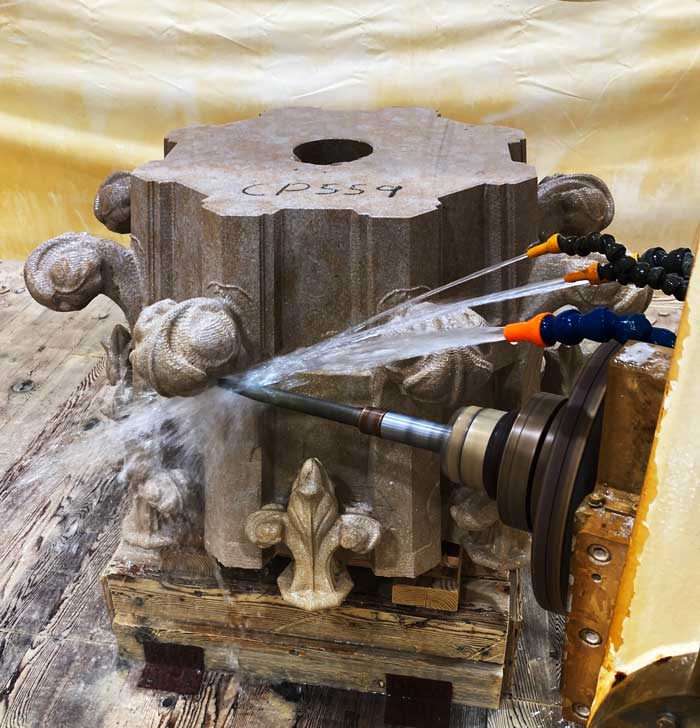 A Gothic pinnacle carved by CNC for the Carmelite Monks
When hand carving could require months for dense detail, a coordinated CNC shop can complete parts within days. That change affects scheduling, budget, and the willingness to include beauty in a building program. It also creates an entry point for staff raised with computers: their coordinate, model, and code skills can support church construction rather than remain abstract.
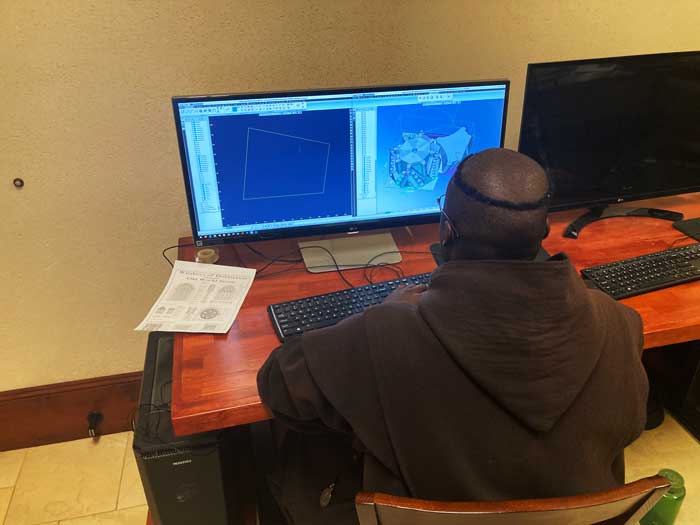 A Carmelite Monk programs CNC carving for a Gothic pinnacle
Machine Definition and Axis Logic
CNC means computer numerically controlled. A control system uses XYZ coordinates to direct cuts or milling passes. Early applications came from aircraft component manufacturing, while stone-specific machines arrived later. For Gothic stone, that history matters because the machine must remove a hard material.
Most stone-cutting systems rely on diamond tipped blades and milling bits. Water is not the cutting agent. It cools the diamond tool and clears the stone sludge. Without this distinction, shops can misread performance as a laser issue, when the real wear path is abrasive diamond action.
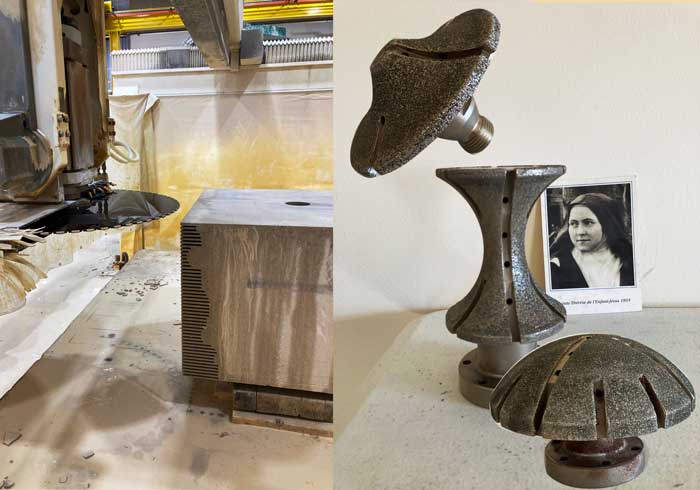 CNC stone cutting blades and bits used by the Carmelite Monks
Ornamental relief and foliage normally require 5 axes. The machine travels left and right, up and down, and front and back, and the head can rotate in two different ways. The practical value comes from interpolation. The word Interpolate means the motions work together. One direction alone is an axis; combined motion allows a small tool to reach a tight recess or leave a chosen surface texture on the stone.
Tall elements can add a 6th axis. This is usually a lathe or turntable. It positions pinnacles or statues so the CNC spindle can access surfaces that would otherwise be fixed or awkward. Unattended cutting is another option. A job may run overnight, and a normal workweek measured as 40 hours can become less than 2 days of machine time.
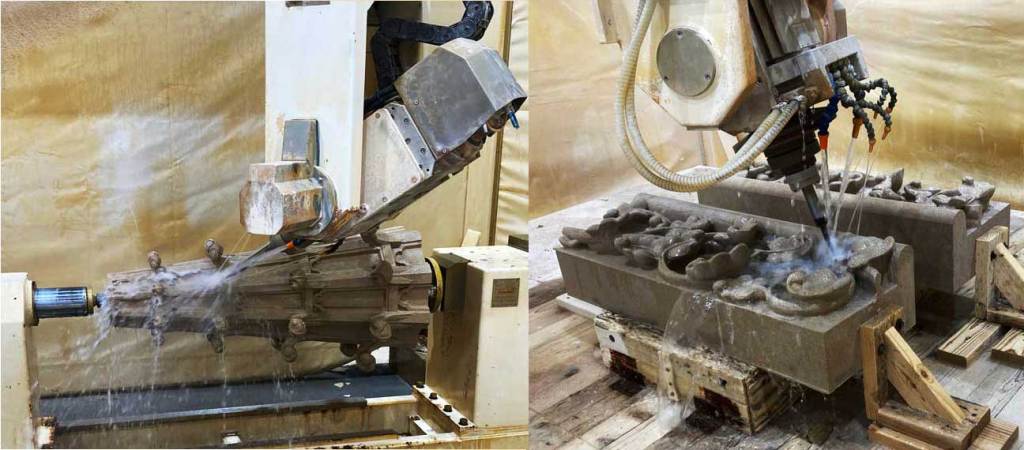 A CNC lathe and spindle carve stone for the Carmelite Monks
Case Study: Prussiani Engineering and the Durability Test
The Carmelite Monks use CNC equipment from Prussiani Engineering, a stone CNC manufacturer in Bergamo, Italy. Their approach follows the saying where there’s a will, there’s a way: careful programming, capable tooling, and persistent shop practice allow intricate 3D relief that might otherwise seem unrealistic.
The case that makes the durability point concrete happened a few months after stone carving began. A first machine was left running overnight on several 7 foot long window sills. The following morning, staff found large stones, each weighing several hundred pounds, thrown around inside the machine area. Pieces were broken and scattered.
The investigation showed a code problem from that night. At the very end of each finished sill, the program commanded repeated downward impacts, like a heavy fist, against the top of the stone. The stones failed, but the machine did not. It is still cutting to this day, almost a decade later.
From Artist Model to Sawyer Setup
The process is staged but tightly linked. The head carver or artist shapes flowers, leaves, statues, gargoyles, and other Gothic elements in a 3D model. This mudbox modeling approach resembles shaping clay, but the computer offers Undo and full building visualization. That reduces guesswork about final ornament placement.
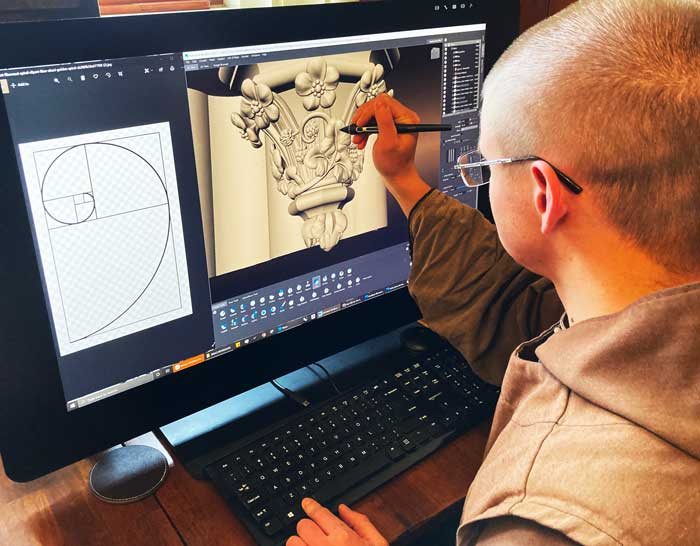 A Brother artist carves in mudbox for the Carmelite Monks Gothic
Then programmers bring the model into CAM, computer aided machining, and create toolpaths. They choose tools based on speed and finish, manage how stone is held, and prevent collisions with the spindle or neighboring stones. This stage is not just code; it is process control.
The output Gcode goes to sawyers, the boots on the ground team. They set stones according to layout and tooling lists, establish reference points, and watch the cut. The communication line between programmer and sawyer is essential because either role can miss a physical condition the other must correct.
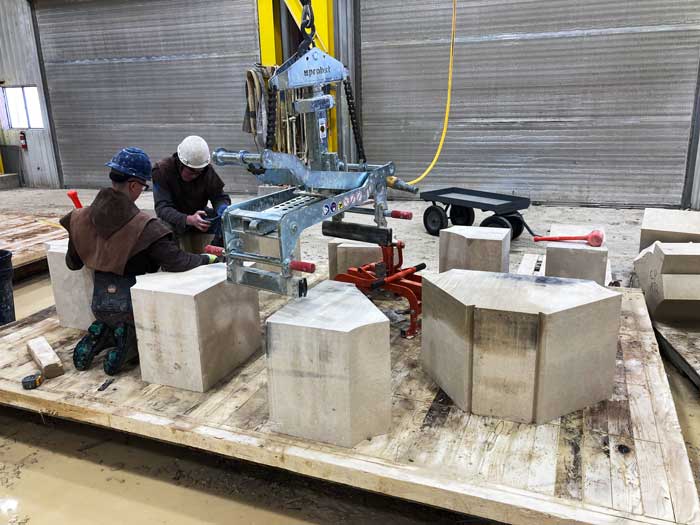 Monk sawyers set up a table to be carved for the CNC
Wire saws and bridge saws prepare blanks. A wire saw is a simpler 2 axis CNC. It cuts straight profiles such as columns and window surround segments. From one slab it can produce 20 or 30 smaller stones, like cookie cut parts, which reserves the 5 axis machines for complex carving.
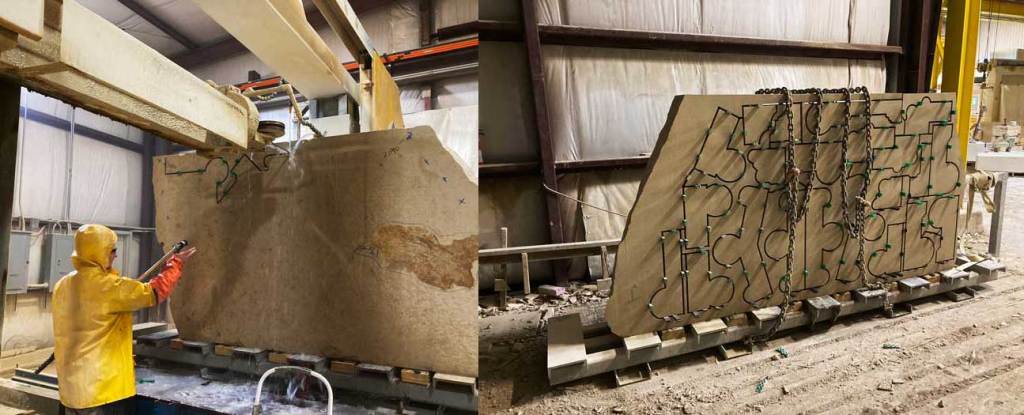 A monk wire sawyer inserts plastic shims to support the cut pieces. On the right is the finished product of the wire saw awaiting denesting of the profiled stones
Common Misconceptions
| Misconception | Operating reality |
|---|---|
| CNC removes the artist. | The artist still designs foliage and other sculptural forms; programmers translate the model into toolpaths. |
| Water or laser does the cutting. | Diamond tipped blades and bits grind the stone; water cools and washes sludge. |
| More axes automatically means better carving. | Value comes from combined motion. A 6th axis helps tall work, while a 2 axis wire saw handles simple profiles. |
| One machine can handle the whole process efficiently. | Programming, sawyer setup, and rough profile cutting are distinct steps that protect complex machine time. |
Action Suggestions for Industrial Stone Programs
- Treat the final model as the project truth early. If ornament is to be visualized in a full church model, do it before stone is committed.
- Use CAM planning to balance tool selection, fixturing, finish, and collision risk.
- Keep a continuous communication line between programmers and sawyers; layout sheets, tooling lists, and reference points are handoff tools.
- Check code for end-of-program behavior, especially repeated plunges after a cut is complete.
- Reserve complex machines for complex parts by routing straight profiles through wire saw operations.
FAQ
Can CNC make Gothic carving faster? Yes. Dense detail that once took months from a skilled carver can now be completed within days, depending on the work.
Is a 6th axis only for decoration? No. It is typically a lathe or turntable used to position tall stones such as pinnacles or statues.
Does the workflow eliminate hand skill? No. Pneumatic chisels and hand carving still have a valuable role; CNC changes the production sequence.
For industrial managers, the practical lesson is that Gothic stone work is no longer a romantic exception when it is treated as a production problem. The Carmelite Monks example shows how CNC, programming, sawyer coordination, and machine selection convert a project that could otherwise stall into deliverable elements. The learning curve remains steep, and the workload can feel intimidating, but a disciplined digital workflow gives ornament a chance to stand for centuries.