
Boeing Delivery Target Reset Sends Shares Down 10% in Largest 18-Month Fall
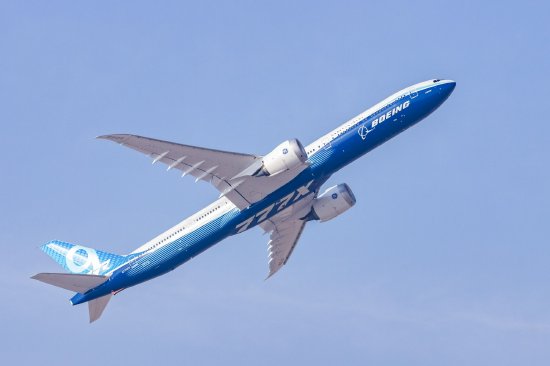
A downward adjustment to Boeing’s annual aircraft delivery plan has put the company’s production ramp back in focus. On Tuesday, executives said the manufacturer would not meet its goal of producing 500 737 aircraft for the year, while 787 Dreamliner deliveries would be close to 90, at the low end of previous guidance. The company’s explanation was forward-looking but candid: moving to a higher and sustainable production speed still needs more time. Markets reacted quickly: Boeing shares fell 10%, marking the largest decline since April 2025 and the largest 18-month drop.
The episode is not only an equity story. It is a manufacturing and operations signal, because Boeing Commercial Airplanes is the company’s largest revenue business and the delivery outlook ties directly to production discipline, quality stability and supplier coordination.
Case reading: a miss that changes the score, not the whole story
The third-quarter result gave investors a more complicated picture than the delivery reset alone. Boeing Commercial Airplanes recorded a loss of $697 million. In a Bloomberg survey, analysts had expected a loss of $360.8 million, so the segment missed consensus. The shortfall was still much smaller than in the same period last year, when Boeing took $4.9 billion of charges related to the delayed 777-9 widebody program.
That contrast matters for any reader trying to judge progress against expectations. The commercial segment’s loss narrowed year over year, yet it still fell short of what analysts had forecast for this quarter. In other words, the path to a healthier result can look uneven: improvement and disappointment can occur in the same period.
Chief Executive Kelly Ortberg framed this point directly during the conference call: “I have said before that our progress is not always perfectly linear, but we are continuing to improve, and I believe we are on the right path.”
Segment mix: defense profits, asset sale and cash flow
Beyond aircraft production, Boeing’s defense and space business grew profit, helped in part by a transaction involving a research laboratory that Boeing had jointly held for more than 20 years. Rising global defense spending also supported business volume. At the same time, cash performance partly offset the operational disappointment: free cash flow was $464 million, ahead of the $325.1 million analysts had expected.
For program timelines, Boeing reiterated that the 777-9 widebody airliner is still planned to begin deliveries next year, about six years later than the original schedule.
Data checkpoints from the announcement
| Theme | What the company said | Why it matters |
|---|---|---|
| Delivery reset | Boeing will not meet the full-year goal of 500 737 aircraft; 787 Dreamliner deliveries will be close to 90. | It shows that raising production speed to a higher and sustainable level still needs more time. |
| Market reaction | Shares fell 10%, the largest drop since April 2025 and the largest 18-month decline. | Investors repriced near-term output confidence quickly. |
| Commercial aircraft result | Boeing Commercial Airplanes reported a $697 million loss, versus an expected $360.8 million loss in a Bloomberg survey. | The segment missed expectations, but its loss was much smaller than the same period last year, when the 777-9 delay led to $4.9 billion of charges. |
| Defense and space result | Profit growth was supported by global defense spending and a sale tied to a research laboratory held jointly for more than 20 years. | Group profitability can receive support from parts of the business even when aircraft deliveries fall short. |
| Cash and schedule | Free cash flow was $464 million, above the $325.1 million expected by analysts; 777-9 deliveries are still planned to start next year, about six years late. | Cash generation can improve even as a long-delayed program remains behind schedule. |
Common misconceptions
- That a missed delivery target is simply a scheduling detail. In this case, Boeing tied the reset to the time still needed to reach a higher and sustainable production speed, so the number is a proxy for operational readiness.
- That the quarter was uniformly negative. The commercial aircraft loss missed expectations, but defense and space profit increased, free cash flow beat the analyst forecast, and the current loss was smaller than the same period last year.
- That a long-delayed program can be read as close to normal simply because it now has a delivery year. The 777-9 remains about six years behind the original plan, even with deliveries still targeted for next year.
Action guidance: how to read the reset without over-reading it
For industrial readers, the useful response is not to choose between “everything is broken” and “everything is fine.” A more balanced review starts with three checks:
- Compare the company’s own guidance changes with the analyst expectation set. The gap between Boeing Commercial Airplanes’ actual loss and the Bloomberg survey figure shows where market assumptions may have been too optimistic.
- Separate segment performance from group outcomes. The defense and space result, the research-laboratory sale and the global defense spending backdrop helped profit, while the commercial delivery reset changed near-term confidence.
- Track schedule language carefully. Repeating a plan for 777-9 deliveries next year is not the same as restoring production speed; the company itself said a higher and sustainable level still needs more time.
The episode suggests that complex manufacturing recovery should be measured through delivery targets, segment losses, cash flow and long-delayed program milestones rather than through a single quarter or a single share-price move.
FAQ
Q: What changed in Boeing’s annual aircraft delivery plan?
A: Boeing said it will not meet its full-year target to produce 500 737 aircraft. For the 787 Dreamliner, deliveries were described as close to 90, at the low end of previous guidance.
Q: How did the stock react?
A: Shares fell 10%, a decline described as the largest since April 2025 and the largest 18-month drop.
Q: Did Boeing Commercial Airplanes beat or miss expectations?
A: It missed. The segment recorded a $697 million loss, while a Bloomberg survey put the expected loss at $360.8 million.
Q: Was the loss worse than last year?
A: No. The loss was much smaller than the same period last year, when Boeing took $4.9 billion of charges related to the delayed 777-9 widebody program.
Q: What did the company say about progress?
A: Chief Executive Kelly Ortberg said, “I have said before that our progress is not always perfectly linear, but we are continuing to improve, and I believe we are on the right path.”
Q: Did other parts of the company help offset the miss?
A: Yes. Defense and space profit grew, helped by global defense spending and a transaction involving a research laboratory held jointly for more than 20 years. Free cash flow was also $464 million, above the $325.1 million analysts expected.
Q: What is the status of the 777-9?
A: Boeing reiterated that 777-9 deliveries are still planned to begin next year, about six years later than originally planned.
A reset of the delivery target is not a verdict that production improvement stopped. It is a reminder that a higher and sustainable pace can require more time, even when other business lines and cash generation are moving in a better direction.