
ASML's 2028 Capacity Wall: EUV, Immersion DUV and Tool Upgrades Compared for Industrial Buyers
ASML cannot cover its customers' declared needs for 2027 and 2028, so scanner slots — not cleanroom budgets — now set the ceiling on AI-chip expansion. For industrial buyers the practical ranking is clear: reserve scarce EUV capacity first, extract extra wafers from the installed base through upgrades and service, and treat High-NA EUV as a post-2028 economics decision rather than a hedge against this shortage.
That conclusion comes out of ASML's Q3 2026 earnings, as reported by Digitimes: an AI-driven build-out of advanced logic and memory keeps lithography undersupplied at least until 2028, and the company's own output has become the bottleneck of the whole chain. What follows compares the four responses actually available to a plant or procurement team — lock the slot, change tool class, upgrade what already runs on the floor, or absorb the price premium — together with the trade-off each one hides.
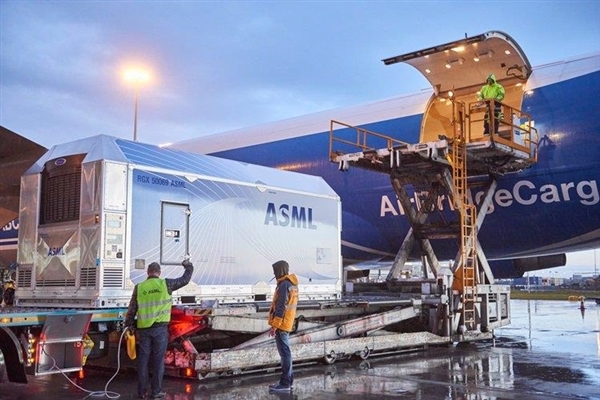
Why is the scanner slot, not the fab, the binding constraint?
Because tool demand is growing faster than ASML can convert optics, machine beds and supplier capacity into shipping systems, and the constraint sits upstream of Veldhoven.
Christophe Foucart, ASML's president and CEO, put it plainly: even the supply capability planned for 2027 and 2028 will not fully satisfy customer requirements, and some customers have already opened talks on far-out orders for 2029 and 2030. For most manufacturers that reservation horizon is longer than the depreciation schedule of the plant those machines would sit in.
The physical reason is the optics monopoly. Reporting by EE Times on ASML's July capacity plan notes that the company's 2025 annual report identified Carl Zeiss SMT, its only supplier of projection optics, as a limit on how many systems it can build. Zeiss is adding about 25,000 square metres of production space at Oberkochen in southern Germany, with staff moving into the first new building only in July 2026, four years after the 2022 groundbreaking, according to Tom's Hardware. Precision-optics fabs cannot be compressed into a fiscal year.
Demand pressure is broadening the gap. SEMI's mid-2026 forecast put worldwide semiconductor equipment sales on course for a record US$229 billion in 2028, while Deloitte's 2026 industry outlook expects global chip sales to peak near US$975 billion. More capital is chasing a fixed number of scanners.
How much output do the 2027 and 2028 steps really add?
Two consecutive steps of roughly 30% growth are genuine, but they compound from a small base, so absolute machine counts stay tight through 2028 — the bottleneck shifts from "will capacity grow" to "who is allocated the growth".
ASML had already planned to lift low numerical-aperture EUV and immersion DUV capacity each by about 30% in 2027. With demand accelerating, the company is studying a further increase of more than 30% in 2028. Bank of America models EUV shipments reaching 120 units in 2028, with average selling prices up about 5%, a combination the analysts say feeds straight into earnings per share.
| Planning reference point | Figure | Whose number | What it means on the buy side |
|---|---|---|---|
| Low-NA EUV output base, 2026 | roughly 65 systems per year | CEO remarks cited in EE Times' ramp reporting | The pool that all EUV customers were competing for before the ramp |
| 2027 step, EUV and immersion each | about 30% | ASML plan via Digitimes | Arithmetically implies roughly 85 low-NA EUV-class systems — an implication, not company guidance |
| 2028 step under study | more than 30% | ASML, per management commentary | Late-2027 order windows decide who benefits |
| Immersion DUV shipments, 2026 | about 130 units | Tom's Hardware report on company guidance | The only large-format alternative to EUV for advanced layers |
| EUV shipments, 2028 | 120 units | Bank of America research | Seller's-market pricing power persists into 2028 |
EUV, High-NA EUV or immersion DUV: which machine class solves which problem?
Availability differs by class, but the choice should still start from node, die size and cost per wafer — a scarce slot in the wrong tool class is the most expensive kind of capacity.
| Option | Ballpark capital cost | Access in 2027-2028 | Wins on | Loses on |
|---|---|---|---|---|
| Low-NA EUV (0.33 NA, NXE:3600D-class) | around US$200-250 million per tool | Allocated; new entrants pushed to 2029 and 2030 windows | Single-exposure critical layers, mature throughput learning | Still needs multiple patterning at the sharpest pitches |
| High-NA EUV (EXE:5000, EXE:5200B) | about US$380-400 million per tool, roughly double low-NA (TechPowerUp, trade press) | Earliest access for research and pilot layers; production slots come later | Fewer masks, larger usable die, next-decade headroom | A single High-NA exposure costs around 2.5 times a low-NA one, and stitching reduces throughput |
| Immersion ArF DUV | Below EUV, per layer stack economics vary widely | 30% more capacity in 2027, another step studied for 2028 | Overlay, memory and non-critical advanced layers; established supply | Multi-patterning inflates mask count, cycle time and footprint |
| Upgrades plus refurbished platforms | A fraction of a new tool | Fastest — no slot queue | Throughput, overlay and availability from assets already qualified | Capped by what the fab already owns |
Two live cases show the split. Intel has the deepest High-NA learning curve — trade press in September 2026 reported the foundry passing one million High-NA EUV wafers, and SemiAnalysis has argued that High-NA usage can still be costlier than low-NA double patterning in the early ramp. TSMC, by contrast, has been reported deferring High-NA for production and continuing to run 0.33-NA EUV, a reminder that the largest buyer ranks cost per good wafer above technology first-mover value.
Can buyers dual-source lithography the way they source etch or deposition?
Not at EUV, and only partially at DUV. ASML is the only maker of EUV scanners in the world, which is why its capacity plans read like an industry-wide production forecast.
- Industry tallies put ASML's share of the critical ArF immersion market at roughly 93.3% in 2023 with Nikon at 6.7%, and closer to 97% by 2024.
- EE Times reported that Nikon's immersion scanners were already priced a double-digit percentage below ASML's equivalent tool, yet its share continued to decline — evidence that process recipes, uptime and field-service coverage, not the sticker price, decide lithography purchases.
- Nikon is reportedly aiming at a next-generation ArF platform around fiscal 2028, per Nikkei-cited reporting by TrendForce; that timeline does not help a 2027 capacity plan.
- Analyst Robert Castellano's shipment tabulations show Canon dominating i-line with about 64% against ASML's 26% and Nikon's 10%, while ASML captured roughly 94% of 2024 lithography shipment value. Japan's alternatives are real at mature nodes, thin at the advanced end.
Practical reading: dual-sourcing is viable for i-line, KrF and some dry ArF use cases; for EUV the only lever is scheduling and allocation, not supplier competition.
What does the installed-base path deliver without a slot?
Upgrades turn engineering time into wafer output faster than a reserved machine can be installed, which is why service businesses are growing in a shortage.
ASML's installed-base management segment — service, upgrades and field options — grew about 26% to EUR 8.2 billion in 2025, according to market reporting on the company's results, outpacing much of the systems business and carrying richer margins. The company also states that almost every lithography system it has ever shipped is still running at a customer fab, and that it refurbishes classic PAS 5500 and TWINSCAN platforms for new life (ASML product pages). For mature-node and analog-plant readers, refurbished and requalified tools are the least congested lane in this cycle.
What is the price bill, and who absorbs it?
A seller's market converts scarcity into pricing power, and the cost lands in wafer economics rather than in a visible list price.
Roger Dassen, ASML's chief financial officer, disclosed that the company has completed value-based pricing conversations with its main customers and has raised prices on part of its lithography product line. The financials show why: ASML's Q3 2026 net sales reached 11.662 billion euros, up 55.2% year on year and a record — Kuai Technology's conversion of that figure puts it near 87.7 billion RMB. ASML raised its full-year guidance three times within the year, now calling for full-year 2026 net sales of 44 billion to 45 billion euros, equivalent to roughly 331.1 billion to 338.6 billion RMB by Kuai Technology's conversion. Bank of America's model of about 5% higher average selling prices in 2028 assumes that trend holds.
Buyers are signalling acceptance. TSMC guided 2026 capital expenditure of US$52-56 billion, up as much as 40% year on year according to Industrial Info Resources, with AI accelerator demand the stated driver. Three consequences for planners:
- Model escalators into multi-year capex: a value-based-pricing supplier renegotiates at renewal, not at inflation.
- Re-price the make-vs-upgrade question annually: once ASP and slot scarcity move together, the break-even for tool reuse shifts.
- Push the premium into product mix: fabs that cannot pass 5% higher depreciation per wafer should question whether they need EUV layers at all.
Five misconceptions that distort 2027-2028 equipment plans
- "A 30% capacity increase means 30% more machines for us." The steps apply to ASML's total output across all customers and both tool classes; allocation, not headline growth, determines delivery.
- "Capacity equals shipment." Bank of America's 120-unit EUV figure for 2028 is a shipment estimate; installed capacity only converts into wafers after site preparation, installation and qualification lead times.
- "High-NA replaces low-NA." Current reporting shows both running side by side, with High-NA limited to selected layers — Intel's pilot production and TSMC's deferral point the same way.
- "Nikon or Canon can absorb the overflow." Their strength is at mature wavelengths; the value concentration in ASML's 2024 shipment share shows why the queue does not move.
- "The shortage is only about leading-edge logic." Memory and HBM expansion, plus AI infrastructure build-out, pull the same scanners, and DUV demand for advanced packaging is rising with them.
Which route fits which operation: a decision framework
- Leading-edge logic and HBM-adjacent memory programmes. Treat 2029 and 2030 slots as a procurement deliverable now: confirm allocation in writing, align fab shell milestones with tool windows, and budget the value-based price step rather than assuming flat ASPs.
- Advanced-adjacent layers with node headroom. Buy immersion DUV capacity in the 2027 step where multi-patterning still fits your overlay and cycle-time targets; this is the class with the clearest announced expansion.
- Mature-node, analog, power and sensor plants. Prioritise upgrades, refurbished platforms and requalification; you compete least with AI demand for the same tool classes.
- New entrants and capital-constrained operators. Do not plan a fab around EUV access you cannot evidence; contract for foundry capacity instead until the 2029-2030 window is real.
- Everyone. Re-run cost per good wafer at about 5% higher ASP and at current lead times, and put service-level commitments — uptime, spares, field engineer coverage — into every reservation agreement, because the EE Times and Nikon price evidence shows availability, not discount, wins the argument.
FAQ: what plant and procurement teams ask next
Is the lithography shortage still open into 2028?
Yes. Based on the Q3 2026 results reported by Digitimes, ASML expects the supply-demand imbalance to run at least until 2028, with some customers already negotiating 2029 and 2030 orders.
Should we pay the premium to secure EUV or spend the same money on upgrades?
If your critical layers genuinely require EUV, the slot wins because upgrades cannot print smaller pitches. If your constraint is throughput or availability rather than resolution, installed-base upgrades deliver wafers months earlier and carry no allocation risk.
How firm is a booked 2028 slot?
Treat bookings as reservations against a constrained queue, not guaranteed deliveries: the upstream limit here is optics capacity at Carl Zeiss SMT, which ASML's own annual report has flagged, and new Oberkochen buildings are being handed over in phases.
Does price relief arrive once capacity expands?
Nothing in the current disclosures points that way. Value-based pricing conversations have already been completed with major customers, price increases have been applied to part of the range, and Bank of America assumes roughly 5% higher average selling prices alongside 120 EUV units in 2028.
Reference sources
- ASML third-quarter 2026 results, company investor relations: https://investor.asml.com/quarterly-results
- EE Times on ASML's EUV expansion and the Zeiss optics constraint: https://www.eetimes.com/asml-euv-expansion-runs-through-zeiss/
- Tom's Hardware on Zeiss's Oberkochen expansion that caps scanner output: https://www.tomshardware.com/tech-industry/zeiss-expands-german-site-that-caps-asmls-euv-scanner-output
- SEMI equipment sales forecast to a record US$229 billion in 2028: https://www.semi.org/en/semi-press-release/global-semiconductor-equipment-sales-forecast-to-reach-a-record-229-billion-dollars-in-2028-semi-reports
- Deloitte 2026 global semiconductor outlook: https://www.deloitte.com/us/en/insights/industry/technology/technology-media-telecom-outlooks/semiconductor-industry-outlook.html
- ASML products and refurbished systems: https://www.asml.com/en/products
- TechPowerUp on High-NA EUV tool pricing: https://www.techpowerup.com/319071/asml-high-na-euv-twinscan-exe-machines-cost-usd-380-million-10-20-units-already-booked
- Yahoo Finance on ASML installed-base management growth: https://finance.yahoo.com/markets/stocks/articles/asmls-installed-business-gains-traction-142000346.html
- Industrial Info Resources on TSMC's 2026 capital budget: https://www.industrialinfo.com/news/article/chipmaker-tsmc-projects-2026-capex-will-reach-52-billion-56-billion--352061
- TrendForce on Nikon's next ArF platform: https://www.trendforce.com/news/2025-02-21/news-nikon-aims-to-close-the-gap-on-asml-with-new-arf-lithography-system-in-fy28/