
Apple's J595 Stall: A Robotics Case Study in Software Drag, Talent Depth and Bill-of-Materials Risk
By Michael Torres | Industrial Weekly
Seen only as a gadget story, Apple's first for-sale home robot is a product running late. Seen as an industrial story, it is something more instructive: a picture of what happens when a manufacturer with elite mechanical execution discovers that its critical path has migrated out of the CAD room and into software stability, actuation durability and component pricing. The tabletop machine, internally code-named J595, is the clearest current evidence that robotics timelines are no longer set by tooling.
Case file: a hardware freeze that arrived two years early
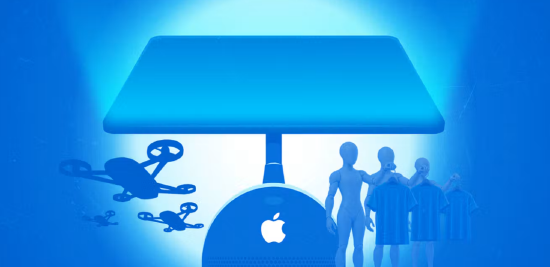
The device carries a 9-inch display on an articulated arm, and the silhouette deliberately recalls the lamp in Pixar's animation logo. Apple opened the program in 2019 under a modest brief: a video-call companion whose arm existed mainly to follow a person around a room. Once leadership asked for AI capability to be layered on top, the objective ballooned. The current design specification calls for cameras and multiple sensor types so the unit can read a whole room and move on its own - switching on a light when someone walks in, nudging a cat off a table, and steering clear of furniture through built-in obstacle avoidance.
People involved in the program describe a now-familiar mismatch: most of the hardware configuration was frozen roughly two years ago, while the software group never caught up. The J595 hardware team pressed to accelerate and ship; the software team argued for delay. Over the past year the software group has been subtracting features, narrowing the product's core to FaceTime calls plus simple home-automation tasks such as turning lights on.
The commercial frame is equally unsettled. Apple's planned price for the robot is about $1,000, and the component market could push the final sticker higher. Former employees say the product may be called HomeView Ultra, extending the naming family of HomeView, the fixed desktop device Apple released last month. The company originally aimed at a launch next year, yet the date can slide as far as 2028; the hardware team had initially planned to ship this year.
This reporting adds a fourth variable to the standard launch-triangle reading: the buyer base. A first-generation robot priced near $1,000 sits above the impulse threshold of the smart-home aisle and below the price band where households expect a durable appliance, so Apple's timing decision is simultaneously a bill-of-materials decision and an expectation-management decision.
"An iPad on a stick": how a decade-long program lost its owner
The institutional backstory explains why nobody ever owned the schedule outright. Development has run for nearly a decade with several senior executives rotating through the program, most of them carrying other products at the same time. Bloomberg has previously reported parts of this history. The earliest prototype was finished in 2018; the next year Tim Cook watched a demonstration and signed off on continued work. That first mule was larger than today's version, and engineers joked that it looked like an iPad stuck on a stick. Hardware was led by Matt Costello, who previously ran Beats, the headphone brand Apple bought in 2014. Software was handed to Apple's Special Projects group, which at the time was consumed by Project Titan, the self-driving car effort. For a long stretch the veteran engineer Brian Lynch, an iPod-era hire, ran both the car cockpit and J595, and imagined the robot parked on an Apple car dashboard. In 2021 the Special Projects chair changed hands: Doug Field left for Ford and Kevin Lynch arrived. Lynch is credited with building the health-tracking features that rescued Apple Watch, but his attention sat with the car, so robot work was carried mainly by Chris Sari, another Apple Watch software veteran. After Apple cancelled the car program in 2024, Lynch moved his full focus to the home robot and absorbed a large block of former automotive staff; three people connected to the project said colleagues who had worked on robotics earlier were disappointed by his style, describing little communication and limited listening to front-line input.
Three structural causes behind the slip
1. Refresh discipline does not transfer to a new category
Apple re-engineers iPhone and Mac on an annual metronome and has comparatively little practice creating a category from a blank sheet; its institutional tempo is cautious. Vision Pro was polished for about eight years before launching two years ago to a flat reception. If J595 appears next year, its development cycle will be roughly as long.
Timing pressure was amplified by the handover: to align new products with John Ternus taking over in September, Cook pushed several launches back so they would land on his arrival. The releases that followed - HomeView, the foldable iPhone Duo and a touchscreen MacBook - met mixed reviews: the $2,899 MacBook drew criticism for its price, the Duo generated buzz but recurring complaints about cracked screens, and HomeView was dismissed by some as an enlarged Apple Watch that leans on a Siri whose performance still underdelivers.
The industrial read is that category creation behaves like a service business, not a product launch. Home robotics has a graveyard to prove it: social robots such as Jibo and Kuri, along with Anki's lineup, collapsed when their makers ran out of funding, leaving owners with silent devices; Amazon discontinued its Astro-for-Business program less than a year after launch and refunded $2,350 units, as IEEE Spectrum and GeekWire later documented. A robot whose value lives in cloud-resident software is only as durable as the vendor's commitment to keep the servers on - a consideration that belongs in procurement contracts, not just in roadmaps.
2. A bench of about 10 specialists inside a 300-person software org
Ternus, who before his promotion ran hardware and was skeptical of many new bets - the cancelled car project, Vision Pro - is described by three people familiar with the work as far more optimistic about robotics than colleagues expected. Last year Kevin Lynch's reporting line and that of the Special Projects group moved from senior vice president John Giannandrea, who once oversaw Apple's AI work and left earlier this year, to Ternus. After Apple announced in April that Ternus would take the CEO chair within the year, he attended nearly every J595 and other robot demonstration and planning session.
His stated approach - leaner teams, faster shipping - runs into a scarce resource. The robotics group remains small, and people with deep robotics experience inside Apple are thin; one estimate puts true robotics specialists at about 10. Lynch's software organization has roughly 300 people, of whom about 30 do research. Attrition has hit the program's founding layer: hardware lead Brian Lynch moved to the fitness-hardware maker Oura, and robot research lead Jian Zhang went to Meta.
That shortage is a market condition, not an Apple quirk. The International Federation of Robotics reported 542,000 industrial robots installed worldwide in 2024, more than double the figure a decade earlier, and the operating base has since passed five million units - a build-out that absorbs the same controls, perception and motion-control engineers into factories first. Coverage of Stanford's 2026 AI Index in IEEE Spectrum makes the split explicit: U.S. companies still publish the most notable AI models, while China holds a clear lead in robot deployment volume. A company strong in devices but light in deployed-robotics practice ends up bidding for talent in the most contested segment of the market, where U.S. median total pay for robotics engineers is quoted near $138,000, per Coursera's aggregation of compensation data.
3. Access to a model is not the same thing as a product
From the start the team understood that a premium price could not rest on a fancy FaceTime terminal. After ChatGPT arrived in 2022 and ignited the AI wave, the group began adding AI capability and richer experiences, with internal pressure to embed proactive agentic behavior so the device could act on its own. Apple created an agentic-AI research branch inside the robotics department headed by Vladlen Koltun, who had run AI business and research at Intel and joined in 2021.
The gap between Apple's in-house AI and rivals forced a pragmatic choice: the team was cleared to use externally available models, including open-source options and models licensed from Google. A later tie-in with Siri was planned, but early in robot development the Siri and robotics teams worked independently, and Siri's own update backlog was already heavy. Siri's major overhaul has taken years, and even after Apple shipped a new set of AI features this year it trails Meta's Muse and OpenAI's Dots in the AI-agent race. One former engineer who worked on J595 put the organizational cost bluntly: Apple has been torn in every direction, pulled apart by the effort of catching the AI wave.
Sector-wide data supports treating this as a physics-and-software problem rather than a management failure. Tesla's Optimus program, generally considered the most aggressive in the field, reportedly slipped customer deliveries toward late 2027, with Elon Musk attributing the delay to hand mechanisms, durability and AI, and describing the ramp as nothing like building cars - even though he says the robot will eventually help with housework.
Bill of materials: the arithmetic behind "may cost more"
Two price points bracket the problem. HomeView, launched last month, is a 7-inch smart display that starts at $299 - the reference for what a screen plus microphones plus a home hub costs at scale. A roughly $1,000 robot adds an arm, actuators, cameras and sensing, so the incremental price is almost entirely motion hardware and perception, not display area.
On top of that, the memory complex is in a price upcycle. TrendForce projected conventional DRAM contract prices rising 10-15% quarter over quarter in the fourth quarter of 2026, with NAND flash contract prices up 15-20% in the same period, after server DRAM had already climbed a cumulative 64% in the second half of 2025. Any consumer robot built in volume is bidding against AI server demand for the same memory allocation.
Motion components are tighter still. McKinsey's April 2026 analysis of the humanoid supply chain argues that precision reducers - strain-wave and harmonic gearsets - are structurally the hardest parts to scale, with long lead times and few qualified substitutes. Industry supply surveys put reducer content at 14 to 20-plus units per robot, and report delivery windows at some suppliers stretching from roughly three months to six to eight months as humanoid orders surged. That is the concrete mechanism by which a robot announced at about $1,000 can arrive higher.
| Program | Form factor | Timeline signal | Read for industrial buyers |
|---|---|---|---|
| Apple J595 | 9-inch screen on an articulated arm | Hardware frozen about two years ago; target next year, possible slip to 2028 | Software validation, not tooling, sets the ship date |
| OpenAI hardware | Donut-shaped smart speaker with moving parts and a camera, planned for next year | Acquired the startup co-founded by Jony Ive a year ago; more than 400 Apple engineers hired | Talent and design can be bought faster than a supply chain |
| Meta | AI glasses, VR headsets, Charm pocket AI device | Charm reportedly developed in less than a year, shipping in December | Single-purpose devices compress the integration surface |
| Tesla Optimus | Humanoid | Deliveries reportedly pushed toward late 2027 on hands and AI | Dexterous hardware is the industry-wide blocker |
| 1X | Neo humanoid | Went viral last year on dishwashing and laundry; home rollout planned for this year | Demo-to-deployment gaps persist at startups too |
Beyond J595: the portfolio that reveals the real strategy
Kevin Lynch's group is exploring several other shapes: a wheeled robot that follows people, an indoor flying robot, and a program targeting a narrow set of specific household chores, such as folding laundry. The logic is straightforward engineering economics - a machine that does one task well needs a far narrower perception-and-motion envelope than a general-purpose humanoid. Meeting records reviewed by the project indicate Ternus is especially interested in chore-specific robots. Members of the J595 team are already discussing a second generation, planning to restore some of the functions cut from the first. For market sizing, Goldman Sachs projected a $38 billion humanoid total addressable market by 2035 in its February 2024 baseline and, in an update reported in September 2026, raised expected 2035 shipments to roughly 6.5 million units and the market to about $138 billion. The prize is being re-rated upward while Apple's program drifts, which is precisely why team members fear the delay itself is expensive: the longer the launch waits, the higher ambient AI capability lifts outside expectations - and the colder the reception could be if the first unit lands with the muted response HomeView got.
Five misconceptions to drop before budgeting a robotics program
- A hardware freeze means a product is ready. J595's mechanical work was largely settled about two years ago, and the schedule still moved. In robotics, the validation harness is the long pole.
- Bill of materials is the binding constraint. Component prices matter, but feature cuts, not cost, decided the first version's scope.
- Licensing a capable model yields an agent product. Apple's access to open-source and Google-licensed models did not remove the need for room-scale perception, safety behavior and Siri integration.
- Annual refresh habits transfer to new categories. Vision Pro's roughly eight-year development run shows how long a first-of-category machine takes to converge - and J595 is tracking toward a similar span if it ships next year.
- Launching late is the conservative choice. A late launch of a reduced-spec robot invites expectation inflation, a re-priced competitor set and the same skeptical review cycle a rushed launch would have caused.
Action recommendations for operations and product leaders
- Give software ownership of the gate date. Run dual sign-off reviews in which perception, safety and reliability evidence - not industrial design freeze - unlocks tooling spend.
- Ship a defensible minimum, then a contract upgrade path. Kevin Lynch's base-version-plus-updates plan mirrors Apple Watch, which launched in 2015 and only became indispensable after health and fitness sensors arrived later. Define the one job the first unit must do reliably: a call, a light scene, a single chore.
- Hedge the motion and memory lines in your supply plan. Qualify at least two reducer or actuator sources, add price-indexing clauses for memory and storage, and reserve capacity before the pilot order, since lead times in this segment run in months, not weeks.
- Buy capability, not headcount. A 300-person software organization with about 30 researchers and an estimated 10 deep robotics specialists is the cautionary ratio; recruit against named gaps such as manipulation, safety validation and fleet telemetry.
- Write the service-life commitment into the product. Publish an explicit support horizon for cloud-dependent robots and an offline fallback mode; the Jibo and Astro-for-Business history is now a procurement concern, not a curiosity.
- Match marketing claims to shipped software. Overclaiming autonomy is what turns an internal hardware-versus-software dispute into a public credibility problem.
FAQ
What is J595?
Apple's internal code name for its first home robot intended for sale: a 9-inch screen mounted on a movable arm, designed to track people, sense a room, act on simple automations and avoid obstacles. Program work began in 2019; the planned price sits at about $1,000 under the possible product name HomeView Ultra.
Why is the launch date uncertain?
Because the hardware and software tracks diverged. Most hardware was finalized roughly two years ago, the hardware team wanted to ship this year, and the software team spent the past year cutting scope and arguing for delay. Apple hopes for next year; 2028 remains possible.
Is the price likely to rise?
That is the stated risk. DRAM and NAND contract prices are climbing, and precision reducers and actuators remain supply-constrained, so a robot priced at about $1,000 today is exposed to input inflation across a multi-year development tail.
Who else is competing in this space?
OpenAI, which a year ago bought the hardware startup co-founded by Jony Ive and has since hired more than 400 Apple engineers, plans a donut-shaped smart speaker with moving parts and a camera next year. Meta is shipping AI glasses and VR headsets, with its Charm pocket device reportedly developed in less than a year for December delivery. Tesla is developing the humanoid Optimus, and startup 1X's Neo drew attention last year for handling dishes and laundry.
What should a manufacturer take from this?
Treat robotics programs as software-led capital projects: gate on validation evidence, secure long-lead motion components early, and budget for the expectation-inflation cost of every quarter of delay.
Trend judgment: the delay tax compounds
For plant managers, automation buyers and product executives, the J595 story is less about one company's gadget pipeline than about where schedule risk now sits in electromechanical products. Motion hardware that works on a bench is a solved problem; motion hardware that behaves safely, reliably and affordably in an unpredictable home or shop floor is not, and the component markets that feed it are tightening as AI factories absorb capacity first. Expect the near-term market to be won by narrow-scope, serviceable machines with published support horizons rather than by general assistants - and expect Apple's next moves, from chore-specific robots to a second generation that restores cut features, to be read across industry as the honest measure of how long this transition really takes.
Have a robotics sourcing or automation timeline you want examined? Write to our editorial desk at news@industrialweekly.com.