
AMD EPYC Embedded 9006 CPUs: What up to 256 cores and seven-year Longevity Change for ATE, Firewall and Storage Builds
On a memory test cell, the number that decides the capital plan is devices validated per tester per shift. AMD's own comparison figures put AMD EPYC Embedded 9006 CPUs up to 1.8x ahead of 5th Gen AMD EPYC 9005 Series processors on throughput, up to 1.3x on firewall throughput and up to 1.5x on storage services, with up to 256 cores, PCIe Gen 6 and CXL 3.1 connectivity, plus seven-year product longevity. Here is how I would read that as a deployment brief rather than a launch note.
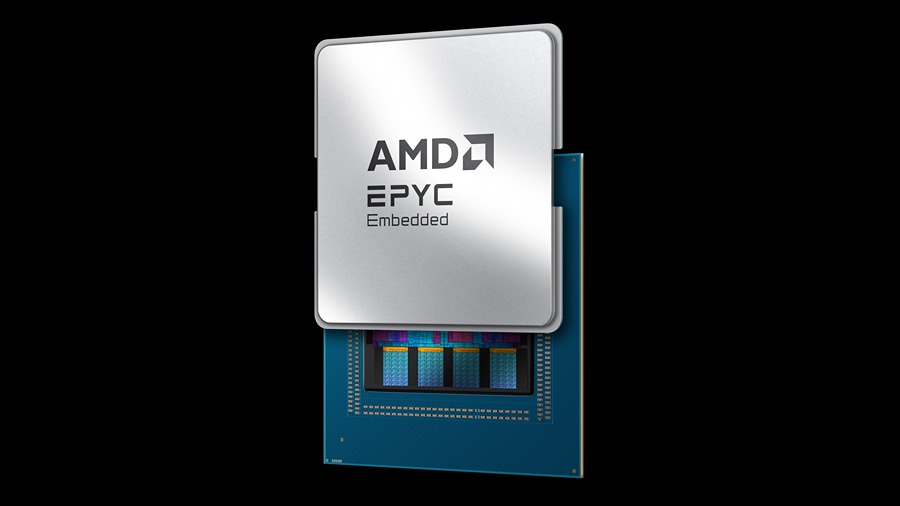
Why is server silicon now landing inside embedded boxes?
Because three separate floors — test, security and storage — hit the same wall at the same time: data movement, not arithmetic. AMD's launch name for this line is the AMD EPYC Embedded 9006 Series SP7 CPUs, introduced in 2026 and described by the company as AMD EPYC Embedded 9006 Series SP7 processors built on the high-performance Zen 6 core architecture. AMD EPYC Embedded 9006 processors are positioned against three duty cycles with identical demands: high throughput, memory bandwidth and I/O performance.
The demand data backs that positioning. Dell'Oro Group's second-quarter 2026 read was that firewall growth doubled to 18 percent on refresh and capacity expansion, with AI traffic cited as the driver (Dell'Oro Group). On the test side, coverage of high-bandwidth memory notes that HBM now accounts for close to half the cost of an AI chip, which is why validation is moving earlier in the flow and why every second inside the tester has become expensive (Semiconductor Engineering). For the equipment-side capital cycle around that same quarter, see our comparative read of EE Times Magazine November 2026.
What actually changes on a semiconductor ATE floor?
Site count per tester, mostly. Inside automated test equipment (ATE) the CPU is the control and orchestration engine: it manages memory and storage test workloads and the interfaces under validation — high-speed DDR5 RDIMM and emerging MRDIMM, plus switches and devices on PCIe Gen 6 and CXL 3.1. The added compute scalability lets a cell run more tests in parallel, which is the cheapest way to buy back test time when the alternative is another tester in the cleanroom.
The memory dependency is where I would be careful in a design freeze. MRDIMM is a JEDEC module class, not a vendor option: JEDEC's own status update puts Gen1 MRDIMM at 8,800 MT/s with Gen2 raw-card designs targeting 12,800 MT/s still in development (JEDEC). A tester program frozen for a 2027 qualification can plan on that module class; one being quoted for a 2026 purchase order should not assume it on the shelf.
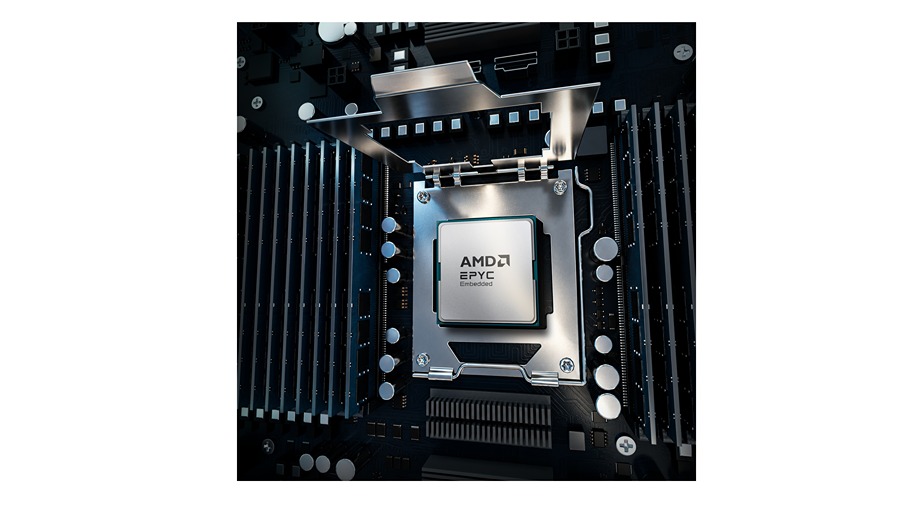
Where do the firewall and storage uplifts come from?
From the control plane, not from packet crunching. As AI infrastructure expands network traffic, high-end firewalls supporting 400G/800G links accumulate more security policies, more sessions and more flow exceptions to inspect. AMD positions these CPUs as the control-plane engine that manages that growth, processes new flows, feeds data-plane accelerators, and yields up to 1.3x higher firewall throughput compared with the previous generation.
Storage is the same logic with a different dependency. These parts power NVM Express (NVMe) connectivity, data movement and storage processing for attached NVMe devices, and accelerate data-intensive services such as compression, caching and RAID — an increase over the previous generation of up to 1.5x on the intelligent storage acceleration library (ISA-L) suite, which measures the specific functions storage services call rather than generic integer work.
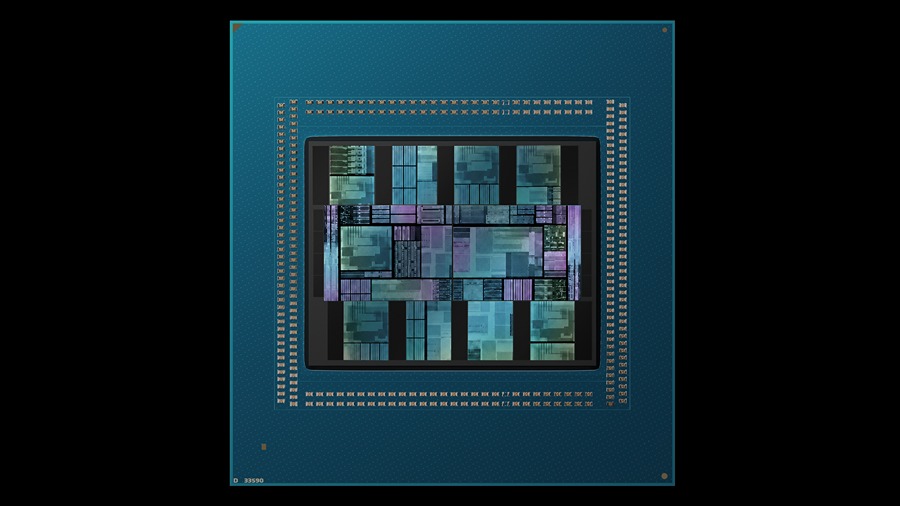
How much core, memory and I/O scale is on the table?
Enough to change chassis architecture, not just board spin count. The practical reading of each figure is on the right.
| Specification | Figure | What it gates on the machine |
|---|---|---|
| Compute | up to 256 cores and 512 threads | Parallel test sites, concurrent security sessions, storage service threads |
| Throughput vs prior generation | up to 1.8x | Devices per tester per shift; sessions per appliance |
| I/O bandwidth | up to 1.5x | Instrument, accelerator and NIC fan-out without a PCIe tree redesign |
| Memory bandwidth | up to 2.7x | The real limiter for memory ATE and inline storage services |
| Memory channels and speeds | Sixteen DDR5 channels; RDIMM up to 8,000 megatransfers per second (MT/s); MRDIMM up to 12,800 MT/s | Population plan, DIMM sourcing, signal-integrity validation |
| Lane count | Up to 96 PCIe Gen 6 lanes operating at 64 gigatransfers per second, with flexible CXL 3.1 support | Test heads, NVMe backplanes, 400G/800G NICs, memory expansion |
Is seven-year product longevity worth a socket change?
If the box ships into a decade-long fleet, it is the line item that removes a mid-life board redesign. The processors provide seven-year product longevity, ongoing embedded-focused firmware updates and software support, and — building on the EPYC 9006 server CPU architecture — enterprise-class reliability, availability and serviceability features, with telemetry and predictive failure analysis available through supported platform implementations.
Cryptographic shelf life is the second reason, and it has a date attached. AMD states these parts support post-quantum cryptography for firmware signing. The migration calendar that makes that commercially relevant is public: NSA guidance sets 2027 as the point at which new acquisitions for national security systems must support the post-quantum algorithm suite, with legacy cryptography phased out by 2030 and software and firmware signing called out early in that sequence (NSA). A platform started in 2027 has to still sign bootable firmware at the end of its field life.
What does the layered security stack actually prove?
That trust decisions sit in silicon and are split across engines with separate resources, so one compromised layer does not carry the others. AMD describes three:
- AMD root of trust (ART) establishes the initial immutable silicon root of trust and enables secure boot by building a chain of trust that authenticates firmware components as the system boots. ART also supports post-quantum cryptography for firmware signing, alongside hardware protections against physical and side-channel attacks.
- AMD Security Processor (ASP) acts as boot orchestrator and provides runtime security services including a trusted execution environment, plus secure debug for authorized diagnostics. In virtualized environments the ASP manages the keys protecting VM memory.
- Caliptra, an open-source vendor-agnostic silicon root of trust, handles device identity and attestation, allowing a remote entity to verify the device is genuine and that the expected BIOS and firmware are running.
Which SKU should a design team pick, and when can it design against one?
Size the chassis first, then let cores follow. Customers can choose from a range of SKUs with 64 to 256 core counts, trading performance, power, frequency and cache against a specific workload. The 128-core SKU processor is the first on the calendar, available starting Nov. 15, with the remaining SKUs expected to begin shipping by end of year.
Where teams get these numbers wrong
- Reading a multi-socket figure as a per-site gain. The 1.8x throughput and 2.7x memory bandwidth claims scale with populated sockets, channels and DIMM class. Re-run the ratio against your own site count before it enters a business case.
- Copying the vendor configuration into an RFP. Notes 2 and 4 below show how far the result moves with DIMM population and BIOS settings — 3.15 GHz against 2.70 GHz, NPS2 against NPS1, 8000 MT/s against 6400 MT/s.
- Assuming the faster memory is procurable. Treat 12,800 MT/s MRDIMM as a roadmap dependency, not a line item.
- Comparing after the yardstick retires. SPEC has scheduled SPECrate 2017 for retirement on November 17, 2026, after which it will no longer review or publish results, so any cross-generation quote built on it needs a frozen baseline captured now.
- Treating longevity as support. Seven-year product longevity covers availability; firmware cadence, telemetry hooks and attestation endpoints are what your service team actually consumes over that window.
Rollout conditions: a framework you can reuse
- Baseline your own floor metric. Devices validated per tester per shift, sessions per appliance, terabytes per watt per shelf — measured, not quoted.
- Map each uplift claim to the constraint it touches. Core count buys parallelism; memory bandwidth buys test-pattern throughput; lanes buy instrument and NVMe fan-out.
- Check the dependency chain. Confirm DIMM class, NIC speed and CXL device availability against your procurement calendar before committing a design.
- Test the fleet obligations. Verify firmware signing requirements, attestation and predictive failure telemetry against the remaining life of the install base.
- Pilot one cell, then standardize. Run one tester, appliance or shelf through qualification and record deltas before you re-spin a platform.
How to read AMD's comparison figures (source notes)
Note 1: The SPECrate2017_int_base comparison uses AMD internal estimates for a 2P 6th Generation EPYC Embedded processor as of 11/26, plus 2P 5th Gen EPYC measurements as of 7/26. For 2P AMD EPYC 9976, 512C total, 16x64GB 12800 MT/s MRDIMM, AOCC 6.0, the SPECrate2017_int_base result is 4900. For 2P AMD EPYC 9965, 384C total, 12x64GB DDR5-6400, AOCC 5.0, performance determinism, the result is 2740. SPEC, SPECint and SPECrate are registered trademarks of Standard Performance Evaluation Corporation; details at spec.org. SPECrate 2017 is scheduled for retirement on November 17, 2026, after which SPEC will no longer review or publish its results. (EES7-008)
Note 2: DPDK (Data Plane Development Kit) L3 forwarding performance comes from AMD testing conducted in October 2026 using the DPDK L3FWD test. The 6th Gen AMD EPYC Embedded 9756 (128 cores) and 5th Gen AMD EPYC 9755 (128 cores) platforms were each configured with 400 Gb/s aggregate NIC bandwidth (2 × 200 Gb/s). The 6th Gen platform used 32 × 128 GB DDR5 RDIMMs operating at 8000 MT/s; the 5th Gen system used 24 × 24 GB DDR5 RDIMMs operating at 6400 MT/s. Both sides ran one core and one thread per port. Estimated results are subject to change at market release, and results may vary with system configuration, software version and BIOS settings. (EES7-003)
Note 3: The AMD EPYC Embedded 9756 processor figures are based on AMD internal estimates as of 11/26 and published product specifications for AMD EPYC 9005 Series Processors as of 6/26. Estimated results are subject to change when products are released in market. (EES7-004)
Note 4: The ISA-L comparison uses AMD internal estimates for the 6th Gen AMD EPYC Embedded 9756 processor as of 10/26, and measurements of the 5th Gen AMD EPYC 9755 as of 6/26. ISA-L Erasure, CRC32_ISCSI, SHA-256, AES-XTS-128 encode and AES-XTS-256 encode performance were evaluated using cold data, one core, SMT disabled. Configuration: the AMD EPYC Embedded 9756 system (128 cores/256 threads) on an AMD reference platform with 32 × 128 GB dual-rank DDR5 RDIMMs operating at 8000 MT/s, running Ubuntu 24 LTS at its fourth point release with Linux kernel 6.18.54, and custom BIOS settings including a 3.15 GHz base frequency, NPS2 and AVX-512. The 5th Gen AMD EPYC 9755 system (128 cores/256 threads) used 24 × 24 GB single-rank DDR5 RDIMMs operating at 6400 MT/s on the same Ubuntu release and the same Linux kernel 6.18.54, with custom BIOS settings including a 2.70 GHz base frequency, NPS1 and AVX-512. Estimated results are subject to change at market release. (EES7-002)
Note 5: The AMD EPYC Embedded 9756 processor figures referenced for memory and I/O comparisons are based on AMD internal estimates as of 11/26 and published product specifications for AMD EPYC 9005 Series Processors as of 6/26. Estimated results are subject to change when products are released in market. (EES7-005)
Frequently asked questions
What are AMD EPYC Embedded 9006 CPUs built for?
Long-lived embedded systems rather than generic servers: semiconductor ATE, enterprise storage and high-end network firewalls — workloads where a platform must be supported, patched and re-qualified for years, and where the bottleneck is throughput, memory bandwidth and I/O.
How much faster is the new line than the previous generation?
AMD claims up to 1.8x throughput, up to 1.5x I/O bandwidth, up to 2.7x memory bandwidth, up to 1.3x firewall throughput and up to 1.5x on ISA-L storage functions versus 5th Gen AMD EPYC 9005 Series processors. Several of those rest on internal estimates, so treat them as design targets until your own workload has run on the silicon.
When can an OEM design against it?
SKUs span 64 to 256 core counts. The 128-core SKU is available starting Nov. 15, and the remaining SKUs are expected to begin shipping by end of year.
Why does the seven-year window matter more than core count?
Because embedded OEMs re-qualify boards on a decade cadence, not a server refresh cycle. A stable socket plus firmware and security updates over seven years is what keeps a test cell or a deployed appliance from a mid-life redesign; the extra cores only help once the platform is qualified.
Sources and further reading
- AMD press kit: 6th Gen AMD EPYC and EPYC Embedded 9006 Series SP7 — https://newsroom.amd.com/press-kits/6th-gen-epyc-venice/
- JEDEC, DDR5 MRDIMM ecosystem update (Gen1 8,800 MT/s, Gen2 targeting 12,800 MT/s) — https://www.jedec.org/
- NSA, post-quantum migration timelines for national security systems — https://www.nsa.gov/Cybersecurity/Post-Quantum-Cryptography-Resource-Hub/
- Dell'Oro Group, network security appliance and firewall tracking — https://www.delloro.com/
- Semiconductor Engineering, on HBM shifting test earlier in the flow — https://semiengineering.com/hbm-shifts-testing-left-to-preserve-ai-chip-yield/
- Standard Performance Evaluation Corporation, retirement notice for SPECrate 2017 — spec.org
By Daniel Foster, WorldIndustrialWeekly.