
Canceled Orders, Closed Accounts, Idle Racks: A Decision Q&A on Buying AI Compute While Supply Is Tight
Purchasing an AI workstation used to be the simplest line item in an engineering budget. Today the requisition itself is the failure point: allocation rules that nobody published, risk flags that nobody explains, and a fulfilment chain that can end with a locked account rather than a delayed shipment. For plant managers, automation leads, engineers and procurement owners who increasingly depend on local inference for vision inspection, simulation and model prototyping, the recent turbulence around NVIDIA hardware sales on Amazon is not a consumer-gadget story. It is a supply-chain control problem. The question-and-answer brief below reframes what happened, why the buying climate hardened, and what to change before the next purchase order goes out.
The two cases behind the headlines
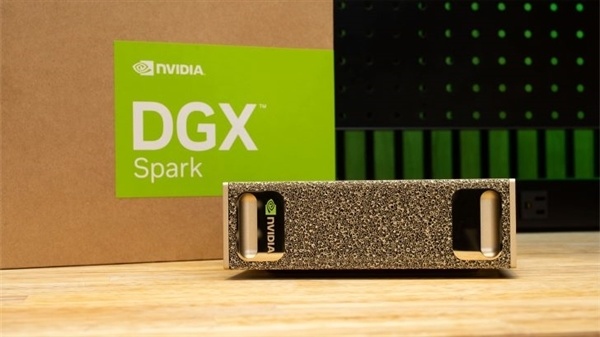
Compact desktop machines built for running AI models locally have become the pressure point. The user posting as @nicksaraev reported placing 4 separate NVIDIA DGX Spark orders on October 31, and every one was canceled. After repeated attempts, the problem escalated beyond the orders: once Amazon's verification routine was completed, the account itself was shut down, with the notification describing a decision reached after careful review.
What makes this case uncomfortable for business buyers is the collateral damage. The user said he had never encountered anything similar, that Amazon never identified which rule he broke, and that no appeal path was offered. Locked out, he also lost access to his Prime membership, his gift card balances and his full order history — the same records a company relies on for expense reconciliation, warranty claims and asset tracking.

Tim Sweeney, chief executive of Epic Games, describes a milder but stranger variant. His account was not closed. Yet after he ordered two NVIDIA GPUs, ordinary follow-up purchases started disappearing: the orders could still be submitted normally, then were cut shortly before dispatch. Before that GPU purchase, Sweeney said, his routine orders had always gone through. The sequence points to a flag that attaches to the account rather than to the individual line item.
Whether the behaviour is a defect or a deliberate design has not been settled. Compute hardware demand is running extremely high while supply is thin, and DGX Spark systems are frequently unavailable, so a per-customer quantity limiter is a plausible explanation. What is harder to explain is the response gradient: in the @nicksaraev case Amazon went straight to account closure, which is far more than a quantity cap would require.
Three data points that explain why the rules hardened
- Even the lower-memory SKU now costs more. NVIDIA's own engineering blog announced that the 64GB DGX Spark became available from Acer, ASUS, Dell, Gigabyte, HP and MSI on Friday, Oct. 23, starting at $4,999 — a configuration with less memory than the original model, yet priced above it, while current market quotations for the 128GB unit have drifted toward $6,950.
- Memory, not silicon, is the binding constraint. IDC's analysts describe a global memory shortage that is re-pricing smartphones and PCs through 2026 as DRAM and NAND capacity is reallocated toward high-bandwidth memory for AI servers. A compact machine whose bill of materials is dominated by large unified memory inherits that scarcity directly, which is exactly why a four-unit basket looks like arbitrage to an automated risk model.
- Contracted channels are backed up as well. Component lead-time trackers put industry-wide data-centre GPU delivery at 36 to 52 weeks, with integrators quoting 8 to 16 weeks even for priority buyers. In other words, retail stock is the last and most fragile link in a long queue, not a separate pool of abundance.
Availability, moreover, is only half of the readiness question. Business Insider reported that billions of dollars of Amazon-purchased NVIDIA racks have been sitting in transit warehouses as so-called dark GPUs — hardware that cannot be energised because the receiving sites lack electrical capacity. The same inversion applies at plant level: a machine that arrives is not a machine that runs, and capital tied up in un-energised compute shows up as idle depreciation, not as output.
Frequently asked questions: short answers for decision-makers
Is ordering several units of a scarce device inherently risky now?
Yes, in the current climate. Four DGX Spark orders placed by @nicksaraev on October 31 were all canceled and the account was then closed. Splitting volume across separate transactions does not read as caution to an automated system; it reads as accumulation. If a facility genuinely needs multiple machines for a rollout, that requirement belongs in a quoted, contract-governed channel rather than in a consumer shopping cart.
Is this a system fault or a purchase-limit mechanism?
Unconfirmed, and that ambiguity is itself the operational risk. Until the platform publishes the criterion it applies, plan as if the stricter explanation is true: assume a restricted category, assume the flag persists, and assume no appeal channel exists on the day you need it.
Why does one graphics-card purchase contaminate unrelated orders?
Sweeney's experience is the clearest illustration. Routine purchases made after two NVIDIA GPUs were pulled before shipping, even though the same orders had previously been fulfilled. Where a scoring model keys on account history rather than on order intent, a single flagged category can quietly degrade everything else the account buys.
What is actually at stake beyond the lost order?
More than the hardware. The locked account stripped access to a Prime membership, stored gift card balances and the complete order history. Any organisation that routes even part of its consumables, tooling or spares through that same personal identity is exposing recurring purchases, not a one-off transaction.
Does buying under a company profile solve the problem?
Not automatically. The deciding variable is whether allocation is governed by a written agreement instead of a per-order risk score. The DGX Spark class of machine is also sold through the OEM partners named by NVIDIA — Dell, HP, ASUS, Acer, Gigabyte and MSI — where a quote, a purchase order and an invoice create an auditable record that a marketplace cancellation does not.
Should we simply rent cloud capacity instead?
It depends on where the decision has to be made. Inference that has to stop a line within milliseconds, or that must keep process parameters inside the factory, argues for local hardware. Bursty model training or seasonal simulation argues for rented capacity — but reserve it early, since quoted enterprise GPU lead times of 36 to 52 weeks mean cloud slots are also allocated in advance.
How long will this supply regime last?
For planning purposes, assume as long as memory wafer capacity keeps shifting toward AI server products. That is a supplier investment decision measured in quarters, not a retail stocking cycle measured in weeks, so budget lines should be built on current memory-market direction rather than last year's list price.
What is the correct next move after a cancellation?
Do not keep re-submitting the same order; repeated attempts are the behaviour most likely to escalate a review. Ask for the specific clause that was triggered, preserve every confirmation and cancellation notice with timestamps, open a documented support case rather than a new purchase, and move the requirement to a pre-registered alternate channel.
Common misconceptions that get accounts flagged
- "Cancellation is the worst case." In the reported instance the account closure followed the cancellations and took memberships, balances and purchase records with it.
- "A prominent or long-standing account is exempt." The Epic Games chief executive's history did not shield his routine orders from being cut.
- "Hardware in stock equals capacity in hand." The dark-GPU phenomenon shows that power, cooling and commissioning — not the purchase order — determine when compute starts producing value.
- "Retail tightness is a short storm." Memory reallocation toward AI accelerators is structural, and it is already visible in the pricing of desktop inference boxes.
- "One buyer, one account is enough." Concentrating a company's compute buying in a single personal identity converts an automated scoring error into a procurement outage.
Action checklist before the next compute requisition
- Decouple the buying identity from the individual: register a company account under business credentials before demand spikes, not after an order fails.
- Match channel to quantity. A single evaluation unit can ride a marketplace; a three- or four-unit rollout needs a configured order through the named OEM partner channel, with a written quote and delivery window.
- Freeze the evidence trail — confirmations, cancellation notices, verification emails — as the only artefacts available if access is restricted.
- Pre-clear site readiness: available kilowatts, cooling headroom, network drops and the commissioning window, so procurement does not create a warehouse inventory of assets that cannot be switched on.
- Set an internal re-order ceiling that defines how many times a canceled line may be resubmitted before it escalates to a contract channel or an alternate supplier.
- Log the true cost of a restricted account — membership benefits, prepaid balances, historical records and the labour of rebuilding them — in the total-cost entry of the purchase request.
Choosing the buying route: a decision table
| Buying route | Best suited to | Principal exposure | Confirm before committing |
|---|---|---|---|
| Consumer marketplace | One-off test unit, short evaluation | Order cancellation, account-level flagging, loss of stored balances and records | Whether a single unit, single address, single account will pass review |
| Configured OEM partner order | Rollout of several identical machines across sites | Longer quoted delivery, higher administrative overhead | Allocation commitment, invoice terms, delivery window, named support contact |
| Cloud rental | Bursty training, seasonal simulation, no data-residency constraint | Reserved capacity queues; cost escalates with sustained usage | Region capacity, reservation horizon, egress and data-transfer terms |
| Local hardware behind the plant firewall | Line-stop inspection, low-latency inference, parameters that must not leave the site | Power and cooling readiness; capital sitting idle if the room is not prepared | Available kilowatts, cooling margin, rack space, commissioning date |
The takeaway for operations leaders
Scarce compute has left the IT supply lane and now behaves like long-lead tooling with utility constraints attached: it is rationed, it is priced off a volatile component market, and it can be blocked by rules that are enforced automatically and explained reluctantly. The disciplined response is not to buy faster. It is to treat account standing, memory-cost direction and site power headroom as three formal procurement variables, review them before the requisition is raised, and hold at least one pre-registered alternate channel in reserve. Organisations that build that discipline now will keep their engineering schedules intact; those that wait for the supply picture to normalise will discover that the cancellation email arrives long before the machine does.