
Allplan Max 2027 Puts an AI Layer Under the Model, Analyze and Fabricate Chain
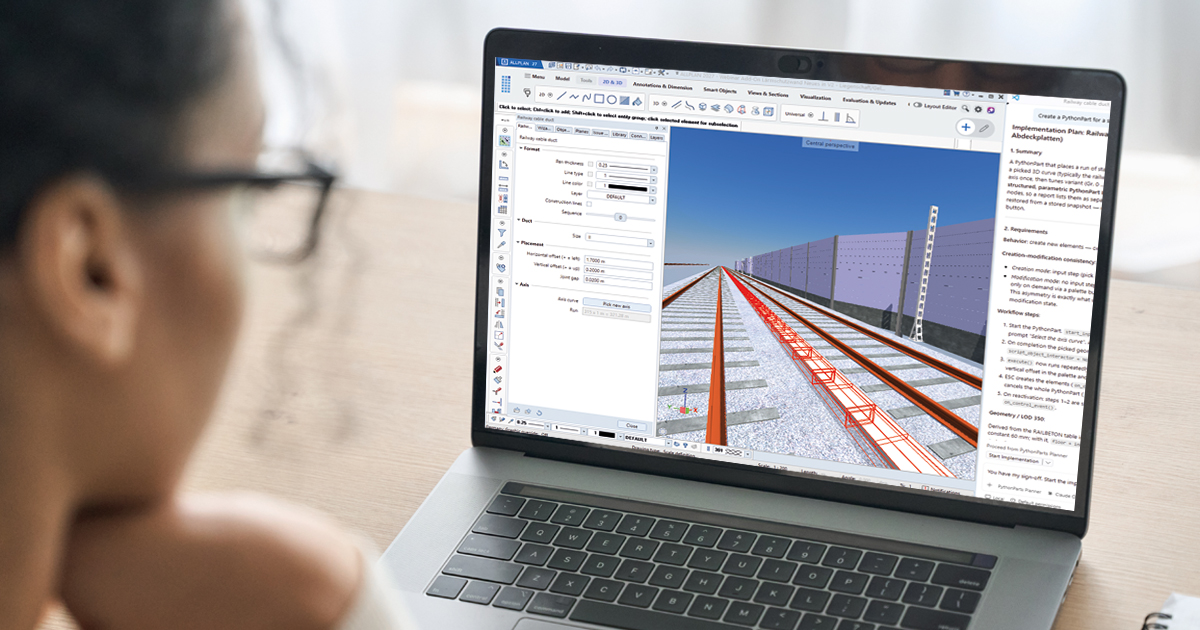
Engineering groups inside industrial firms rarely describe their constraint as a shortage of technical insight. They describe it as calendar time absorbed by lookups, model verification, report assembly, formula drafting and drawing cleanup — the administrative strip that sits between a decision and its deliverable. Nemetschek Group, working with its Allplan brand, is addressing that pattern with Allplan Max 2027, a release built on the Nemetschek Intelligence Platform and spread across an existing portfolio instead of being offered as a separate destination for engineers to visit.
Where the release aims: routine minutes, not creative output
Modeling, analysis, detailing and fabrication stay human-led. The new layer enters through the software those tasks already run on. Four intentions are repeated in the positioning: cut repetitive work, retrieve project information faster, automate routine processes and let teams build custom workflows — with the recovered time redirected toward engineering judgment, problem-solving and design.
The task list named as the target is recognisable on any project floor or plant engineering desk: searching for information, checking models, preparing reports, creating formulas, cleaning drawings and repeating common tasks. That scoping matters for managers, because it is a workflow-hygiene claim rather than a claim of new engineering capability.
Capability map: nine named functions across four product lines
The capability set carries nine names — Feature Builder, Workflow Builder, AI Formula Writer, AI BIM Analyst, AI Structural Analyst, AI Drafter, AI Coach, AI Visualizer and AI Steel Take Off. Their stated role is to help engineers customize software, automate workflows, work with model data, speed up reporting, improve drawing production and access guidance in context.
| Capability | Routine pressure it is meant to relieve | Where the portfolio carries it |
|---|---|---|
| Feature Builder | Adapting the software to firm-specific standards | Allplan (workflow customization) |
| Workflow Builder | Repeating common tasks and hand-offs | Allplan (workflow customization) |
| AI Formula Writer | Creating formulas | Allplan |
| AI BIM Analyst | Checking models, working with model data, retrieving project information | Allplan (BIM); SDS2 (fabrication-oriented BIM analysis) |
| AI Drafter | Drawing production and drawing cleanup | Allplan (detailing); SDS2 (drawing automation) |
| AI Structural Analyst | Structural analysis work | SCIA and FRILO |
| AI Coach | Guidance in context and engineering decision support | SCIA and FRILO |
| AI Visualizer | Listed in the capability set | Engineering portfolio |
| AI Steel Take Off | Listed in the capability set | Engineering portfolio |
One intelligence layer over a connected lifecycle
Allplan Max is introduced across the engineering portfolio with the stated goal of supporting the full engineering lifecycle:
- Allplan: BIM, detailing and workflow customization, expressed through Feature Builder, Workflow Builder, AI Formula Writer, AI BIM Analyst and AI Drafter.
- SCIA and FRILO: structural analysis and engineering decision support, expressed through AI Structural Analyst and AI Coach.
- SDS2: fabrication-oriented workflows, including BIM analysis and drawing automation.
Assembled as a system, the products are meant to support a connected model, analyze and fabricate workflow, with Allplan Max acting as a common intelligence layer across them. The strategic intent is specialised engineering products that are more connected while engineers stay in control. For industrial readers this is the notable shift: the same project information that feeds a structural check also feeds detailing and then shop fabrication, so a layer spanning those steps behaves differently from another point tool bolted onto one desk.
The evidence, and the qualifiers attached to it
Usage results reported for Allplan Max point to productivity gains: depending on the workflow, users reported up to 36 percent faster completion for selected tasks. Two conditions travel with that number and should travel with it into any internal business case. The results are self-reported estimates, and they may vary by role, project complexity, data quality and adoption. Read honestly, 36 percent is a ceiling observed on particular tasks, not a department-wide average.
Two scheduling facts belong in procurement planning. Allplan Max launches alongside Allplan 2027, which also includes updates in reinforcement detailing, BIM information workflows and AI-powered customization. Allplan Max 2027 is scheduled to launch on October 28, 2026, and availability can differ by product, package and region.
Four misconceptions worth pre-empting
“It automates the engineer out of the loop”
Allplan states that the system is meant to support engineering judgment rather than replace it. Responsibility for design intent, review, approval and final outcomes remains with engineers.
“Every task gets 36 percent faster”
The figure applies to selected tasks, varies by workflow and rests on self-reported estimates — the opposite of a guaranteed throughput uplift.
“It is just another isolated tool to license”
The release is positioned inside the Nemetschek Intelligence Platform and applied across Allplan, SCIA, FRILO and SDS2 as a common intelligence layer for a connected model, analyze and fabricate workflow.
“Signed once, switched on everywhere”
Availability can differ by product, package and region, so scope has to be confirmed line by line before a rollout is committed.
Action guidance for production, project and engineering managers
- Baseline the routine strip first: measure time spent searching for information, checking models, preparing reports, creating formulas, cleaning drawings and repeating common tasks. That is the release's own target list, so it defines a fair pilot scope.
- Match each pilot to the product that carries the capability — BIM and detailing customization in Allplan, structural analysis support in SCIA and FRILO, fabrication workflows in SDS2.
- Decide what to encode rather than accepting defaults: Feature Builder and Workflow Builder exist so firms can customize software and automate routine processes, which is where internal standards and hand-offs should be captured.
- Treat data quality as the limiting factor. Published results vary with it, and model checking plus reporting speed both depend on usable model data.
- Keep governance human. Design intent, review and approval remain with engineers, so output should enter the existing check-and-sign routine, not bypass it.
- Measure by role and task rather than by licence count, since the evidence is scoped to selected tasks.
- Plan the window: the October 28, 2026 launch date for Allplan Max 2027, together with Allplan 2027, gives standard-software cycles a concrete horizon to schedule against.
FAQ
What is Allplan Max 2027?
An AI offering from Nemetschek Group and the Allplan brand created for engineering workflows, positioned within the Nemetschek Intelligence Platform and intended to broaden capabilities across Allplan's engineering portfolio.
Which kinds of work does it touch?
Modeling, analysis, detailing and fabrication support, with the stated emphasis on routine work: information search, model checking, report preparation, formula creation, drawing cleanup and repeated tasks.
Which products are involved?
Allplan for BIM, detailing and workflow customization; SCIA and FRILO for structural analysis and decision support; SDS2 for fabrication-oriented workflows.
Is there measured productivity evidence?
Users reported up to 36 percent faster completion for selected tasks depending on the workflow. Those are self-reported estimates and may vary by role, project complexity, data quality and adoption.
When does it ship?
It is scheduled to launch on October 28, 2026 alongside Allplan 2027, with availability that can differ by product, package and region.
Does it take ownership of the design?
No. The vendor positions it as support for engineering judgment; design intent, review, approval and final outcomes stay with engineers.
Bottom line for industrial operations
Follow the rollout rather than the feature list. The durable question for manufacturing, infrastructure and project-driven engineering teams is whether one intelligence layer can genuinely carry model data from analysis through detailing into fabrication without adding hand-off friction — and whether the recovered routine minutes show up in per-role task times for a specific project, not in a headline percentage. Confirm availability by product, package and region, pilot against the routine-task baseline, and keep sign-off where the vendor says it belongs: with the engineer.
Written by Michael Torres, Industrial Weekly. Corrections and industry tips: news@industrialweekly.com.