
AI Servers Are Reshaping PCB Capacity: A Supply-Chain Signal for Industrial Operations
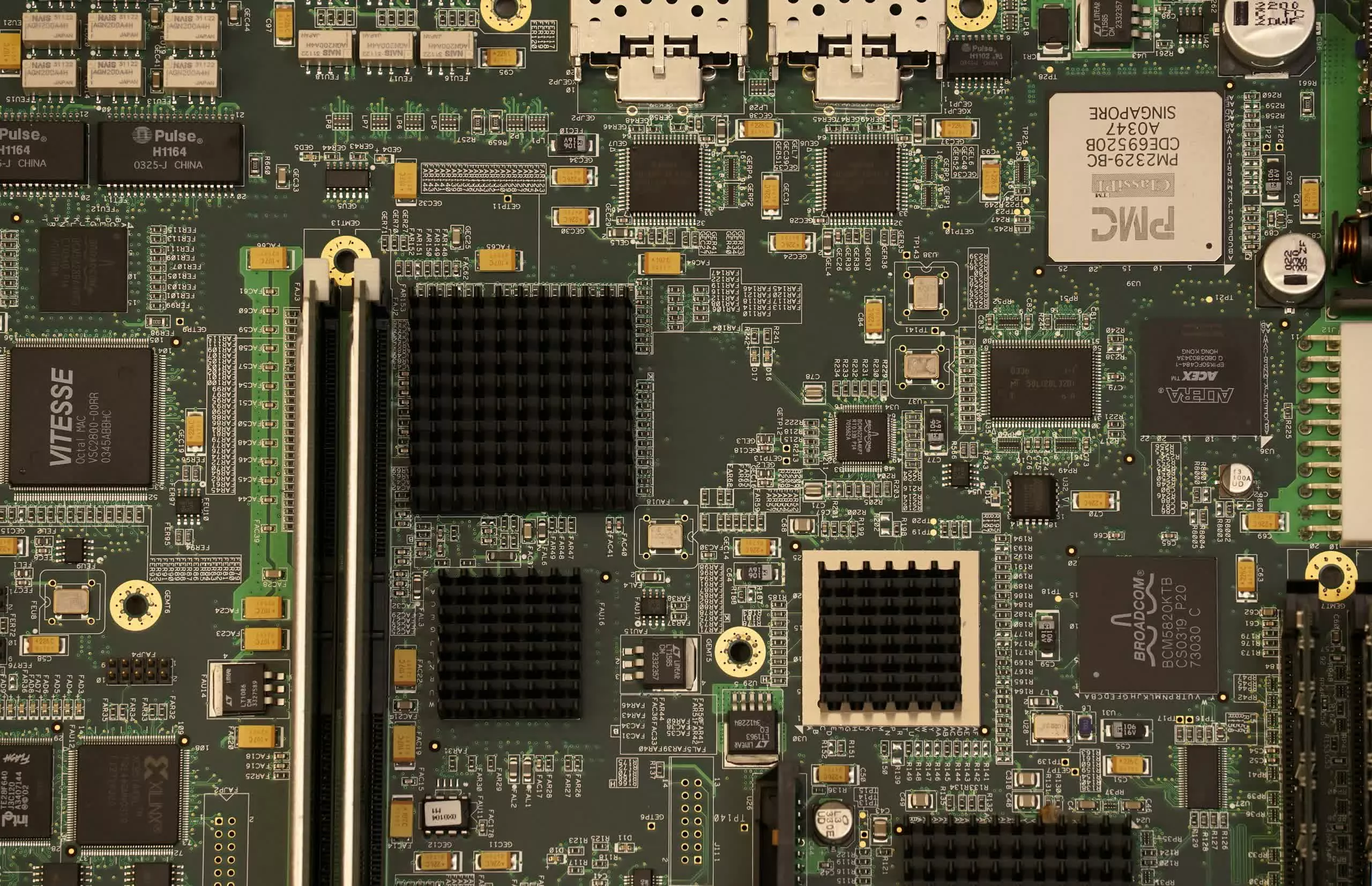
For most of this investment cycle, the conversation about artificial intelligence and electronic components began and ended with accelerators and memory. The signal arriving now from the board trade pushes one layer deeper into the manufacturing base. Nikkei Asia reports that securing enough printed circuit boards (PCBs) has become an active worry for PC makers including HP and Dell while they assemble 2027 product roadmaps — and that worry is emerging at a time when global PC shipments are expected to decline again next year. For production managers, project engineers and procurement leads, the relevant question is therefore not whether AI hardware will stay expensive, but how the reallocation of board-making capacity will move lead times, material risk and product availability across factories that never placed an AI server order.
Capacity Allocation, Not End Demand, Sets the Constraint
Classic sourcing logic holds that softening terminal demand relieves pressure on components. That relationship has inverted. Global PCB manufacturing resources are being absorbed by AI server construction, so consumer electronics brands cannot guarantee their own production support even while market appetite for their machines stays weak. A manager at a United States PC maker told Nikkei Asia the company is having difficulty obtaining enough PCBs to meet its own production requirements.
Two consequences follow for operations teams. First, supply risk is now largely decoupled from demand forecasting, so a benign sales outlook no longer implies a benign component outlook. Second, line allocation is being decided by the purchasing power of a different customer group, which changes how fabricators respond to a conventional order.
Why High-End Server Boards Consume Ordinary Mainboard Capacity
AI server boards and desktop mainboards are not close substitutes on the shop floor. A high-end AI server carries large numbers of GPUs, CPUs, memory devices and high-speed interconnects, which imposes far stricter requirements on signal integrity, thermal capability and electrical performance. A typical desktop mainboard, by contrast, uses a comparatively conventional multilayer structure. To keep high-speed data transmission stable, server boards frequently run to dozens of layers and depend on low-loss copper clad laminate and specialty glass fiber materials.
Those boards are harder to build and carry better unit prices, so fabricators naturally steer equipment time toward AI server customers, who also demonstrate stronger procurement capacity and willingness to pay. A single high-end AI server board can absorb machine hours and material that would otherwise yield several consumer-grade boards. Capacity formerly reserved for desktop mainboards, notebook mainboards and graphics card PCBs is steadily migrating into the AI infrastructure segment.
| Attribute | High-end AI server board | Conventional consumer board |
|---|---|---|
| Stack structure | Often dozens of layers | Relatively conventional multilayer |
| Laminate system | Low-loss copper clad laminate plus specialty glass fiber | Standard multilayer laminate |
| Design driver | Signal integrity, heat removal, electrical performance for dense GPU/CPU/memory interconnect | Cost and volume efficiency |
| Capacity effect | One board can consume the equipment time and material of multiple consumer boards | Displaced as lines are reassigned |
The Upstream Choke Point: Laminate Prices, Backlogs and Longer Delivery Windows
The most severe pressure sits below the board shops, in copper clad laminate (CCL). As the core base material of a printed circuit board, CCL is produced by bonding glass fiber cloth, resin and copper foil; fabricators then pattern circuit traces onto its surface and stack multiple layers to complete the PCB.
Cited by Nikkei Asia, a Taiwan PC manufacturer said CCL prices have already reached at least 12 times their level in July, a jump that shows how quickly upstream tightness is deteriorating. That figure comes from one company's market feedback, and it cannot be read as evidence that every laminate grade has moved by the same magnitude. One major global CCL supplier already has orders booked into 2030, and even a plan to lift capacity to three times current levels before 2028 leaves a very large backlog. The problem has therefore shifted from whether board makers want to expand to whether material suppliers can deliver feedstock in time.
Delivery terms are moving at the same pace. One PCB supplier reports that lead times on a considerable share of its products have doubled. Another said an order placed now would not ship until the second half of 2028, which puts some orders on a 30-month window. Because PC brands must plan product development and production cycles in advance, this directly disturbs supply arrangements for 2027 and 2028.
Expansion itself is slow and expensive. Beyond buying equipment, building plants and securing raw materials, the PCB industry faces a severe shortage of specialized technicians. As fabricators scale up investment, experienced PCB engineers and production technicians have become contested resources, and pay for relevant technical roles has already risen 20% to 30%. That raises the cost of expansion and means a completed plant may not reach intended output immediately.
Case File: How a Board Shortage Reached Medical Equipment Output
The contagion is no longer theoretical. Japan's Canon Inc. said this week that part of its production has been constrained since August this year because of shortages of circuit boards and related components driven by the AI industry. Medical device manufacturing is among the affected lines, and Canon expects roughly ¥90 billion in lost medical device sales this year as a result.
The lesson for industrial readers is uncomfortable: the exposure runs through any product family that depends on complex circuitry — medical equipment, industrial electronics, graphics cards and personal machines alike — not only through the consumer categories where AI demand was first expected to land.
Overlapping with the Memory Squeeze
The board constraint is stacking on top of an existing component crisis. Since 2026, prices for DRAM and NAND flash have kept climbing, forcing PC makers to revisit product configurations and pricing strategy. Research firm Gartner had earlier forecast that PCs priced below $500 could gradually disappear by 2028, because rising costs for memory and other key parts make low-priced machines increasingly hard to sustain.
Graphics cards show the consumer-side effect. Nvidia's GeForce RTX 5080, for example, has been priced close to $2,000 in some United States retail channels, far above its original manufacturer suggested price. PCBs have now joined the ranks of items that are both dearer and slower to obtain, which widens the cost pressure on the entire PC industry.
Why a Minor Cost Line Carries Disproportionate Risk
PCBs occupy a modest share of a computer's total material cost, yet they are an irreplaceable foundational component: mainboards, graphics cards and notebooks all depend on circuit boards to connect chips, memory, power modules and other parts. If board supply falls short, a factory holding CPU, GPU and memory inventory still cannot complete finished machines.
Chipmakers have read that risk early. Nvidia has begun partnering with specialized substrate manufacturers to lock in advanced packaging and chip substrate capacity ahead of demand. Japan's Ibiden, Samsung Electro-Mechanics in South Korea and Unimicron in Taiwan have all entered that cooperation framework, with Unimicron planning to lift related capacity to 2.5 times current levels within the next three years. IC packaging substrates and ordinary PCBs are technically related but not fully interchangeable, so surging AI demand for advanced substrates adds another layer of competition across the whole board value chain.
Common Misconceptions in This Shortage
- Weak PC demand will make components cheaper. The inverse is happening: global PCB capacity is being taken by AI server buildout while consumer demand stays soft.
- Board shortage is a nuisance because the cost line is small. PCBs are irreplaceable; without them, stocked CPUs, GPUs and memory cannot be assembled into product.
- Fabricators can simply add lines and fix it. Equipment, plants, feedstock and a severe shortage of specialized technicians all bind expansion, and pay for relevant technical roles is already up 20% to 30%.
- Substrate capacity growth will relieve ordinary boards. Advanced packaging substrates and standard PCBs cannot fully substitute for one another.
- The laminate price jump is a confirmed market-wide reading. The 12-times-July figure is one Taiwan PC manufacturer's feedback, and may not apply to every CCL grade.
Action Guidance for Managers Planning 2027 and 2028
- Name PCBs and copper clad laminate as explicit constraints in 2027 product roadmaps rather than treating them as routine commodities.
- Reset design-freeze and order timing against a 30-month lead-time scenario, since some new orders quoted now point to the second half of 2028.
- Segment the bill of materials by capacity pool: separate dozens-of-layers and low-loss laminate items from conventional multilayer boards, because they compete for different production resources.
- Qualify laminate grades and alternate board suppliers early, and confirm feedstock allocation rather than only board quantities in commercial terms.
- Model cost stress jointly with memory: since 2026, DRAM and NAND increases already reshaped configuration and pricing decisions before PCB pressure was added.
- Screen adjacent exposure using the Canon pattern — products that rely on complex circuitry, including medical and industrial electronics, can be curtailed without any AI-related order from your own company.
- Run entry-price and configuration reviews before public commitments, since widening component costs erode the room for consumer electronics price reductions.
Frequently Asked Questions
Is this a board problem or a materials problem?
Both, but the binding constraint has moved upstream. Board makers face demand from a wealthier customer segment, while suppliers of copper clad laminate are the ones reporting orders into 2030 and a plan to triple capacity before 2028 that still cannot clear the backlog.
Which product families are most exposed next?
Mainboards, graphics cards and notebooks are all in range of rising PCB costs and longer delivery windows, and the Canon case shows medical equipment and industrial electronics share the same dependency on complex boards.
Does AI-driven capacity expansion eventually help consumer supply?
Not automatically. New lines require equipment, plants, raw materials and scarce technicians, so installed capacity does not guarantee that conventional consumer boards regain the share they lost.
Should buyers expect announced retail price increases?
No PC manufacturer has published a specific adjustment range yet. The practical reading is that with memory, SSD and GPU costs already higher and PCBs now tightening, the scope for consumer electronics price cuts narrows.
The Industrial Read for 2027
The warning embedded in this cycle is specific: even if consumer demand keeps weakening, PC brands may not be rewarded with lower procurement costs, because AI server customers bidding for high-end boards keep pulling traditional production resources out of reach. Over the coming period, mainboards, graphics cards and notebooks are the items most likely to absorb laminate inflation and stretched delivery terms.
Read from a plant and program-management perspective, the episode exposes the other face of AI infrastructure expansion. Artificial intelligence is competing not only for the most advanced GPUs, HBM and process wafers, but also for unglamorous base electronics manufacturing capacity that markets previously took for granted. As capital and fabrication capability tilt steadily toward data centers, a mature PC business with proven designs and established channels can still miss its build schedule over a single ordinary circuit board — and that is precisely the kind of dependency industrial operations leaders should now be scheduling for.