
$80B Operating Profit: The Samsung Electronics AI Memory Signal for Industrial Buyers
For WorldIndustrialWeekly General readers tracking input costs and supplier leverage, the most useful reading of the latest earnings is not simply that Samsung Electronics delivered a $80B operating-profit print, but that the result exposed a split inside one large industrial platform. The third-quarter disclosure, which also covers Q3 performance, reported consolidated revenue of 195.3 trillion won (~$146 billion) and operating profit of 107.4 trillion won (~$80 billion). It also marked the first time a technology company globally crossed 100 trillion won (~$75 billion) of quarterly operating profit.
Case read: one earnings release, two operating realities
The case matters to plant, purchasing, and product managers because the balance sheet shows component economics and finished-device economics moving in opposite directions inside the same enterprise.
| Division | Revenue | Operating result |
| Device Solutions (DS) | 147.1 trillion won (~$110 billion) | 106.5 trillion won (~$80 billion) |
| Device eXperience (DX) | 52.1 trillion won (~$39 billion) | -0.8 trillion won (~$0.6 billion) |
Counterpoint Research summarized the divergence with the line, “Another record-breaking quarter, beating consensus estimates,” while MS Hwang, research director at Counterpoint Research, pointed to semiconductor strength and consumer-set losses.
Data citation: memory prices become a factory input variable

Counterpoint Research data shows why buyers should treat memory costs as a bill-of-materials pressure point rather than a narrow chip-market story. Standard DRAM pricing moved from the historical range of 20-30 cents per gigabit to $2 per gigabit, expanding the global DRAM market to $200 billion. Samsung also reported operating margins of 79% for DRAM and 72% for NAND flash. In the high-bandwidth memory market (HBM), HBM4 prices are expected to reach $4 per gigabit.
The pricing pressure is visible in mobile hardware economics. The Mobile eXperience (MX) and Networks business generated 37.7 trillion won (~$28.21 billion) in revenue but posted an operating loss of 0.6 trillion won (~$0.45 billion). Hwang said, “The [consumer electronics] MX division continues to suffer from high memory pricing,” and added, “Since low-end models are expected to continue losing money, Samsung may scale back its volume contribution, implying further correction in market volume dynamics in the supply chain.”
Samsung Mobile VP Daniel Araujo said, in the presentation before the earnings call, that the business aims to “mitigate profitability risks through efficiency improvements” and “improve our product mix centered on flagships.”
HBM expansion, sold-out windows, and competitive readthrough
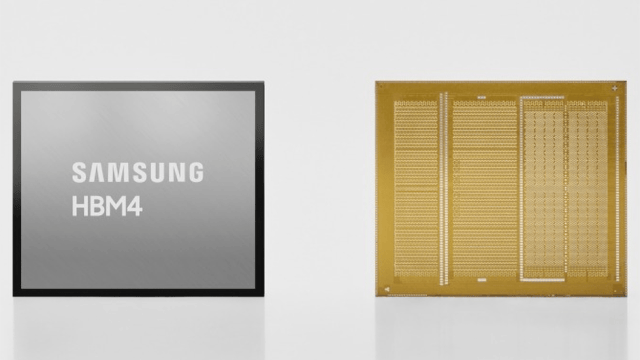
The result sits within a broader AI-memory supplier picture. SK Hynix posted third-quarter revenue of 104.62 trillion won (~$78 billion) and operating profit of 83.33 trillion won (~$62 billion), giving industrial readers a comparison point outside one company.
Samsung said “it significantly scaled up sales of HBM4” and described managing its “product mix, with focus on AI products, amid capacity constraints.”
During the earnings call, Jaejune Kim, EVP of Memory Business, said the company has secured multi-year supply agreements with 10 key customers. Competitor SK Hynix stated that its HBM capacity is fully sold out through 2029, while Samsung confirmed its HBM capacity is currently sold out through 2027.
Counterpoint Research expects competitive shares to move. Hwang said, “We anticipate that Samsung will surpass SK Hynix from the HBM4 generation, leading the market share in 2027,” in comments made around the peer results.
Capital allocation, investor expectations, and the 2026 return plan
Despite high operating income, Samsung’s share price fell during the earnings call after the capital allocation plan met expectations. The company announced a third-quarter cash dividend of 30 trillion won (~$22 billion) as part of an estimated total shareholder return plan of 90 trillion won (~$67 billion) to 110 trillion won (~$82 billion) for 2026. Samsung CFO Soon-Cheol Park said long-term capital deployment will remain aligned with industry expansion, noting that “memory demand will far exceed supply due to robust AI investment” and that “AI infrastructure investment continues to grow.”
Hwang concluded, “Shares declined during the earnings announcement as shareholder returns offered no upside surprise,” pointing out that the market reaction “highlights the real challenge of navigating an equity market with elevated expectations.”
Common misconceptions to avoid
- A $80B quarter does not mean every division earned money: Device eXperience (DX) still recorded a 0.8 trillion won (~$0.6 billion) operating loss.
- Strong HBM demand does not remove supply constraints: Samsung and SK Hynix discussed sold-out periods through 2027 and 2029, and Samsung’s Memory Business cited agreements with 10 key customers.
- Capital-return news is not a demand verdict: the plan matched expectations, but investor reaction showed that operating strength can still coexist with no upside surprise.
Action recommendations for managers, engineers, and buyers
- Tie BOM reviews to memory-price movement, using the disclosed shift from 20-30 cents per gigabit to $2 per gigabit as the planning baseline.
- Flag product families most exposed to memory inflation, especially low-end models, because Hwang warned that Samsung may adjust volume contribution.
- Read flagship-mix language from Samsung Mobile VP Daniel Araujo as an efficiency and margin-protection signal, not as a new product fact.
- Check AI-memory supply plans against sold-out windows and multi-year commitments, including the 2027, 2029, and 10-customer details already disclosed.
- Separate operating fundamentals from equity expectations, because the 2026 return plan affected market response even as AI infrastructure investment continues to grow.
FAQ
Did the company set a new quarterly profit benchmark?
Yes. The Q3 result listed operating profit of 107.4 trillion won (~$80 billion), and Samsung Electronics was described as the first technology company globally to exceed 100 trillion won (~$75 billion) of quarterly operating profit.
Why did the consumer device side weaken?
Mobile hardware carried memory-price pressure. The Mobile eXperience (MX) and Networks segment generated 37.7 trillion won (~$28.21 billion) in revenue but posted an operating loss of 0.6 trillion won (~$0.45 billion), while Counterpoint Research attributed the strain to high memory pricing.
What does the HBM outlook imply for supply planning?
Planning horizons need to account for constrained capacity and long-term commitments. Jaejune Kim, EVP of Memory Business, cited multi-year agreements with 10 key customers; SK Hynix said capacity was sold out through 2029, while Samsung cited capacity sold out through 2027.