
WorldIndustrialWeekly Briefing: CoWoS Lead Times, AI Test Bottlenecks and TSMC Foundry Price Rumors
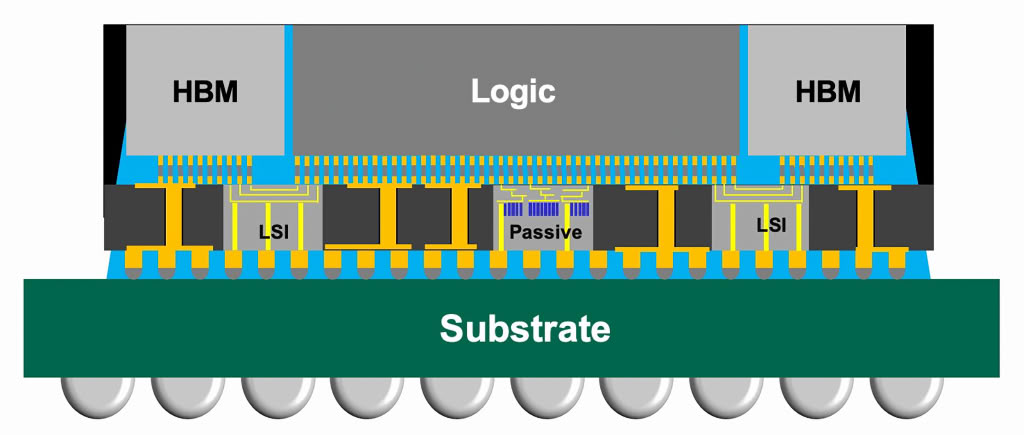
Industrial managers reviewing advanced-chip roadmaps this quarter need to treat packaging and test capacity as a scheduling constraint, not just a procurement detail. The latest supply-chain signals around CoWoS, the silicon-interposer packaging architecture used for high-bandwidth memory and compute chips, show order backlogs moving from a forecast exercise to a production-planning problem. Demand is no longer limited to AI GPU accelerators; it also touches server CPUs and custom ASICs, which broadens the customer base competing for the same equipment, test lanes and interposer supply.
Why CoWoS Has Become a Capacity Checkpoint
CoWoS integrates processors with HBM and other components through a silicon interposer, so any bottleneck changes the practical timing for AI platforms that depend on close compute-memory coupling. Reports described order accumulation as demand spread from AI GPUs to server CPUs and custom ASIC products. For factory and project planning, that means the packaging step should be mapped as an explicit dependency in schedules for accelerator boards, data-center systems and related power/cooling readiness, rather than as an after-the-fab administrative task.
Equipment Lead Times and Customer Behavior Shift
Supply-chain information cited in the source article said equipment delivery windows moved from 3-6 months to 6-8 months. The same reports said customers are now prioritizing secured delivery, so they no longer ask TSMC for equipment purchase discounts or added features as readily as in previous years. This is a procurement behavior change worth noting: when lead time becomes the scarce variable, delivery certainty usually outranks price negotiation and customization.
Testing as a Hidden Constraint
Testing may absorb additional capacity before final output appears. Nomura Securities estimated that final test time for Nvidia Blackwell chips is about 4 times Hopper, while next-generation Rubin may reach 7 times. The source explicitly treats these figures as analyst estimates, not official company output data. Still, for operations teams, the implication is clear: test floor time can consume capacity that packaging lines would otherwise use to convert wafers into shippable AI accelerators.
Pricing Rumor: What Has and Has Not Been Confirmed
Beyond CoWoS packaging quotes, earlier reports from Taiwan media said TSMC planned to raise wafer foundry prices by about 3% to 6% beginning in January 2027, with 2 nm and 3 nm advanced process nodes seeing higher increases. The source also noted that this came from supply-chain information and that TSMC has not publicly confirmed a specific increase range. That distinction is essential for budgeting: use the rumor as a scenario trigger, not as a contracted cost change.
Expansion Cases: Near-Term Relief Versus Later Capacity
The article presented two expansion cases. First, TSMC said at a recent earnings call that AI-related demand is strong and the company is accelerating capacity expansion; it also stated that 5x reticle-area CoWoS packaging has entered mass production, larger formats are being developed, and CoPoS technology is being advanced. Second, GlobalFoundries signed a multi-year, $2 billion manufacturing agreement with TSMC to produce silicon interposers in New York State for the CoWoS supply chain, with ramp expected in the first half of 2028.
The practical conclusion is time-based: the New York State interposer project is important for supply-chain geography, but it is not positioned in the source as an immediate answer to current CoWoS tightness because it starts ramping in the first half of 2028. The TSMC statements on 5x reticle production, larger sizes and CoPoS indicate active development, but they do not erase the present 6-8 months equipment lead-time pressure.
Cost Transmission: Direct and Indirect Channels
If the foundry price increase is implemented, the most direct exposure is expected to fall on AI accelerators and data-center chips that use CoWoS. Gaming GPUs usually do not use this packaging approach, so the source article separated them from direct CoWoS quote increases. However, wafer foundry price adjustments may transmit gradually to other chips and end products, meaning indirect effects can still reach wider electronics categories over time.
Data Citation Table
| Reported signal | Value in source | Status | Planning implication |
|---|---|---|---|
| Equipment lead time change | From 3-6 months to 6-8 months | Supply-chain message | Add packaging equipment buffer to new line schedules |
| Blackwell final test time | About 4 times Hopper | Nomura Securities analyst estimate | Model test capacity demand by product generation |
| Rubin final test time | May reach 7 times | Nomura Securities analyst estimate | Reserve later test lanes for next-generation programs |
| Foundry price rumor | About 3% to 6% starting January 2027 | Taiwan media report; not publicly confirmed by TSMC | Prepare cost scenarios without booking it as confirmed |
| Advanced node pressure | 2 nm and 3 nm higher increases | Supply-chain report | Prioritize node-specific procurement review |
| GlobalFoundries/TSMC agreement | Multi-year, $2 billion; New York State; ramp first half of 2028 | Reported agreement | Track medium-term supply, not short-term relief |
Common Misconceptions
- A CoWoS price signal automatically means every GPU category faces the same immediate cost shock. The source says gaming GPUs usually do not use CoWoS packaging, so their direct exposure is separated from AI accelerator and data-center chip exposure.
- Any announced expansion immediately resolves current tightness. The New York State interposer ramp is reported for the first half of 2028, while present equipment lead time has already moved to 6-8 months.
- Foundry price changes are fully confirmed because media reported them. The source states TSMC has not publicly confirmed a specific increase range, so the about 3% to 6% figure should remain a scenario.
- Test duration estimates are official production data. The 4 times and 7 times figures are attributed to Nomura Securities as analyst estimates, not company disclosures.
Action Recommendations for Industrial Teams
- Re-map AI hardware schedules with explicit packaging and test milestones. Treat the shift from 3 to 6 months to 6 to 8 months for relevant equipment as a visible planning variable.
- Use the Blackwell and Rubin test-time estimates as stress cases. Even as analyst estimates, the 4 times and 7 times numbers can guide test-lane reservation and staffing assumptions.
- Separate direct and indirect cost exposure in purchasing reviews. AI accelerator and data-center platforms using CoWoS are the first-order candidates; products that usually do not use such packaging should be evaluated through downstream transmission rather than assumed to be unaffected.
- Keep the January 2027 price rumor outside signed financial assumptions until official confirmation. If building a budget model, use about 3% to 6% with node differentiation for 2 nm and 3 nm as a sensitivity range, not a fixed commitment.
- Monitor later capacity milestones without waiting for them to solve short-term needs. The $2 billion GlobalFoundries-TSMC agreement and first half of 2028 New York State ramp are medium-term signals, while current pressure remains.
- Adjust procurement posture to match the reported priority on delivery certainty. When secured delivery matters more than discount or feature requests, evaluate supplier performance on on-time capability and capacity allocation.
FAQ
What does CoWoS do in an AI chip package?
It is an advanced packaging scheme that uses a silicon interposer to integrate compute chips with high-bandwidth memory and other components inside one package. The practical significance for industrial readers is that it couples multiple supply-chain nodes—interposer supply, equipment availability, assembly capacity and test time—into one delivery path.
Why can equipment lead times affect final chip availability?
Because packaging and test capacity must be installed and qualified before output can increase. The source reports delivery windows lengthened from 3-6 months to 6-8 months, and customers are focusing on securing delivery instead of pushing for equipment price reductions or added functions.
Does the reported foundry price increase apply to all products equally?
Not as presented. The reported about 3% to 6% increase is a possible future adjustment beginning in January 2027, with 2 nm and 3 nm nodes noted as higher. TSMC has not publicly confirmed the specific range, and the source distinguishes direct CoWoS exposure from broader transmission effects.
When might new capacity start to appear?
The source mentions two related timelines. TSMC has said it is accelerating expansion and that 5x reticle-area CoWoS has entered mass production, while larger formats and CoPoS are in development. The GlobalFoundries agreement for New York State silicon interposer production is reported to ramp in the first half of 2028.
What should readers watch next?
Watch for official confirmation of any foundry price change, actual progress on TSMC capacity statements, and whether test requirements for Nvidia Blackwell and Rubin continue to pressure packaging capacity. Also watch how the reported $2 billion agreement and 2028 ramp milestones move from contract language to operational supply.