
Case File 2026: What China's Unmanned Delivery Vehicle Rollout Teaches Industrial Fleet Operators
China's unmanned delivery vehicles became working fleet assets in 2026 rather than campus curiosities: they now run public-road shuttle and last-mile routes across hundreds of cities. Adoption was driven by cost, not novelty — roughly 2,500 yuan a month per robot van against 7,700 yuan for a manned one — while road rights, accident liability and remote supervision remain the bottlenecks that matter to industrial fleet managers. Read as an operations case, not a meme.
What turned driverless delivery carts into 2026's most visible machine?
The most absurd piece of hardware on sale in 2026 may well be the unmanned express cart trundling down a Chinese street. A parcel that never arrives used to mean a lost shipment; today it can genuinely have been detained by a dog. Witnesses of that scene read it three ways: a three-against-one ambush, a puppy playing with a gadget for the first time, or — judging by the black dog running on three legs — a vehicle that had hit one of them and was being chased down by the rest of the pack.
That is only the tip of the incident file. The vehicles pull up in the middle of the carriageway and shout at one another, and you sometimes get the feeling that Lu Xun is living in their CPU, chewing over his line that "the earth originally had no roads; as more people walk, a road comes into being" somewhere between zero and one.
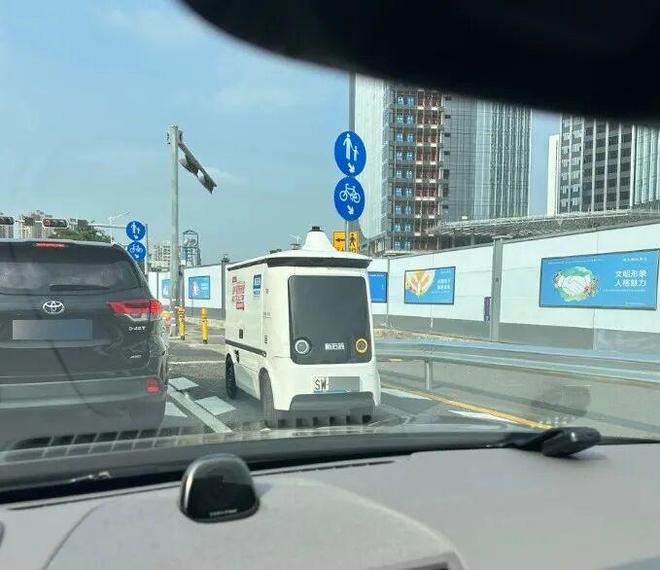
So they drift into the motor-vehicle lane, then the non-motorised lane, then stop dead in the road, then try the pavement — unpredictable, curious, walking their own path. Driving the wrong way looks like this:
Crossing on the zebra stripes looks like this:
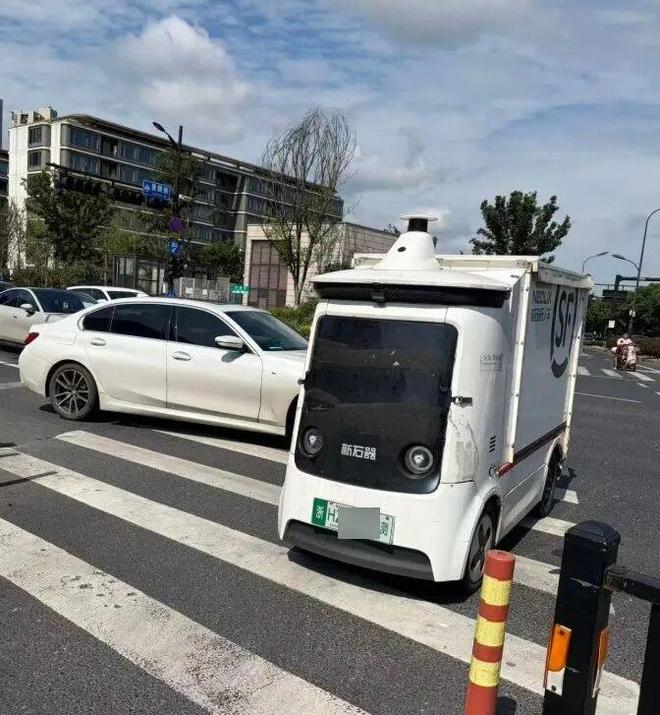
In Shi Chao's reading, "walk your own path" always carried a second half: leave everyone else without one — stalling dead in the morning rush hour, for instance, and making you late for the clock-in. Recently, he concedes, he underestimated these conspicuous little machines.
The fleet visible on Hangzhou streets is multiplying, and capital is more bullish still. A few days ago the autonomous-driving company Neolix closed a Series E round of nearly US$400 million, taking cumulative funding past RMB 10 billion; the Beijing News reported the raise as the largest single autonomous-driving round in China this year, with the money earmarked for finer-grained operating networks and global regional hubs. Going viral as comedy in short video while absorbing that much money sharpens four questions:
- Are all roads now open to it?
- What happens when it tips over?
- What happens when it hits a car or a person?
- Will it replace the courier?
How did unmanned delivery vehicles get from campuses onto public roads?
The long answer: about a decade, plus one regulatory unlock. As early as ten years ago, JD, Cainiao and Meituan — companies whose businesses already run on parcel and meal delivery — began developing unmanned delivery vehicles, but neither the technology nor the legal framework was mature, so the vehicles pottered around closed environments such as campuses, residential compounds and industrial parks.
Whether an unmanned vehicle can move at all is decided by road access granted for a specific city or a specific road segment. Compliance for public roads appeared in 2021, and only then did these machines leave the tutorial level.
How far have they spread? The largest unmanned-vehicle logistics operator in China is China Post. Data published at the end of July put its fleet at nearly 5,000 vehicles covering 31 provinces and 263 cities, having carried more than 130 million parcels. As of now, however, much of that footprint means one district or a handful of approved route segments rather than an entire city opened up.
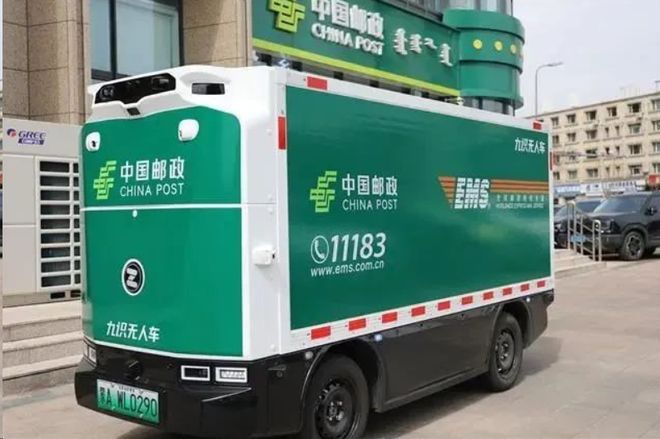
Scale moved again in the second half of 2026. At a Ministry of Transport briefing on 20 August 2026, Xu Huarong, deputy director of the State Post Bureau's policy and regulations department, said more than 16,000 unmanned express vehicles and over 400 drones were in service for last-mile delivery, a shift explicitly credited with lifting delivery quality in mountainous and island areas. Carrier disclosures point the same way: thousands of unmanned vans in over 260 cities at one express group, more than 1,500 at another by the end of June, and roughly 200 vehicles running 300-plus routes daily in Shenzhen at a single-day peak near 90,000 items. Different reporting dates and different scopes — these numbers cannot be added, only read as a trend.
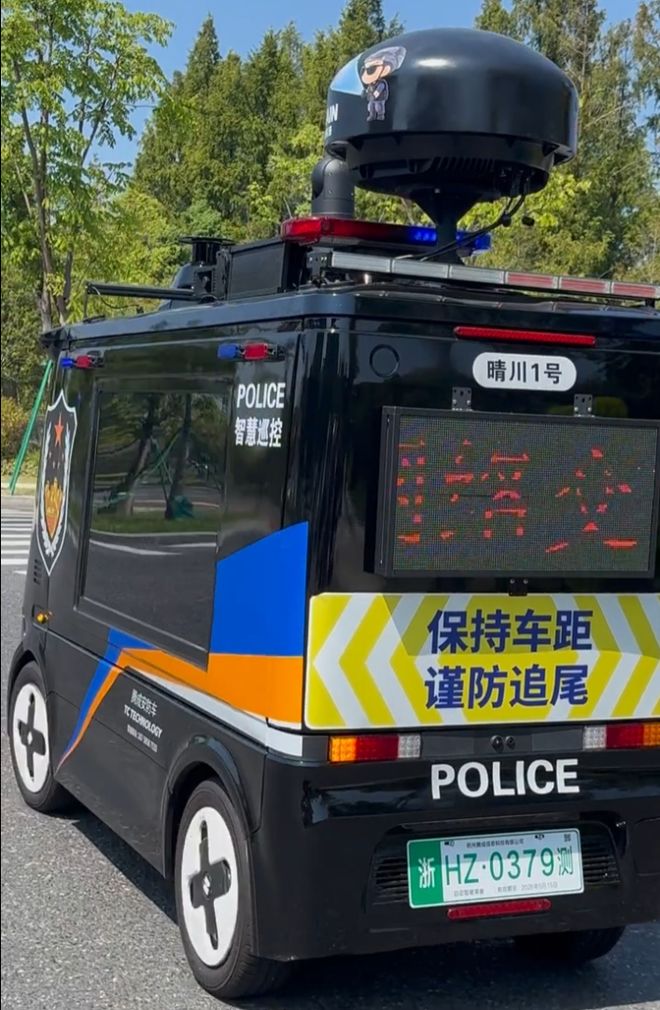
These vehicles are registered and plated, and they are expected to obey traffic rules.
What cost math explains how quickly adoption spread?
Short version: they are genuinely cheap. Operating an unmanned logistics vehicle cost a million-level sum in 2018. By last year a bare vehicle was on the market at 20,000-30,000 yuan with an annual service fee of just over 20,000 yuan; calculated over a five-year life, total usage cost usually lands around 120,000 yuan.
A brokerage worked the same figures down to a monthly basis: about 2,500 yuan a month including vehicle depreciation, FSD service fees and electricity, against 7,700 yuan for a conventional logistics van including depreciation, driver wages and fuel. For a group the size of SF, whose last-mile collection-and-delivery fleet runs to tens of thousands, even over a hundred thousand vehicles, that gap is hard cash.
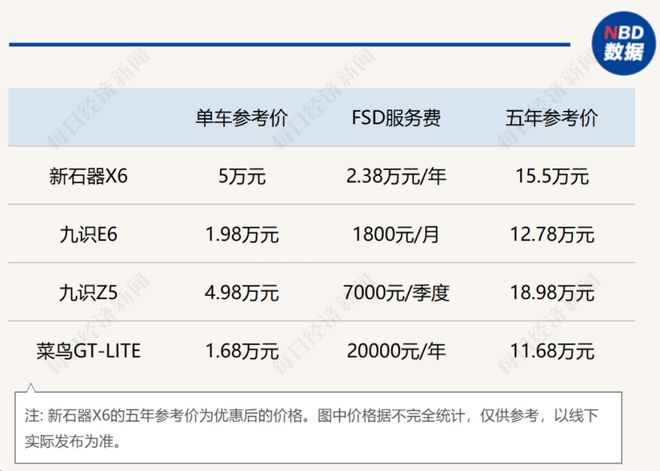
| Item | Unmanned logistics vehicle | Conventional logistics vehicle |
|---|---|---|
| Monthly cost | About 2,500 yuan (vehicle depreciation, FSD service fee, electricity) | 7,700 yuan (depreciation, driver wages, fuel) |
| Five-year usage cost | Around 120,000 yuan typical | Not disclosed in source |
Most units in service today are entry-level models shuttling between station and station. County-to-county and village-to-village legs need higher-spec vehicles, and that is a different price again.
The operating logic is deliberately simple: routes are pre-set, parcels are loaded, the vehicle departs. A safety operator watches remotely — typically one person covering several or a dozen-plus vehicles — and takes over when something goes wrong. Backend dashboards show where each vehicle is, whether it is executing a task, whether an obstacle is blocking it, plus system faults and low battery.
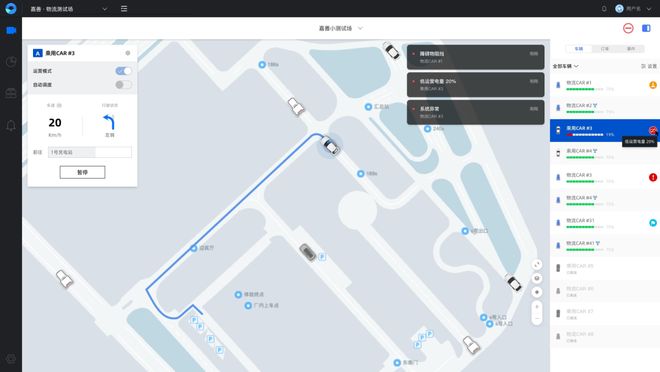
The per-vehicle console can even trigger the horn manually — a reminder that remote supervision is a real operating line item, not a freebie.
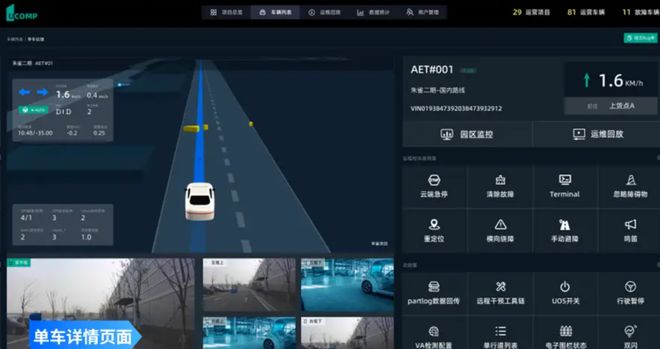
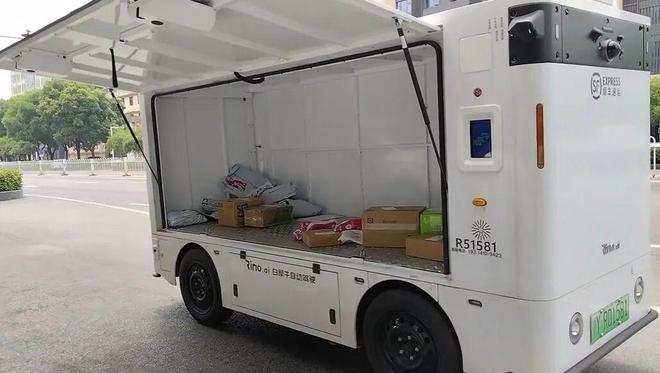
Utilisation is where the business case stands or falls. Huang Gang, describing White Rhino's product logic in 21st Century Business Herald, put the load envelope at roughly 300 parcels in a 3 m3 body and more than 500 in a 5 m3 body, on fixed 5-10 km last-mile legs. In Qingdao, unmanned vehicles running on a DiDi Cargoning partnership were reported handling 6,000-7,000 orders a day, with merchants attracted by citywide fares of 9.9 yuan per order — a price point a human-driven van cannot reach. Treat published operational figures of this kind as directional rather than audited fleet data.
If road rights are granted, why do the vehicles still run short of full capacity?
Because a permit is not an operating envelope. A courier told Shi Chao that his station once ran several unmanned vehicles, but traffic police now control their use: they are barred during morning and evening rush hours and during school drop-off and pick-up periods, so often only a small number can be on the road at any one time.
Another courier told Shi Chao that the machines do make life easier but keep surprising the crew: "if it doesn't come back for ages, you have to go find it and see where it is stuck."
The pattern repeats wherever operators have measured it: the technology is not the weak link, the rules are. Reporting from September 2026 noted that more than 100 cities had opened test road segments, and that inside gated compounds and industrial parks the same vehicles ran smoothly — obstacle avoidance, navigation and handoff all clean — while on public roads they still lack a legal vehicle category. With no steering wheel and no driver, they fail motor-vehicle registration standards; with their kerb weight and power output, they exceed the rules written for non-motorised vehicles. Hand signals from traffic police, temporary road works and jaywalking pedestrians remain scenarios a person would improvise around and a machine can only stop in front of.
Case file: the two-yuan parking fee that stopped an L4 fleet
The most instructive incident of the year was also the cheapest. In May 2026 in Linyi, Shandong, an unmanned delivery van was filmed held at a parking-lot exit, its screen reading "2 yuan due". The vehicle was a White Rhino RX operating on the Huolala freight platform, which had switched into large-scale commercial operations in Linyi on 7 April 2026 with a plan to expand the local fleet towards 200 units and run around the clock. It had no driver to roll down a window, no phone, and no payment account.
What is worth copying is the escalation ladder the operator described afterwards: normally the consignee of that delivery is asked to settle the fee; if that fails, back-office staff scan and pay through the vehicle's forward-facing camera; if the vehicle dwells too long or a customer cannot be reached, someone is dispatched to move it. Commentators called it magic beating magic — unmanned driving meeting unattended toll collection. For a plant or a 3PL, the finding is drier: the vehicle passed the road test and failed the infrastructure handshake.
Reusable lessons for industrial fleet pilots:
- Audit every choke point on a route — boom barriers, paying car parks, gates, elevators, dock doors — before counting the kilometres saved.
- Give the machine a payment identity: an account bound to the vehicle, not to whoever happens to be watching it that shift.
- Set a dwell-time SLA and a named exception-response rota; one stalled vehicle at a single exit becomes a public-order incident.
- Sequence sites by controllability. In a logistics park the operator can make tolling adapt to the vehicles; in a public car park the vehicle has to adapt to tolling, and no such handshake exists yet.
- Report exceptions per 1,000 stops, not demonstrations per quarter.
What does the rulebook require, and who pays when a vehicle hits something?
Rules remain largely city-by-city, and generally constrain vehicle dimensions, maximum speed, the safety-operator ratio and insurance — with insured amounts set at the million level. When an accident happens, traffic police issue a liability determination as they would for a human driver.
Even so, keep your distance.
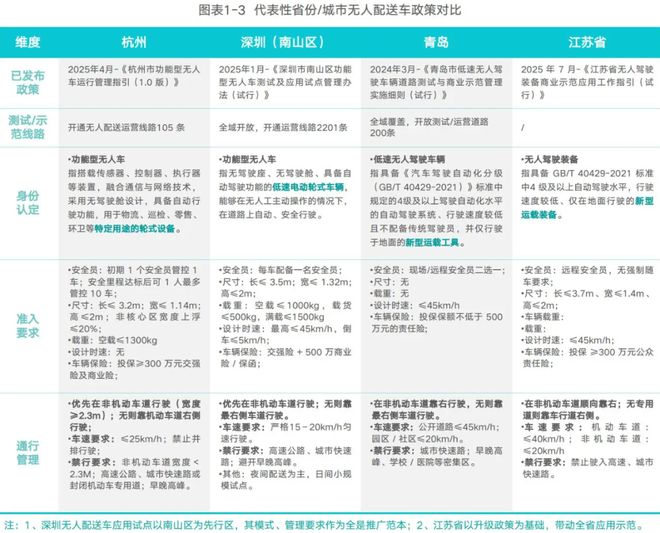
An unmanned vehicle does not drive like a person: it can brake hard or pull away without warning. If a collision does happen, insurance exists but liability allocation is still complicated, because there is no driver-shaped accountable subject. Cases that eventually resolve can still resolve painfully. Do not touch the vehicle — and, above all, do not step in front of one.

Regulation did catch up during 2026. On 28 February 2026 the Ministry of Public Security issued GA/T 2388-2026, the safety traffic specification for road testing and demonstration applications of intelligent connected vehicles, in force from 1 July 2026 and recorded on the ministry's public-security standardisation platform. It is the first national instrument that addresses right-of-way and accident-liability questions for unmanned delivery vehicles as a class. Two caveats matter to anyone signing a fleet contract: it is a recommended standard rather than binding law, and legacy vehicles have been given a transition buffer of roughly thirteen months. Treat it as the floor, not the finish line.
Why do operators refuse to call them "express vehicles"?
Because parcels alone is a small ambition. Jiushi Intelligent said this year that express deliveries account for less than 40% of its unmanned logistics vehicle usage, against roughly 50% in Q3 last year; the other 60% sits elsewhere.
Reframe the product as an autonomously driven cargo box and the addressable work expands: any A-to-B move qualifies, from supermarket replenishment to instant logistics runs.
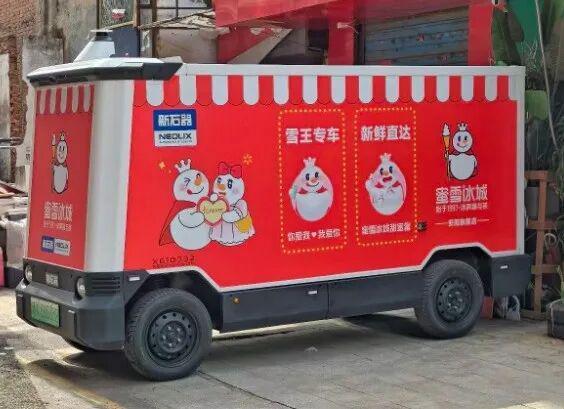
Small parcels that senders previously moved by hiring a DiDi ride will increasingly travel by these carts instead.
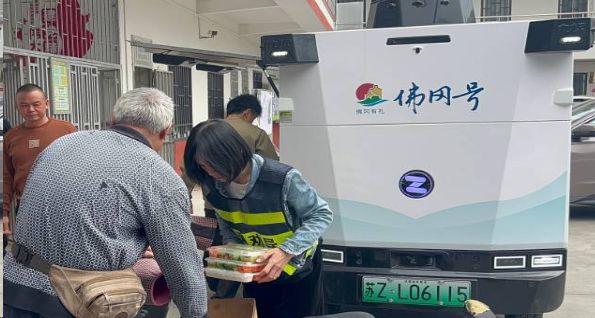
They also absorb jobs humans would rather not do. Delivering meals to housebound older residents is quasi-charitable but operationally heavy — more than 10 community meal points a day — and hiring a dedicated driver does not pencil out; the vehicle runs the route and volunteers handle the handout.
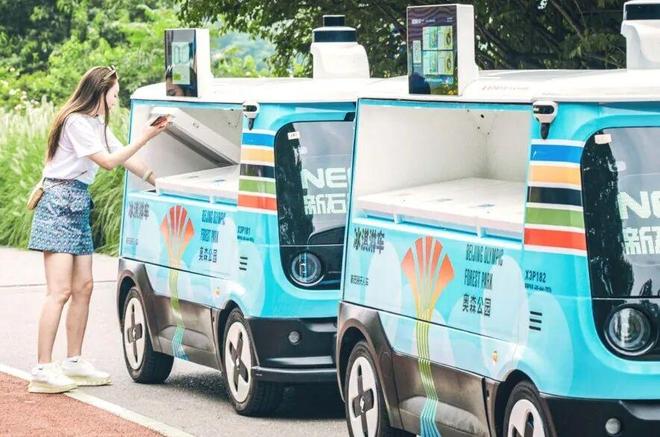
They can trade as well: fit a freezer and the same chassis becomes an ice-cream counter in a scenic spot or an industrial park, with a body-mounted screen selling advertising.
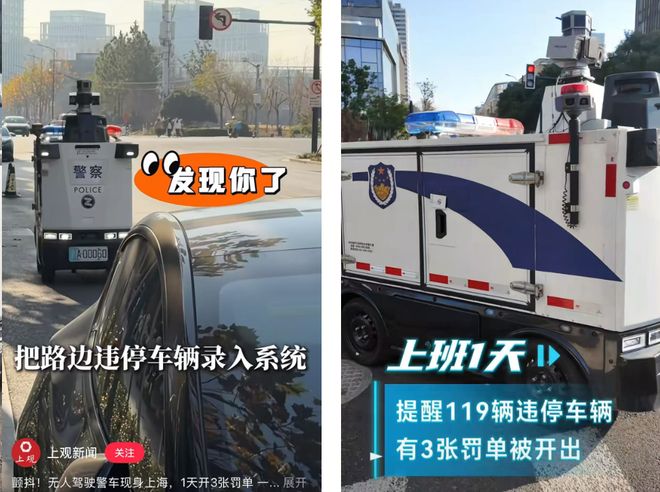
For people living in Hangzhou the most striking variant is the unmanned police patrol vehicle, common on the streets of Yuhang. It identifies violations and sends photographs back to the police station for human review, carries a one-button alarm wired directly to the station, and stores first-aid and firefighting supplies in the cargo bay that the station can unlock remotely in an emergency.
Export of the model is being tested in parallel, which is useful as a benchmark for European sourcing teams. Neolix announced in September 2026 that it would establish a European headquarters in Luxembourg as its corporate and regulatory base for the region, citing rising last-mile retail logistics costs and labour shortages; earlier company disclosures described deployments across more than 15 countries and 170 million cumulative autonomous kilometres.
Where does this model break first?
Xia Tian, co-founder and CTO of White Rhino, stated the risk plainly in a May 2026 interview with OFweek: scale is not the same as maturity. With only tens of thousands of vehicles dispersed across Chinese cities, density remains low, so an occasional stall still draws public and regulatory tolerance; at several hundred thousand vehicles or more, that tolerance falls sharply. "The requirement for intelligence has to step up," he said, arguing that behaviour that does not match human driving habits must be fixed before the larger wave arrives. His own company's roadmap — map-free routing in the first half of 2026 and an end-to-end driving model onboard by year-end — is his version of that step.
Below the technology curve sit the mundane failure modes documented by Shi Chao: routes blocked by temporary works, hand signals from traffic police the vehicle cannot interpret, and handoffs that still require a person to go and find the van.
Which assumptions about driverless delivery vans are wrong?
- "It stalls because the technology is weak." The same vehicles run clean inside compounds and industrial parks; the gaps are right-of-way, vehicle classification and tolling or payment infrastructure.
- "It replaces couriers." The first leg it takes over is the most repetitive one — station-to-station shuttle, night transfer, township and village trunk links — which frees people for doorstep delivery and collection.
- "Road rights mean all-day access." Peak-hour and school-hour bans are standard, so effective utilisation, not fleet size, is the number to model.
- "Cheap hardware means cheap operation." A 20,000-30,000 yuan bare vehicle still carries an annual service fee of just over 20,000 yuan plus a remote operator covering several or a dozen-plus vehicles.
- "It is a delivery product only." Jiushi Intelligent's mix — under 40% express this year, from about 50% in Q3 last year — shows the pitch is general urban capacity.
What should industrial and logistics operators do next?
- Pilot the shuttle leg before the doorstep: depot-to-station and night transfer carry the highest repeatable kilometres and the lowest customer-facing risk.
- Model total cost over five years at around 120,000 yuan per unit, then add the remote-operator ratio — one person to several or a dozen-plus vehicles — and compare against the 7,700 yuan manned baseline.
- Run a choke-point audit of gates, parking tariffs, elevators and dock doors, and provision a vehicle-level payment identity before go-live.
- Put liability in the contract: insured amounts at the million level, named exception-response ownership, and a response SLA measured in minutes.
- Check the rulebook city by city against GA/T 2388-2026 and its transition buffer; a licence granted in one municipality does not travel.
- Instrument exception density. If stalls per 1,000 stops rise with fleet size, stop scaling and fix the operating model first.
FAQ: unmanned delivery vehicles in 2026
Are unmanned delivery vehicles legal on public roads?
Only where road access has been granted. Compliance on public roads first appeared in 2021; since then permissions have been issued city by city, and even large footprints such as China Post's — nearly 5,000 vehicles across 31 provinces and 263 cities at the end of July — typically cover one district or a few approved route segments rather than whole cities.
What does a vehicle actually cost to run?
About 2,500 yuan a month, including depreciation, FSD service fees and electricity, versus 7,700 yuan for a conventional van once depreciation, driver wages and fuel are counted. Hardware prices fell from a million-level usage cost in 2018 to a bare vehicle at 20,000-30,000 yuan last year, with an annual service fee of just over 20,000 yuan.
Who is responsible if one hits a car or a pedestrian?
Traffic police issue a liability determination as for a human driver, and insurance at the million level is a common permit condition. In practice accountability is still messy because there is no driver as a clearly defined responsible subject, which is why the industry is pressing for binding national operating rules.
Do they only carry parcels?
No. Jiushi Intelligent reported that express deliveries fell below 40% of its usage this year from about 50% in Q3 last year, with the remaining 60% split across store replenishment, instant logistics, community meal runs of more than 10 stops a day, mobile vending and public-order patrol vehicles.
Will they block my production access road?
The risk is dwell time, not speed. The Linyi case shows how a two-yuan barrier can immobilise a vehicle at an exit; the mitigation is a written escalation ladder — consignee payment, remote scan through the onboard camera, then human recovery — plus a dwell-time SLA agreed with the site operator.
Sources
- Neolix Series E of nearly US$400 million and cumulative funding past RMB 10 billion — Beijing News
- State Post Bureau figures on unmanned express vehicles and drones, briefing of 20 August 2026 — Sina Finance
- GA/T 2388-2026 standard record, issued 28 February 2026, in force 1 July 2026 — Ministry of Public Security standardisation platform
- White Rhino RX rollout in Linyi and the parking-exit incident — Toutiao report
- Interview with White Rhino co-founder and CTO Xia Tian on scale versus maturity — OFweek
- White Rhino load capacity and per-parcel economics described by Huang Gang — 21st Century Business Herald
- Neolix European headquarters in Luxembourg — Neolix official news