
WorldIndustrialWeekly General Industry Focus: The 2026 LEAP Award Winners in Engineering Software, AI Review, and Synthetic Sensor Data
By Michael Torres | Industrial Weekly | News contact: news@industrialweekly.com
From a WorldIndustrialWeekly General perspective, the latest software results are less about badge collecting and more about where engineering teams can place AI, automation, and data-generation tools inside real production, product, and supplier workflows. The 2026 LEAP Award outcomes give readers a compact map of three pressures: faster mechanical-design cycles, earlier review feedback, and easier access to edge-AI training inputs.
Each year, the LEAP Awards spotlight innovation that advances global industry. The judging panel recognized these entries for outstanding technological achievements. LEAP stands for Leadership in Engineering Achievement Program. This cycle, an expert, independent panel selected the top entries across multiple categories, including software, naming Synera as Gold, CoLab Software’s AutoReview as Silver, and TDK SensorGPT as Bronze.
Gold: Agentic CAD and CAE Workflows
Synera: agentic AI platform for engineers
The judging panel said: “Synera presents an impressive agentic engineering environment that combines specialist AI agents with deterministic engineering rules, physics constraints and extensive CAD, CAE and enterprise-system integration. Its demonstrated industrial adoption and substantial reductions in engineering turnaround time make it a highly sophisticated and practically valuable platform.”
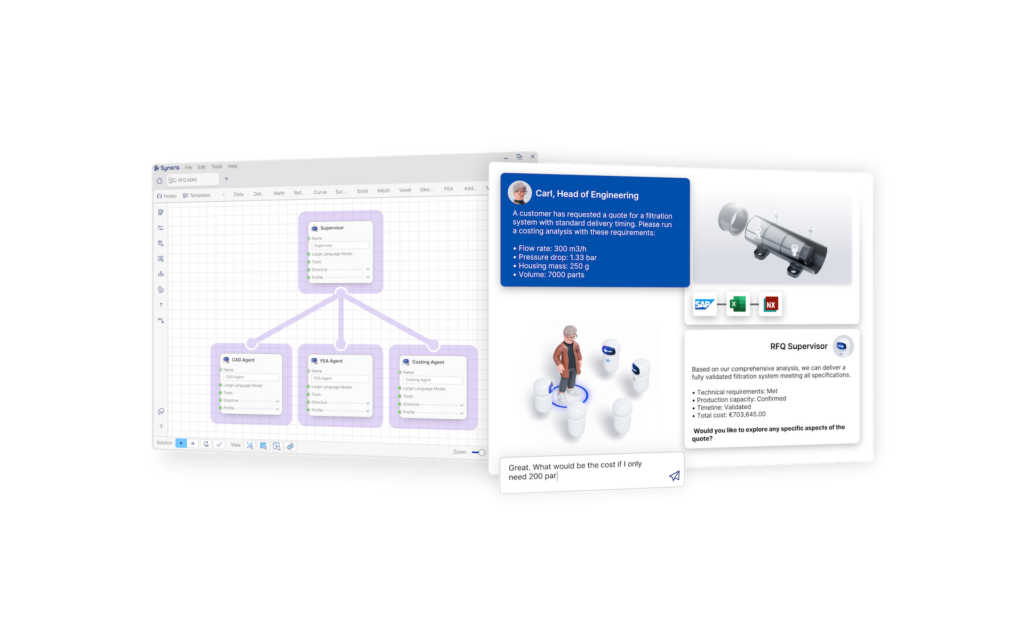
For mechanical engineering, Synera is positioned against a practical bottleneck: complex workflows are still governed by physics, but tools are often fragmented across departments and systems. The platform keeps deterministic behavior and auditability central. It is described as using specialist agents controlled by rule-based logic and physics constraints, rather than probabilistic general-purpose language models alone. Those agents edit 3D parametric geometry, run and interpret FEA simulations, and guide iterative design refinement through engineering rules. Every decision path is logged and auditable, which matters for regulated industries including aerospace, automotive, defense, and consumer goods.
The winning platform also targets repetitive engineering cycles such as RFQ generation, design-to-cost optimization, tolerance stack-up analysis, and manufacturability assessment. Its specialized agents negotiate engineering trade-offs in real time and coordinate end-to-end workflows across 80+ CAD, CAM, CAE, PLM, and other solutions through native APIs. On-premises deployment supports data security and sovereignty, a requirement for global manufacturers protecting intellectual property against cyber threats.
Synera combines institutional knowledge with AI-driven execution. The award case notes that the platform was developed with several Synera customers and underwent two years of real-world testing before public release. The advanced multi-agent capabilities were released in March 2026, with a measurable efficiency impact: 10x faster product development cycles, 99% time savings, and turnaround times reduced from weeks to minutes while material and production costs were lowered.
Enterprises named in the award material include NASA, Airbus, BMW, Hyundai, Volvo Trucks, and Miele. The case frames Synera as setting a benchmark for agentic engineering at industrial scale.
Silver: 3D and 2D Design Review Support
CoLab Software: AutoReview
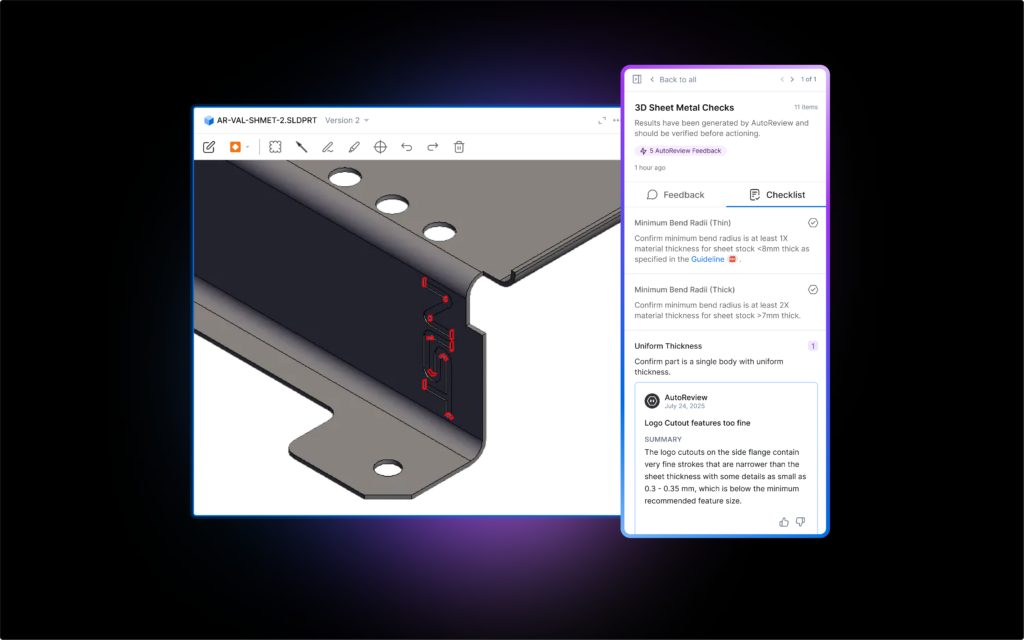
At the pre-review stage, CoLab AutoReview analyzes 3D parts and 2D engineering drawings as an AI peer checker. CoLab Software built AutoReview as a team of specialized agents rather than relying on one general-purpose model. Inside CoLab’s design review platform, large language models, purpose-built system prompts, and organization-specific standards and feedback operate as a combined checking system.
If a concern is detected, markups and comments are added directly onto the surface or feature of the design. That preserves the exact context and makes feedback easier to understand and implement. The guideline or standard linked to the issue is also cited, giving engineers a direct path to the rule behind the comment. When humans enter the review process, they can examine AI-generated feedback and convert accepted findings into tracked issues for resolution.
AutoReview checks multiple dimensions of a design at the same time, including non-conformance to standards, design flaws in 3D parts, DFM optimization, ambiguous or incomplete drawings, and inconsistencies in technical data such as mismatched materials or title block discrepancies. Conflicts with lessons learned are also surfaced: common expert feedback, root causes of failures, and repeat errors are brought forward so engineers benefit from organizational experience without manually searching for it.
CoLab reports the tool is in production today, with dozens of engineering teams, including Fortune 500 manufacturing companies, using AutoReview. It runs inside CoLab’s secure infrastructure, trusted by engineers at Schaeffler, Lockheed Martin, and Bombardier, and meets SOC 2 Type 2, ISO 27001, and FedRAMP High standards.
Bronze: Synthetic Sensor Data for Edge AI
TDK: TDK SensorGPT
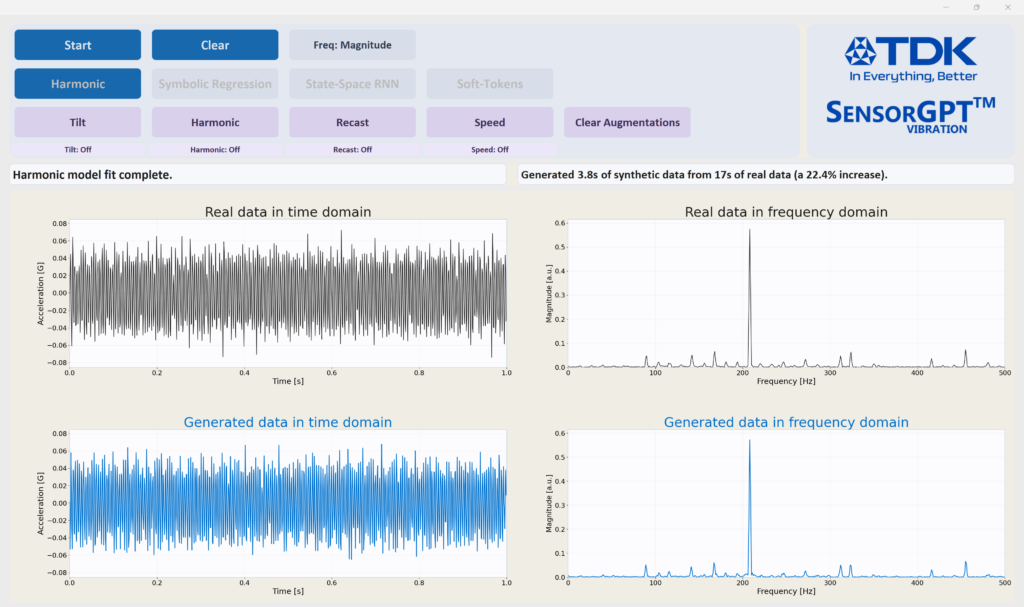
TDK SensorGPT is framed as a smart IoT platform for accelerating the development and scaling of edge AI solutions. Traditional AI programs often rely heavily on real-world data collection, and that effort can account for up to 80% of development time. The platform addresses the bottleneck by synthesizing high-fidelity sensor data at scale, cutting real data dependency to as little as 10% and enabling faster, more efficient model development and deployment.
Synthetic datasets are described as having up to 90% similarity to real-world conditions. Engineers can then rapidly prototype, train, and deploy edge AI models in weeks rather than months. Large, diverse datasets help improve model robustness, expand coverage across edge cases, and lower overall development costs.
SensorGPT supports applications ranging from industrial IoT to wearables and Ambient IoT. The award summary presents the platform as a way to scale edge AI more efficiently by reducing costs, accelerating innovation, and making intelligent systems more accessible.
For broader results, designworldonline.com provides the complete list of 2026 LEAP Award winners across all categories.
Case Signals From the 2026 LEAP Award Winners
The three winning entries form a useful cross-section of current engineering software priorities. The Gold case shows that agentic workflows are moving from assistive chat interfaces toward rule-bound, physics-constrained systems that can act across CAD, CAE, PLM, and enterprise tools while remaining auditable. The Silver case shows that design review is becoming earlier, continuous, and context-rich, with AI comments anchored to exact geometry and exact standards. The Bronze case shows that data scarcity is a bottleneck for edge AI, and synthetic sensor generation can change development cost and schedule without assuming real data can be eliminated entirely.
These cases also illustrate the practical scope of each platform. Synera is positioned for complex mechanical engineering where regulated industries need logged decision paths. CoLab AutoReview is positioned for design review where drawings, models, standards, and learned issues must be checked together. TDK SensorGPT is positioned for IoT and edge AI programs where sensor data collection can slow model training and field scaling.
Data Citation Summary
| Award Tier | Winner | Cited Evidence |
|---|---|---|
| Gold | Synera | advanced multi-agent capabilities released in March 2026; 10x faster product development cycles; 99% time savings; 80+ CAD, CAM, CAE, PLM, and other solutions through native APIs; two years of real-world testing before public release. |
| Silver | CoLab Software AutoReview | analyzes 3D parts and 2D engineering drawings; dozens of engineering teams including Fortune 500 manufacturing companies; secure infrastructure meets SOC 2 Type 2, ISO 27001, and FedRAMP High standards. |
| Bronze | TDK SensorGPT | real-world data collection can account for up to 80% of development time; synthetic datasets up to 90% similarity to real-world conditions; real data dependency cut to as little as 10%. |
Common Misconceptions the Winners Help Clarify
- A common misconception is that agentic engineering software is only a conversational assistant that suggests text or sketches. The Synera description instead emphasizes specialist AI agents controlled by rule-based logic and physics constraints, with every decision path logged and auditable for industries such as aerospace, automotive, defense, and consumer goods.
- Another misconception is that AI design review only checks spelling or title blocks. CoLab AutoReview also checks non-conformance to standards, design flaws in 3D parts, DFM optimization, ambiguous or incomplete drawings, mismatched materials, title block discrepancies, and lessons learned.
- A third misconception is that synthetic sensor data replaces all field data. The TDK SensorGPT description states that real data dependency can be cut to as little as 10%, not eliminated. The platform still works within a development path that uses real-world sensor conditions as the reference target.
Action Recommendations for Industrial Teams
For production, engineering, procurement, and technology-decision groups, the award results suggest a practical evaluation path rather than a simple vendor checklist. Teams can start by identifying workflows where speed and accuracy are both constrained by fragmented tools, inconsistent review cycles, or scarce training data. They can then map each winner’s stated capability to a bounded use case, test it with real artifacts, and document the expected control points.
For Synera-like agentic CAD and CAE workflows, a recommended first action is to list mechanical design tasks that require deterministic, auditable changes, such as 3D parametric geometry edits, FEA interpretation, tolerance stack-up analysis, RFQ generation, design-to-cost optimization, and manufacturability assessment. Teams should also confirm whether rule-based agents, physics constraints, native APIs, on-premises deployment, and logged decision paths match internal governance needs.
For CoLab AutoReview-like design checking, teams can prioritize a short list of 3D parts and 2D engineering drawings where feedback has historically caused rework. Useful pilot checks include mismatched materials, title block discrepancies, ambiguous drawings, standard violations, and repeat lessons learned. Reviewers should decide how AI-generated comments become tracked issues and how human reviewers retain final responsibility.
For TDK SensorGPT-like edge AI programs, teams can compare the time spent collecting real sensor data with the time needed to build synthetic training datasets. Because the award summary emphasizes up to 90% similarity to real-world conditions and real data dependency as little as 10%, a reasonable next step is to validate model performance across edge cases, industrial IoT, wearables, and Ambient IoT use cases before assuming full field deployment.
FAQ: What Readers Often Ask About the 2026 LEAP Award Software Results
Q1: What do the 2026 LEAP Award Software winners have in common?
A1: They address software used by engineering and product teams: agentic CAD and CAE workflows with Synera, AI-assisted 3D and 2D design review with CoLab AutoReview, and synthetic sensor data generation for edge AI with TDK SensorGPT.
Q2: Why is auditability emphasized for Synera?
A2: The winning platform uses rule-based logic and physics constraints rather than probabilistic reasoning alone, and every decision path is logged. That matters for regulated industries including aerospace, automotive, defense, and consumer goods.
Q3: How does CoLab AutoReview differ from a single AI model?
A3: CoLab Software built AutoReview as a team of specialized agents rather than relying on one general-purpose model. Large language models, purpose-built system prompts, and organization-specific standards and feedback operate inside CoLab’s design review platform.
Q4: What does SensorGPT change for AI development?
A4: It reduces the heavy real-world data-collection burden that can account for up to 80% of development time. By synthesizing high-fidelity sensor data at scale, TDK SensorGPT can cut real data dependency to as little as 10% and support model development and deployment in weeks rather than months.
Q5: Where can readers find all category results?
A5: designworldonline.com provides the complete list of 2026 LEAP Award winners across all categories.
From a WorldIndustrialWeekly General viewpoint, the recurring lesson is not simply that software innovation won awards. The lesson is that industrial teams are being asked to build controls around AI: deterministic rules for engineering actions, traceable feedback in design review, and realistic data-dependency assumptions for edge AI. The 2026 results make that direction visible across software, mechanical engineering, design review, IoT, and industrial decision-making.